Vladimir Demikhov: The Science of Two-Headed Dogs
In the shadow of the Cold War, a surgeon doubled up on dogs to defeat death and opened the door to modern organ transplantation.
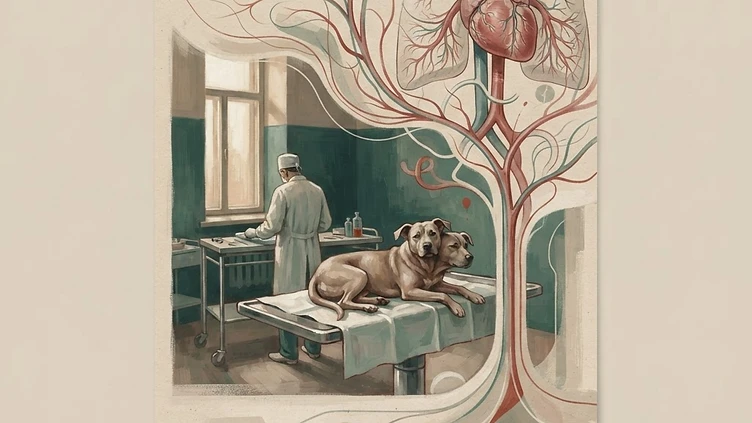
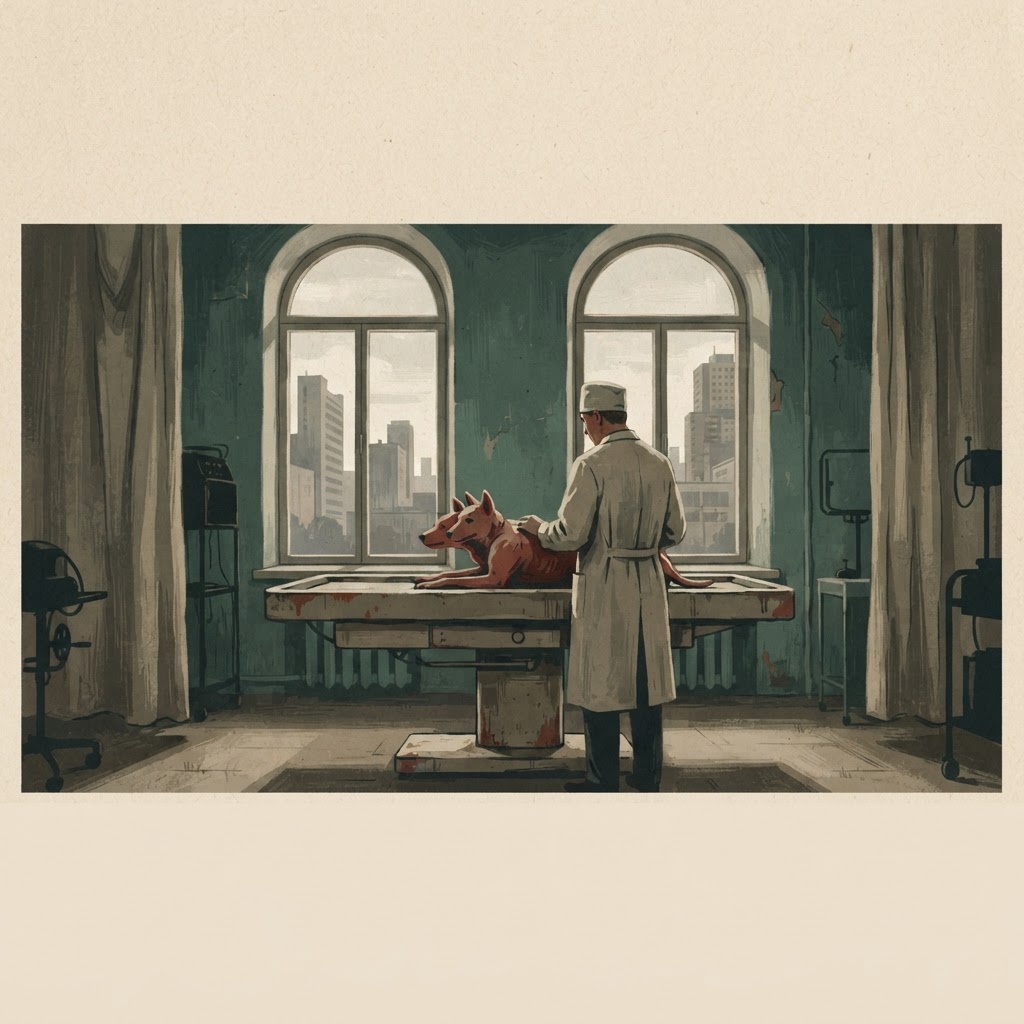
Imagine a second head growing on a dog's neck; it blinks, sticks out its tongue, and even attempts to drink milk on its own. Today, this image might seem like a scene from a nightmare, but for Vladimir Demikhov, this was the patient workbench of a scientist trying to unlock the secrets of death. In the mid-twentieth century, the Soviet surgeon was building the medicine of the future using dogs, in a field where humanity had not yet even begun to dream of organ transplantation. His name is often associated today with words like oddity and horror, yet his legacy is one of the cornerstones of modern heart and lung transplants. So, what was really behind these strange experiments, and how much does a surgeon working in today's operating rooms owe to Demikhov? ## Two Heads in the Laboratory At first glance, Demikhov's work is unsettling; the image seems the product of a kind of uncontrolled whim rather than curiosity that transcends the boundaries of science. Adding a second head to a dog's body immediately brings science fiction to mind. But the question Demikhov was actually asking was much more ordinary and much deeper: how does an organism accept or why does it reject a tissue that is not its own? To answer this question, he chose the most striking, most visible example. The two-headed dog was essentially the most extreme, most theatrical form of an organ rejection experiment; because the second head revealed how the body's immune system established a relationship with the new tissue and how the blood circulation carried foreign tissue. What is truly interesting here is that Demikhov organized these experiments not as a spectacle, but as part of a systematic research program. The techniques for connecting blood vessels required a precision that seemed almost impossible with the surgical instruments of the era; he developed these techniques with his own hands. No transplant could be permanent without understanding the biological mechanism of organ rejection, and Demikhov knew this intuitively. Perhaps that is why reading his experiments only through the lens of oddity would be to miss the essence of the matter; because each two-headed dog was actually a clue reaching out to patients on the organ waiting lists of the next century. ## A Scientific Race Behind the Iron Curtain To understand Demikhov's laboratory, one must also take into account the cold reality of the Cold War. The Soviet Union wanted to repeat the pride of surpassing the West in the space race in the fields of medicine and biology as well. A country's scientific superiority was not just an academic issue at that time; it meant an ideological victory. In this atmosphere, Demikhov's work was both a matter of prestige and potential propaganda material in the eyes of the state. While the Western press met these experiments with horror, Soviet scientific circles did not hesitate to present them as proof of the promise to reshape the human body. But what this political competition brought to the scientific process was not just support; it was also pressure to work quickly. Thinking at length about the ethical boundaries of an experiment could not keep up with the speed of competition. For this reason, some of Demikhov's experiments would never pass today's ethics committees; yet there was no such oversight mechanism at the time. While saying that political competition increased scientific risk may seem like an easy criticism, this situation actually reveals a tension inherent in the very nature of science: sometimes the boldest leaps are made where oversight is loosest. The conditions under which Demikhov worked cannot be defended by today's standards, but the knowledge produced by those conditions prepared the ground that makes today's standards possible. ## The Lesson Barnard Learned Christiaan Barnard's name went down in history as the surgeon who performed the world's first heart transplant; but behind this success, traces of the techniques Demikhov developed in his Moscow laboratory are clearly visible. Barnard closely examined Demikhov's work, and it is known that he even had direct contact with him; this is one of the clearest proofs that science transcends borders. Even though the two sides of the Cold War were hostile to each other, the technique of connecting blood vessels functioned the same way in the human body, regardless of the country in which it was developed. The hand movements in Barnard's operating room were, in a sense, a human-scale version of the movements Demikhov had repeated on dogs for years. This transfer was not just a technical legacy; it was also a legacy of courage. Demikhov's experiments showed that organ transplantation was not just theoretically possible, but achievable in practice. The uncertainty Barnard felt before performing the heart transplant had been somewhat eased by Demikhov's years of trials; because someone, before him, had proven that the body could handle such a radical change. The vessel connection methods used when placing a new heart into a patient's chest today, the management of the circulatory system, and even the initial conceptual frameworks for preventing rejection can all be traced back to this distant and strange starting point. When we read a news story about an organ transplant today, we usually focus on the patient's story, the donor's generosity, or the surgeon's skill; Demikhov's name is left out of this story. Yet those dogs remind us that science sometimes progresses along the most strange, most unacceptable-seeming paths. A scientist's curiosity that pushes moral boundaries can prepare the ground for today's life-saving techniques; although this thought may be uncomfortable, it appears frequently in the history of medicine. Demikhov's legacy perhaps lives exactly in this dilemma: on that thin, uncertain line between horror and progress.
İlgili Denemeler
Can the Human Brain Detect Magnetic Fields?
Geophysicist Joseph Kirschvink's experiment at Caltech indicates that the human brain responds to magnetic fields, raising questions about a potential sixth sense.
Jan Hendrik Schön: The Physicist Who Fooled Science
The scandal of Jan Hendrik Schön's fabricated data at Bell Labs highlights the critical vulnerabilities in the scientific peer-review system.
Barry Marshall Drank Bacteria to Prove Stomach Ulcer Theory
Barry Marshall made medical history by consuming harmful bacteria to prove that stomach ulcers are caused by an infection rather than stress alone.
Tartışma (0)
Henüz yorum yok. İlk yorumu siz yapın.
Join the Newsletter
New essays, once a week, delivered to your inbox.