Toxoplasma Gondii: Does It Change Human Behavior?
A parasite living silently in the brains of millions challenges how we perceive risk-taking and decision-making.
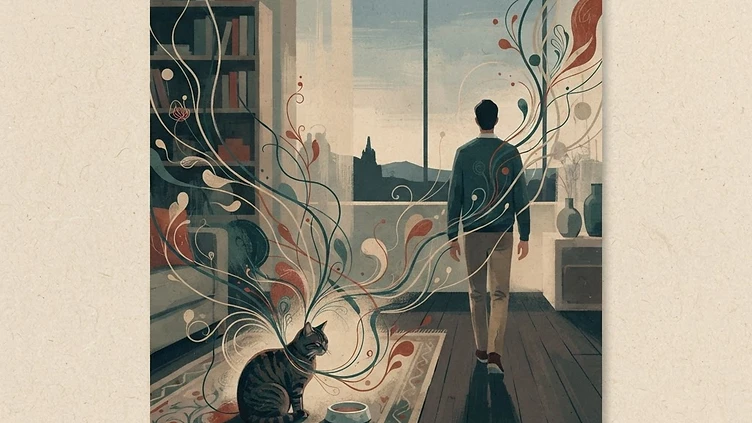
If you are a cat owner, a hidden companion may be living in a corner of your home, near the litter box. This single-celled parasite, known as Toxoplasma gondii, resides silently in the brains of a significant portion of the global population, without causing symptoms or raising a fever. But is this tiny guest merely a passive resident, or a secret partner in our thoughts, decisions, and even our courage? This question has fueled a debate in the scientific community that is met with both curiosity and caution. The idea that a parasite shapes human behavior carries both a dizzying possibility and a claim prone to exaggeration. ## From Mouse to Human: The Strange Journey of a Parasite The story of Toxoplasma gondii illustrates one of nature's most ruthless examples of ingenuity. The parasite requires cats to complete its life cycle; the shortest path to a cat is through a mouse. The problem is that mice naturally avoid the scent of cats, a fear that forms the foundation of their survival strategy. This is where Toxoplasma intervenes: changes occur in the brains of infected mice that suppress their fear of cat urine, or in some observations, even turn it into an attraction. The mouse no longer flees from danger; it acts as if it is walking toward it. This is a perfect evolutionary move for the parasite, as the less timid the mouse becomes, the higher the chance it will be hunted by a cat, completing the cycle. It is inevitable to ask how humans fit into this. Humans are not the primary target of the parasite; in that sense, we are a glitch, a product of an accident outside the cycle. However, Toxoplasma utilizes similar biochemical pathways in every mammal brain it infects; it can influence dopamine production and interact with certain neural circuits. Here, the curiosity of scientists begins: can a mechanism that programs fear so masterfully in a mouse brain leave no trace in a human brain? Or does it make a subtle but real impact on our perception of risk, our attention, and perhaps our patience? This question builds a strange bridge from laboratory mice to human behavioral science. ## The Silent Guest in the Brain: What Do the Studies Show? Studies conducted in various countries indicate that this bridge is not entirely imaginary; at the very least, there is a statistical pattern. When individuals carrying the parasite are compared to those who do not, differences are observed in certain behavioral tests. Measurements regarding risk-taking tendencies, reaction times, and minor accidents due to inattentiveness suggest that infected individuals may react more slowly or make more audacious choices in certain situations. These findings are not limited to a single country; their recurrence across different cultural and geographical contexts captures the attention of researchers. It is as if the parasite leaves a mark in the human brain similar to that in the mouse, slightly loosening the instinct for caution and blurring the line between courage and recklessness. However, what is truly interesting here is not how large or small these differences are, but what they might signify. If a parasite can truly influence human decisions, this creates a thought-provoking foundation not just for biology enthusiasts, but for sociology, economics, and even security policy. Observations on traffic accidents, entrepreneurial tendencies, and even career choices are being analyzed in relation to the presence of the parasite. Of course, these relationships are far from establishing a definitive cause-and-effect link, but they at least offer a ground worth questioning. Perhaps there are biological actors deep in our brains that are as small and effective as we fail to notice, and Toxoplasma is just one of them. ## Correlation or Causation? The Skeptical Side of Science While these findings are exciting, the true power of science lies not in excitement, but in skepticism. Correlation is not causation; this is one of the oldest yet most essential lessons of the philosophy of science. The fact that people carrying the parasite show certain behavioral differences does not automatically mean the parasite caused those behaviors. Perhaps people who own cats have a specific lifestyle or a certain socioeconomic profile; perhaps those living in rural areas encounter the parasite more often and possess different risk perceptions for other reasons. Such hidden variables are one of the traps researchers fear most; while it is easy to find a relationship, pointing to the correct source of that relationship is much more difficult. This is precisely why scientific skepticism is so valuable. The link between Toxoplasma and behavior in humans still cannot be explained by as clear a mechanism as it is in laboratory mice. While some researchers defend this relationship as a strong biological effect, others believe it may be mere statistical noise or, at most, a secondary effect. It is impossible to say who will be proven right when this debate concludes; however, the debate itself provides a beautiful example of how science works. Real science is not about celebrating a finding as an immediate truth, but about testing it repeatedly, questioning it from different angles, and resisting easy answers. The part of this story that stays with me, and perhaps the most interesting aspect, is that it makes us question how pure and independent human free will actually is. When we make a decision or take a risk, are we acting solely with our own minds, or do the invisible partners we carry inside our bodies have a silent share in it? Toxoplasma gondii does not answer this question definitively yet, but it makes it worth asking. Perhaps the mystery of human behavior is hidden precisely in the accumulation of such small, silent factors; and as we look at a cat's litter box, we must also wonder how many of our own decisions truly belong to us.
İlgili Denemeler
Can the Human Brain Detect Magnetic Fields?
Geophysicist Joseph Kirschvink's experiment at Caltech indicates that the human brain responds to magnetic fields, raising questions about a potential sixth sense.
Jan Hendrik Schön: The Physicist Who Fooled Science
The scandal of Jan Hendrik Schön's fabricated data at Bell Labs highlights the critical vulnerabilities in the scientific peer-review system.
Barry Marshall Drank Bacteria to Prove Stomach Ulcer Theory
Barry Marshall made medical history by consuming harmful bacteria to prove that stomach ulcers are caused by an infection rather than stress alone.
Tartışma (0)
Henüz yorum yok. İlk yorumu siz yapın.
Join the Newsletter
New essays, once a week, delivered to your inbox.