The Thalidomide Tragedy: Frances Oldham Kelsey's Legacy
While thousands of infants were born with deformities around the world, how did one FDA official's stubborn skepticism protect America from this catastrophe?
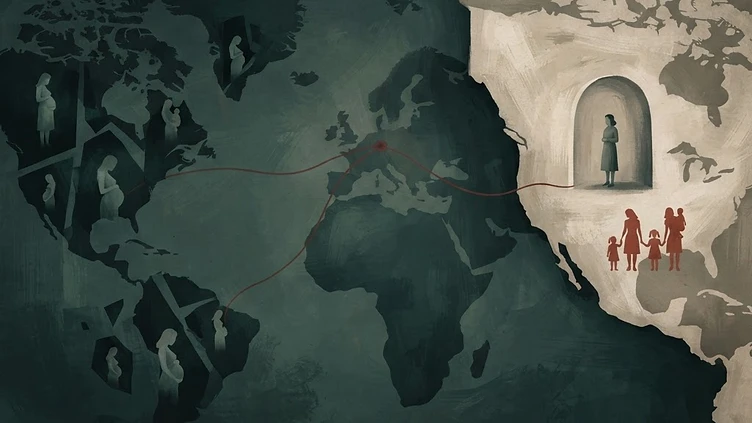
Reading the history of a drug is often like reading a dry chronology: discovery, testing, approval, market. But some drug stories break this orderly line and show us how human will, institutional inertia, and the skepticism of a single person can change history. The story of thalidomide is exactly such a breaking point. Introduced in the late 1950s as a miracle drug for sleep, anxiety, and morning sickness, it led to thousands of babies being born worldwide with missing or deformed limbs. Yet, the United States was largely spared from this catastrophe; the reason was not an advanced regulatory system, but the peculiar persistence of an FDA doctor, Frances Oldham Kelsey, who refused to be convinced. This essay seeks to explore how that persistence saved thousands of lives and how far back it traces the roots of the drug safety issues we still debate today. ## How a Miracle Drug Turned into a Disaster When thalidomide was developed by a Germany-based pharmaceutical company, it seemed like a solution to one of humanity's oldest problems: insomnia, anxiety, and morning sickness. Even the inability to find a lethal dose in animal tests was viewed as a victory by the company; they reasoned that if it was so hard to kill a mouse, it must be safe for humans. This logic carried the first seeds of the tragedy, because safety was not measured solely by a death threshold; there were more subtle, slower-acting bodily reactions. Sold without a prescription or with easy prescriptions in Europe, Canada, Australia, and many other countries, the drug soon found its way onto the nightstands of millions of women. But in the early 1960s, a strange pattern began to be noticed in maternity clinics. Babies were being born with very short, sometimes absent arms or legs, and sometimes with severely affected internal organs. Doctors initially thought it was a coincidence, then suspected an epidemic, and finally reached a single common denominator: almost all these mothers had taken thalidomide in the first months of their pregnancies. The figures were horrifying; thousands in Germany alone and tens of thousands worldwide became victims. How could such a widely used drug receive approval in so many countries without being seriously tested on humans? The answer lay in how lax drug regulation was at the time; most countries accepted the data provided by companies without question, because the burden of proof that a drug was harmful belonged neither to the patient nor the regulator—it belonged to no one. ## A Doctor's Stubborn Skepticism Frances Oldham Kelsey was a physician who joined the FDA in 1960, and one of the applications on her desk was the Richardson-Merrell company's request to market thalidomide as Kevadon in America. At that time, the FDA had sixty days to reject a drug; if the agency did not object within that period, the drug was automatically considered approved. The file Kelsey had showed that the drug was already widely used and considered safe in Europe; for an ordinary official, this would have been sufficient grounds to sign and close the file. But Kelsey noticed that the data was incomplete, specifically that how the drug was absorbed in the human body and its effects on pregnancy had not been examined at all; some reports from England indicated signs of nerve damage in patients, which contradicted the completely safe picture presented by the company. Instead of approving the application, Kelsey chose to ask questions; she demanded new data from the company for every point she found lacking. Richardson-Merrell did not like this delay at all; high-level executives called the FDA, flooded Kelsey's superiors with complaints, and even tried to pressure her by calling her directly. One might argue here: perhaps Kelsey was acting out of bureaucratic stubbornness or legalism, not scientific concern. But the sequence of events soon collapsed this interpretation, as reports of birth defects from Europe began to increase, proving that the questions Kelsey asked were the product of a true intuition, not just a procedural obsession. The file remained in limbo without approval, and this delay was the real reason America never launched thalidomide on a large scale. ## The Legacy of the Disaster When the thalidomide scandal broke, the American public was gripped by both horror and a strange relief; horror at the pain experienced elsewhere in the world, and relief that their own country had narrowly escaped it. This mixed sentiment was reflected in politics, and the Kefauver-Harris Amendment was passed in 1962; this law required that for a drug to be brought to market, it had to be proven effective, not just safe. More importantly, it became mandatory for pharmaceutical companies to obtain informed consent from participants in clinical trials; before an experimental substance was given to a human, that person had to consent with knowledge of the risks. This principle, which seems mundane to us today, was a direct result of the wounds left by thalidomide. One might ask, what does this legacy have to do with today's debates? In every new drug scandal, vaccine debate, or accelerated approval issue, that simple question asked by Kelsey reappears: is the evidence we have sufficient to support the claimed safety, or is it just trying to appear sufficient? This tension never disappeared during the accelerated vaccine development processes of the pandemic or the early access programs for cancer drugs; the old conflict between speed and safety is still on the table in different guises. Kelsey's legacy does not give us a definitive answer, but it reminds us that asking the right question, and persistently repeating it, can sometimes be the only protective shield of a system. When I look back now, what strikes me most about this story is not a miraculous moment of heroism nor the magnitude of the tragedy; what moves me is the power of a person at a bureaucratic desk saying, without expecting any applause, that this data is not enough for me. Kelsey did not want to be a hero; she just wanted to do her job properly, and this ordinary persistence prevented a tragedy that thousands of families would never have to endure. Today, when we read the warning label on a medicine box or fill out a consent form before joining a clinical trial, we are following the traces of a quiet resistance given for sixty days by a woman we never met. Perhaps the real question is: today, under similar pressure, how many people would be capable of showing similar persistence?
İlgili Denemeler
Can the Human Brain Detect Magnetic Fields?
Geophysicist Joseph Kirschvink's experiment at Caltech indicates that the human brain responds to magnetic fields, raising questions about a potential sixth sense.
Jan Hendrik Schön: The Physicist Who Fooled Science
The scandal of Jan Hendrik Schön's fabricated data at Bell Labs highlights the critical vulnerabilities in the scientific peer-review system.
Barry Marshall Drank Bacteria to Prove Stomach Ulcer Theory
Barry Marshall made medical history by consuming harmful bacteria to prove that stomach ulcers are caused by an infection rather than stress alone.
Tartışma (0)
Henüz yorum yok. İlk yorumu siz yapın.
Join the Newsletter
New essays, once a week, delivered to your inbox.