What Is Terminal Lucidity? The Mystery of Final Clarity
How can patients who have not recognized themselves or their families for years return to their former selves just hours before dying?
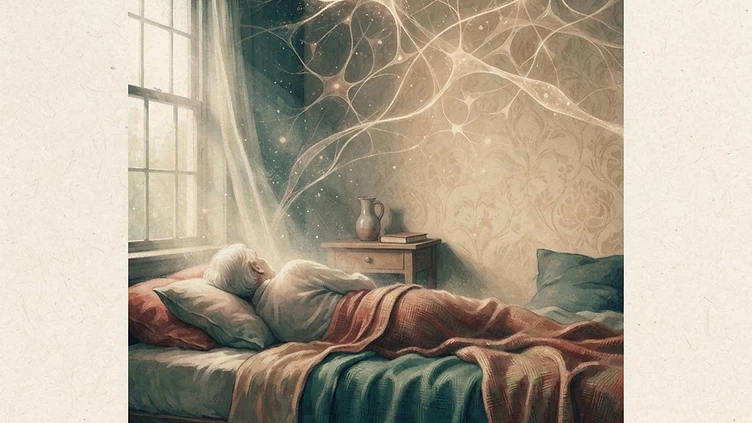
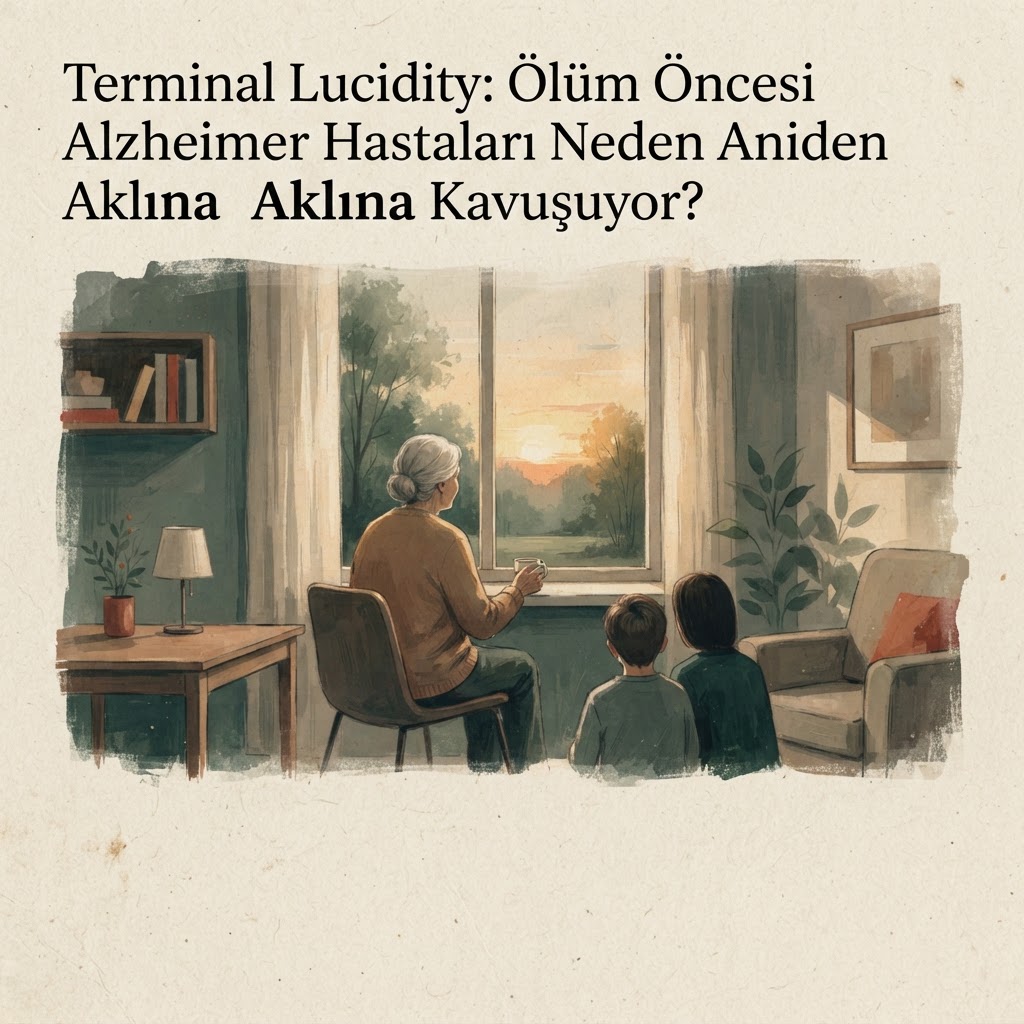
Doctors called it the final stage. A woman who had not remembered her daughter's name for years, failed to recognize her own face in the mirror, and got lost in the middle of sentences opened her eyes just hours before she died and addressed her daughter by her full name. Then she sang the lyrics of an old song from beginning to end, asked for coffee, and said she wanted to be forgiven. She passed away a few hours later. This scene is recounted time and again by nurses working in hospital corridors, staff in nursing homes, and families who have lost loved ones; in medical literature, this is known as terminal lucidity. The question seems simple, but the answer is anything but: how can a person whose brain has been deteriorating for years suddenly return to themselves on the brink of death? ## Unexpected Clarity This phenomenon is not merely an emotional exaggeration of a single case. These sudden moments of clarity, observed in Alzheimer's, advanced dementia, and even some cases of disorders of consciousness, have been recorded repeatedly across different cultures and continents by caregivers who have no contact with one another. The patient's ability to speak returns, they make eye contact, share details from the past, and often seem to realize that their own death is approaching. This repetitive pattern makes it difficult to dismiss as just the family seeing what they want to hear, because the same stories are independently reported by nurses and physicians who have never met. Of course, a skeptical voice might immediately object: perhaps a weary family interprets the final flicker in the eyes of their dying loved one into a meaningful sentence, or perhaps a slight flutter of the eyelids is read as recognition. This objection carries valid caution, but the details of the cases challenge this explanation. In the documented instances, the patient does not simply blink; they speak correct names, recount a specific memory from years ago with perfect accuracy, and sometimes even reveal a detail unknown to their own family members. The illusion theory might explain a singular moment, but it struggles to account for such a consistent and detailed pattern. For example, there is a scene frequently witnessed by nursing home staff: a patient who has been silent and non-communicative for years suddenly sits up, asks for tea, recites the address of a house they lived in long ago, or smiles at the air as if mentioning the name of a sibling who died years prior. In such a moment, time stops for those in the room, because the person before them is no longer the patient they knew, but the human they lost long ago. This brief window usually lasts for hours, sometimes only minutes, but it leaves an impression on the survivors that lasts for years. ## Moments That Contradict the Brain Map What neurology teaches us is clear: in neurodegenerative diseases like Alzheimer's, brain tissue is damaged in an irreversible way. The hippocampus shrinks, connections between neurons dissolve, and most of the brain tissue becomes covered with plaques and tangles. Once this structure is destroyed, it cannot be suddenly repaired by any mechanism known to medicine; cells do not regrow, and lost connections are not established overnight. Despite this, if the patient's mental clarity returns, the question becomes unavoidable: is memory and identity stored directly in that damaged tissue as we assume, or is there something that persists behind the tissue, in spite of it? A useful analogy might work here: think of a broken radio with a snapped antenna and corroded circuits that usually emits no sound. The failure of the radio does not prove that the broadcast itself does not exist; it only shows that the device's capacity to transmit the signal has weakened. Thinking of the brain not just as a source of transmission but as a receiver is an uncomfortable possibility for science, because it implies that the mind is not identical to the brain. Most of neuroscience rejects this analogy because the most solid evidence regarding consciousness still relies on the direct relationship between brain damage and loss of consciousness. Yet terminal lucidity stands as an inexplicable exception that suspends this direct relationship for a moment. ## The Uncomfortable Question of Medicine When medicine encounters this phenomenon, it tends to choose one of two paths: either to ignore it or to rush toward a biological explanation. According to the latter approach, a sudden neurochemical surge might occur in the brain just before death, oxygen deprivation might be firing neurons one last time, or the body might be providing the brain with a temporary boost of energy. These explanations sound reasonable, but none explain why the patient remembers the correct name at that exact moment, or why they can recount a lost memory in full. A random firing of a neuron creates noise, but it is not expected to produce a coherent sentence, a correct name, or a perfect memory. One reason for science's cautious behavior regarding this subject is the fear of losing credibility. Researching terminal lucidity can easily be pulled into discussions of spirituality or life after death; a serious researcher entering this field runs the risk of being lumped in with pseudoscience. Therefore, the topic survives in the margins of academic papers and the footnotes of case reports, either discussed superficially or not at all. Yet this reticence seems to stem not from the knowledge itself, but from the fear of where that knowledge might lead. Because the real question is not whether there is an afterlife, but whether identity and memory lie within the physical boundaries we think we know, or slightly beyond them. Perhaps terminal lucidity tells us more about the things we lose while living than about death itself. If the door that has been closed for years for a dementia patient finally opens, it makes one think that something has always been waiting behind that door, just unable to find a way to reach us. This is a concept that could transform the relationship of caregivers, families, and physicians with dementia: perhaps the forgotten person is not as lost as they appear, just inaccessible. Until science solves this riddle, those unexpected moments on the deathbed will remain a source of both hope and unease, reminding us of how little we know about the territory of our own minds.
İlgili Denemeler
Can the Human Brain Detect Magnetic Fields?
Geophysicist Joseph Kirschvink's experiment at Caltech indicates that the human brain responds to magnetic fields, raising questions about a potential sixth sense.
Jan Hendrik Schön: The Physicist Who Fooled Science
The scandal of Jan Hendrik Schön's fabricated data at Bell Labs highlights the critical vulnerabilities in the scientific peer-review system.
Barry Marshall Drank Bacteria to Prove Stomach Ulcer Theory
Barry Marshall made medical history by consuming harmful bacteria to prove that stomach ulcers are caused by an infection rather than stress alone.
Tartışma (0)
Henüz yorum yok. İlk yorumu siz yapın.
Join the Newsletter
New essays, once a week, delivered to your inbox.