Public Transport and the Control of Time on Our Bodies
Every step we take to catch the bus is essentially a confession of whose clock we are living by.
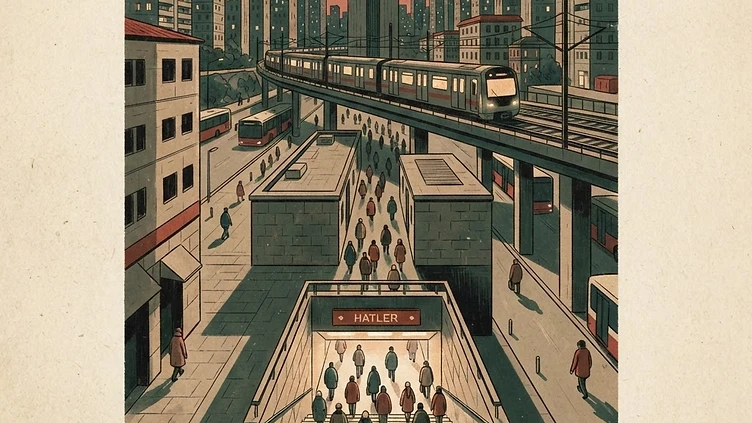
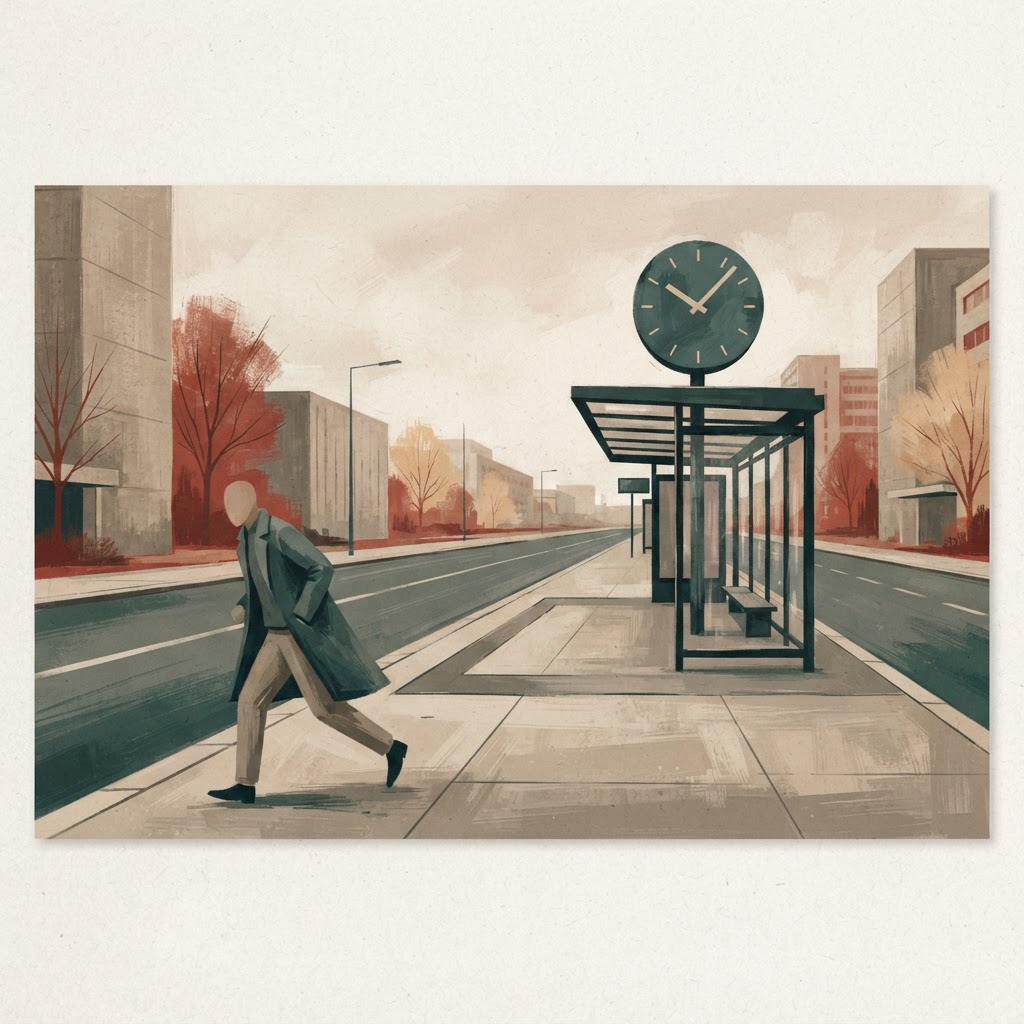
When someone checks their watch while leaving the house at seven in the morning, they are not following their own day, but rather a schedule drafted by someone else. If the bus passes at seven-twenty, that person must be at the stairs by seven-fifteen, regardless of whether they have finished their coffee or if they are missing a sock. We never question this small, invisible surrender because it is ingrained in the flow of daily life; yet, upon reflection, we realize that every step we take to avoid missing the bus is a silent confession of whose clock we live by. Here, the body is not an instrument, but an object of adaptation; the schedule shapes it, and it complies. ## The Clock Rules Us, Not the Other Way Around Our biological rhythm, when left to its own devices, operates on a strange logic: some days we wake up early, on others, our body demands more sleep. But the timetable of public transport does not recognize this fluctuation; it has set its metronome, and it expects everyone to follow it. The seven-thirty train departs at the same minute every day, indifferent to how a person feels. Over time, people grow accustomed to this indifference and learn to suppress their internal clocks. Sleep, meals, and even moments of reflection are sliced and shaped according to this external rhythm; because the schedule waits for no one, so people run. Some might argue that this is a form of liberation, suggesting that a regular schedule makes planning the day easier and reduces chaos. Perhaps they are right, to an extent. But the question that must be asked is this: is the convenience of order more valuable than the autonomy of the body? The sudden panic felt by someone who delays their morning departure by a minute is, in fact, a sign of belonging to an externally imposed time rather than one's own. The clock rules us because we cannot change it; we only adapt to it, and we do so without even noticing. ## A Silent Partnership with Strangers Over time, you come to recognize the people who wait at the same bus stop every morning, even if you never learn their names. The man in the red coat arrives at seven-twenty-five every day, the woman with headphones always looks at her phone, and the young man with glasses always runs just in time to catch it. Not a word passes between you, but a familiarity develops; if one day someone does not show up, you notice, and a subtle uneasiness stirs within you. This is a strange form of community in the modern city: a partnership that is wordless and anonymous, yet reassuring in its presence. The fragility of this partnership lies right there. No promises have been made, no formal bonds have been established; there is only a coincidence produced by adherence to the same schedule. That is why when someone changes their job or shifts their schedule, this small community dissolves silently, without anyone noticing. Yet, this fleeting companionship is one of the few moments that reminds us we are not alone in the city. Perhaps the city dweller has replaced grand narratives and shared ideals with these small, fragile silences; at seven-twenty-five, at the same bus stop, sharing the same cold. ## The City That Loses Time While Gaining Speed As cities accelerate, the human relationship with time shrinks in a peculiar way. Metro lines become more frequent, new rails are laid, and transfer times are shortened; every innovation is presented with the claim that it saves us time. But where does this saved time go? Mostly, it flows into another rush, another appointment, another schedule. Speed does not give us more free time; it only asks us to cram more things into the same time interval. The objection that comes to mind is this: speed is not a bad thing; on the contrary, it saves one from tedious waiting. True, waiting is tiring and sometimes meaningless. However, the real cost of speed lies in how a person experiences their own time. It is possible to watch outside, think, or even be bored while looking out the window of a slow tram; on a high-speed train, everyone looks at their phone because time is no longer something to be experienced, but an interval to be consumed. Speed arrives with the promise of freedom but actually establishes a new constraint: there is no longer permission to slow down because the system cannot handle it. This contraction also widens the gap between the rhythm of the city and the rhythm of the individual. A person sometimes wants to stop and look at something, listen to music, or remember a memory; but the schedule does not allow it because there is a risk of missing the bus arriving in a minute. Thus, one constantly sacrifices their internal time for an external one. This sacrifice becomes so mundane that it goes unnoticed; only one day, perhaps when the train schedule changes, does a person realize how little of their time actually belongs to them. The speed of the city also reveals which moments of a human being are considered unimportant. While a one-minute delay feels like a great loss, an hour of meaningless waiting sometimes passes unnoticed; because in the first case, the discipline of the schedule has been violated, while in the second, the individual has merely spent their own time, which is not in anyone's ledger. This distortion shows how externalized the modern person's relationship with time has become. ## Conclusion Perhaps the issue is not whether the schedule is good or bad, but how silently it has permeated our existence. The fast steps we take every morning to catch the bus and the meals we plan every evening according to train times leave us no opportunity to question who our bodies belong to. The schedule disciplines us, and we accept this discipline without realizing it; because the alternative requires the arduous effort of rebuilding our own time. Maybe sometimes, stopping and daring to miss the next bus is the first step toward returning to our own clock.
İlgili Denemeler
Doorman Culture: The Loss of Community in Cities
This essay explores how the erosion of the apartment caretaker profession has transformed urban neighborliness, trust, and the collective memory of the neighborhood.
Hostile Architecture: Excluding Bodies in Public Spaces
In modern cities, a simple metal fixture added to benches silently exposes who public spaces are intended for and whose presence is systematically excluded.
The Third Place: Where Did Our Sense of Belonging Go?
Drawing on Ray Oldenburg's concept of the third place, this piece explores the societal cost of the vanishing communal spaces that once defined our daily lives.
Tartışma (0)
Henüz yorum yok. İlk yorumu siz yapın.
Join the Newsletter
New essays, once a week, delivered to your inbox.