The Third Place: Where Did Our Sense of Belonging Go?
As coffeehouses, squares, and libraries nestled between home and work fall silent, where do we seek refuge?
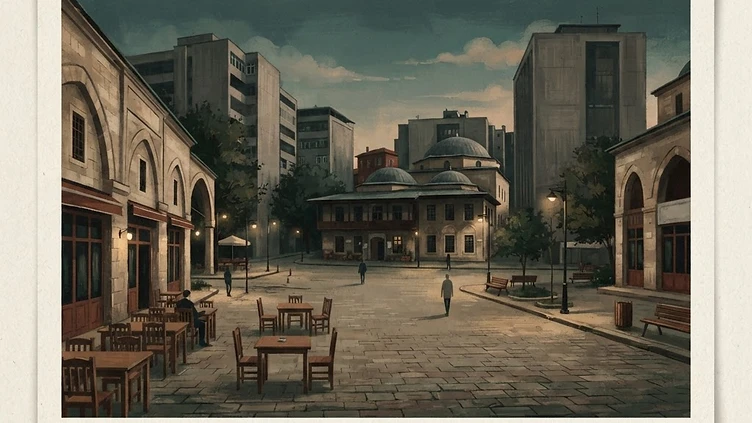
The coffeehouse in my neighborhood closed last winter. I was one of the last customers to visit before the for-rent sign went up in the window; the clatter of backgammon tiles still echoes in my ears, and the old wall calendar remains fixed in my memory. Now, as I pass that corner, I wonder: who will listen to the old man who used to sit at that table? As we rush between home and work, where are we actually seeking refuge? This question always whispers the same name to me: Ray Oldenburg and his concept of the third place. Perhaps what we have lost is not just a building, but a habit, a sense of belonging itself. ## The Gap Between Home and Work Oldenburg divides human life into three realms: home is the first, work is the second, but the third is the most intriguing because it is neither private nor compulsory. The coffeehouse, the barbershop, the corner grocery, the local tea house; these are places where people go without obligation, simply to spend time with others. Modern life, however, is stripping us away from this middle ground. We leave home for work in the morning and go straight home in the evening; the stops in between are vanishing because our time, like our spaces, is being compressed. Traffic, overtime, deadlines; they all trap us in a straight line between two points, leaving no room for unexpected conversation along the way. Perhaps you will object: isn't home already a social space, with family tables, dinners, and guests? It is not enough, because home serves a different purpose. Those who know you there already know you; the magic of the third place lies in the fleeting yet genuine bond you form with a stranger simply because you sit at the same table. In a coffeehouse, nobody expects anything from you, and there is no hierarchy; the boss and the apprentice sit on the same stool. The warmth of home and the egalitarian coolness of the square serve different needs, and we are losing that need without even realizing it. ## From Coffeehouse to Application As physical gathering spaces empty out, what fills their place is not a new community, but an icon on a screen. An apartment WhatsApp group has replaced greeting the doorman; the bargaining at the local market has turned into the order confirmed notification of a delivery app. This shift seems practical at first, even liberating for some, because nobody has to wait in line or talk about the weather anymore. But these small, non-essential moments were precisely what wove the fabric of the community. Catching the eye of a doorman and smiling, answering a grocer's inquiry about your well-being; though these may seem trivial, they were the rituals that made a person belong somewhere. Of course, you might argue that digital platforms also foster connection, and you are right: people sharing the same illness find each other on forums, and hobby groups in distant cities form friendships without ever meeting. This is an undeniable gain. However, such connection does not require the physical presence of the body, whereas the essence of the third place is physical togetherness. A message on a screen cannot convey the silence of the person next to you, the steam rising from a cup, or the hue of the light on the table. The sense of community does not deepen because depth requires time and embodiment; digital contact is built on speed and distance. That is why, as our number of connections increases, our sense of loneliness strangely grows as well. ## Reinventing the Square Yet all is not lost. Some cities have realized that the third place does not emerge spontaneously and can be rebuilt through conscious design. Libraries are no longer just shelves of books; they now host reading nooks, free internet, and children's play areas, inviting people not just to borrow, but to linger. Parks are being redesigned with more benches and shaded trees to become conversational hubs, and squares converted into pedestrian zones are bringing people together by removing cars. These examplesss show that the third place has not disappeared; it simply requires conscious effort. The spontaneous culture of the old coffeehouse is now being replaced by a planned intention. However, this reinvention does not work with equal success everywhere. In some cities, renewed squares drive away long-term residents through rising rents; new cafes look beautiful, but their prices prevent the customers of the old coffeehouses from entering. Thus, the rebirth of the third place can sometimes carry the appearance of a revival while harboring an underlying exclusion. Nevertheless, one must acknowledge that at least the possibility remains: humans can come together again through well-designed spaces. The key is to build such designs with a sense of sharing before profit, viewing the square as a ground for meeting rather than a display window. Perhaps the issue is not just the coffeehouse or the square itself, but remembering the value of the time accumulated within them. Each of us is looking for a third place in our own neighborhood, on our own street, or creating one without realizing it; even making eye contact with the person next to us while reading a book in a cafe could be a small start. Perhaps the question should no longer be where do we seek refuge, but what small space are we willing to revive. For the third place is not a building, it is a habit; and habits, before they are lost forever, always leave one final opportunity.
İlgili Denemeler
Doorman Culture: The Loss of Community in Cities
This essay explores how the erosion of the apartment caretaker profession has transformed urban neighborliness, trust, and the collective memory of the neighborhood.
Hostile Architecture: Excluding Bodies in Public Spaces
In modern cities, a simple metal fixture added to benches silently exposes who public spaces are intended for and whose presence is systematically excluded.
Dunbar's Number: Why Are Our Social Connections Limited?
Robin Dunbar's discovery of the number 150 reveals that, even in the digital age, our seemingly infinite social circles are bound by strict biological limits.
Tartışma (0)
Henüz yorum yok. İlk yorumu siz yapın.
Join the Newsletter
New essays, once a week, delivered to your inbox.