Starfish Prime: The Nuclear Test in Space
Conducted outside the atmosphere in 1962, this test lit up the sky like an aurora and caused damage to Earth's magnetic belts that persists to this day.
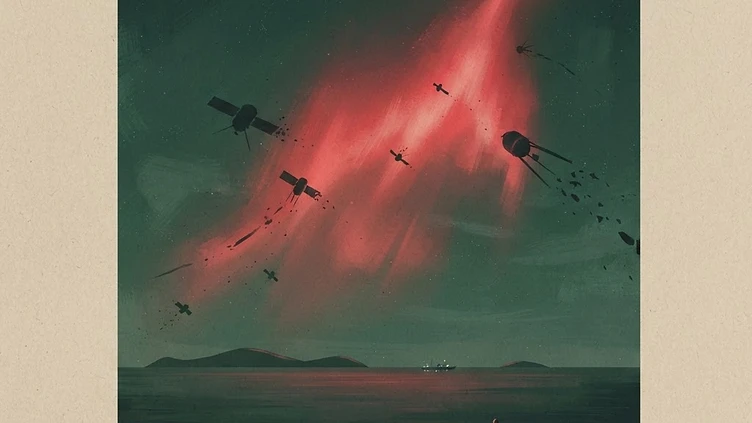
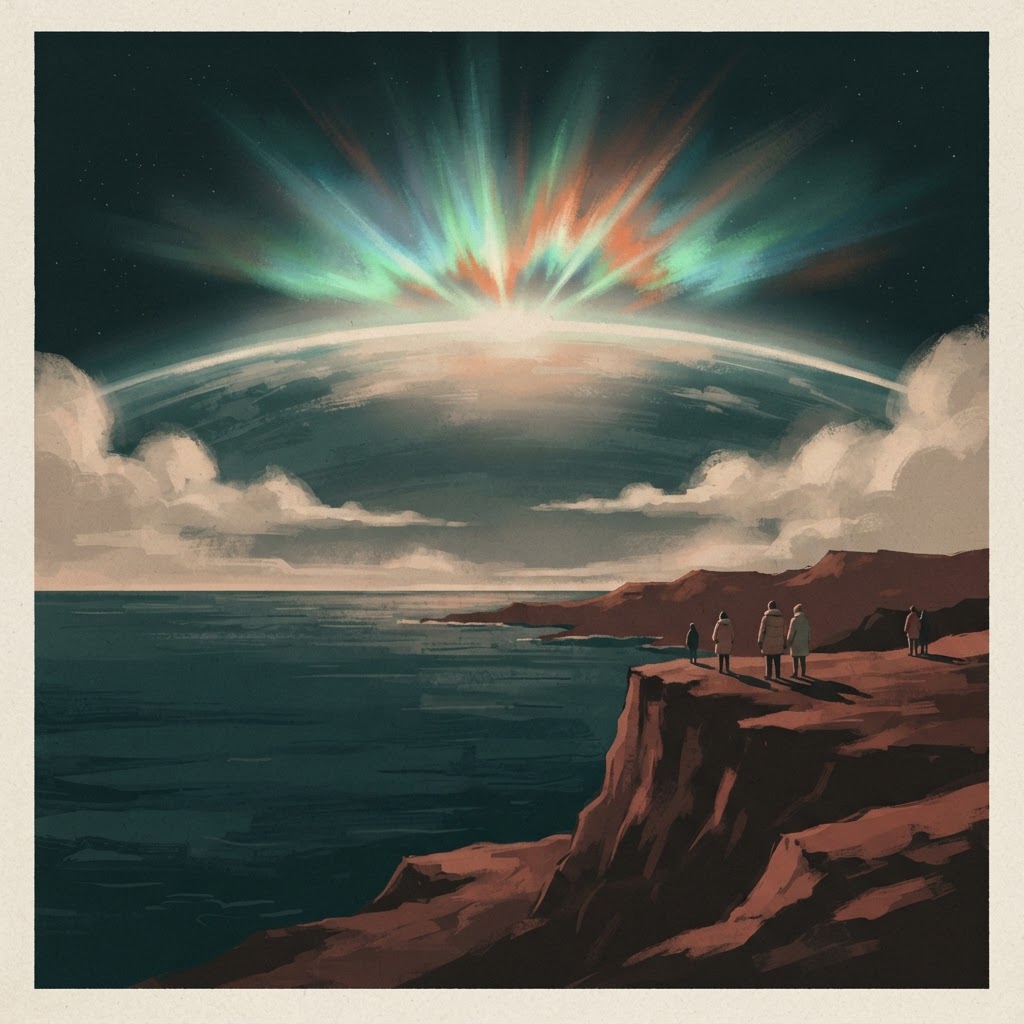
In the middle of the night, the sky above a Pacific island suddenly turns crimson, then green; fishermen gaze in bewilderment under this strange light, unaware that they are not witnessing an aurora. This is the scene with which Starfish Prime enters history: the artificial day turned into night by a nuclear bomb detonated far above the atmosphere by human hands. Remembering this test today is not merely repeating an old Cold War anecdote; it is witnessing how little humanity understands its own power, yet remains willing to test it. This brings us to the fundamental question: when an experiment is conducted in an area where the consequences are unknown, is it science, or is it gambling? ## An Artificial Aurora in the Sky In 1962, the United States launched a nuclear bomb above the Pacific Ocean to an altitude near space. The goal was to see what a nuclear weapon detonated at high altitude would do, as no one at the time knew for certain. The spectacle that followed the detonation far exceeded expectations. In the middle of the night, the sky over the Pacific suddenly lit up as if it were day, followed by waves of light in shades of red and green. Observers thousands of kilometers away in Hawaii could clearly see this light; it was as if an aurora, usually seen at the poles, had suddenly appeared as a human-made replica in a region near the equator. This optical effect alone caught the scientists of the era unprepared, as there were no clear models for how a nuclear explosion would behave outside the atmosphere. In a vacuum, no shock wave forms, but the energetic particles produced by the explosion interact with Earth's magnetic field to emit light. Interestingly, a weapons test had effectively transformed into an astrophysics experiment. Humans had designed nuclear power for destruction, but the result was the visualization of the planet's magnetic field. This strange duality makes Starfish Prime not just a military event, but a scientific discovery made unintentionally. ## Permanent Damage to the Van Allen Belts When the light show ended, the real story had not even begun. Around the Earth, there is a natural layer of electrons and protons called the Van Allen belts that shield the planet from cosmic radiation. The Starfish Prime explosion added an artificial layer to this natural belt; the bomb injected its own electrons into the region, significantly raising existing radiation levels. This increase did not remain a one-time event; the artificial electron belt persisted for months, perhaps even longer according to some estimates, affecting many satellites in orbit during that time. There were few but valuable satellites in orbit at the time, and a significant portion of them were damaged by this artificial radiation. Solar panels failed, electronic systems stopped working, and some satellites became completely unusable. The irony here is that the U.S. conducted this test for strategic superiority, but ended up damaging its own satellites. This point illustrates how humanity can ignore boundaries when interfering with nature. No one had objected beforehand by saying we could break this belt so easily, because no one knew. Scientists realized after this test that the magnetic shield surrounding the planet was a much more sensitive and less understood structure than they had imagined. ## Shedding Light on Today's Space Security Debates More than sixty years have passed, but Starfish Prime remains a key reference point. The reason is simple: this test remains the most concrete, verified data we have on the actual effects of high-altitude nuclear explosions. Computer simulations have advanced significantly, but who could claim that a simulation can fully replace an actual detonation? Today, defense strategists, space security experts, and even civilian satellite operators still rely on data from 1962 when discussing how a high-altitude nuclear detonation would affect modern satellite infrastructure. Today's world is much more dependent on satellites than it was back then; GPS, communications, weather forecasting, and even banking systems rely indirectly on infrastructure in space. A similar event—a nuclear explosion or a powerful electromagnetic pulse occurring at high altitude—would mean much greater destruction today. Some might say this is impossible, assuming that risks are brought under control as technology develops. But Starfish Prime offers the opposite lesson: humans can act without fully grasping the consequences of the power at their disposal, and that power can leave a mark on a planetary scale. This is why an old test never loses its relevance; because the question it asks remains unanswered: if the same mistake were repeated in today's much more crowded space traffic, who would pay the price? When I think of Starfish Prime, what remains in my mind is a photograph not of an explosion, but of ignorance. Humans touched that invisible shield around the planet without fully understanding it, and the consequences lasted for months, perhaps longer. Today, we look at the same region with a much denser network of satellites; the trace left by the old test serves as a warning of the sensitivity still there. Perhaps the most striking question is this: when humanity experiments again in an area where it does not know its limits, who will pay the price this time, and how?
İlgili Denemeler
Can the Human Brain Detect Magnetic Fields?
Geophysicist Joseph Kirschvink's experiment at Caltech indicates that the human brain responds to magnetic fields, raising questions about a potential sixth sense.
Jan Hendrik Schön: The Physicist Who Fooled Science
The scandal of Jan Hendrik Schön's fabricated data at Bell Labs highlights the critical vulnerabilities in the scientific peer-review system.
Barry Marshall Drank Bacteria to Prove Stomach Ulcer Theory
Barry Marshall made medical history by consuming harmful bacteria to prove that stomach ulcers are caused by an infection rather than stress alone.
Tartışma (0)
Henüz yorum yok. İlk yorumu siz yapın.
Join the Newsletter
New essays, once a week, delivered to your inbox.