Silent Trade: The Ancient History of Trust and Economy
How was a form of trade possible for centuries without a single word spoken or a face ever seen?
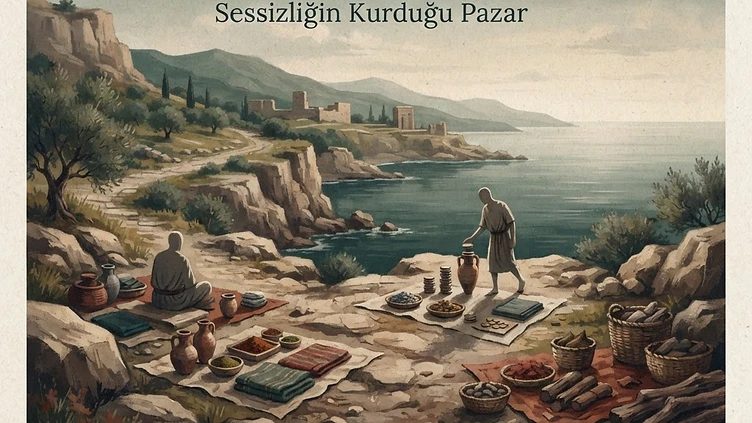
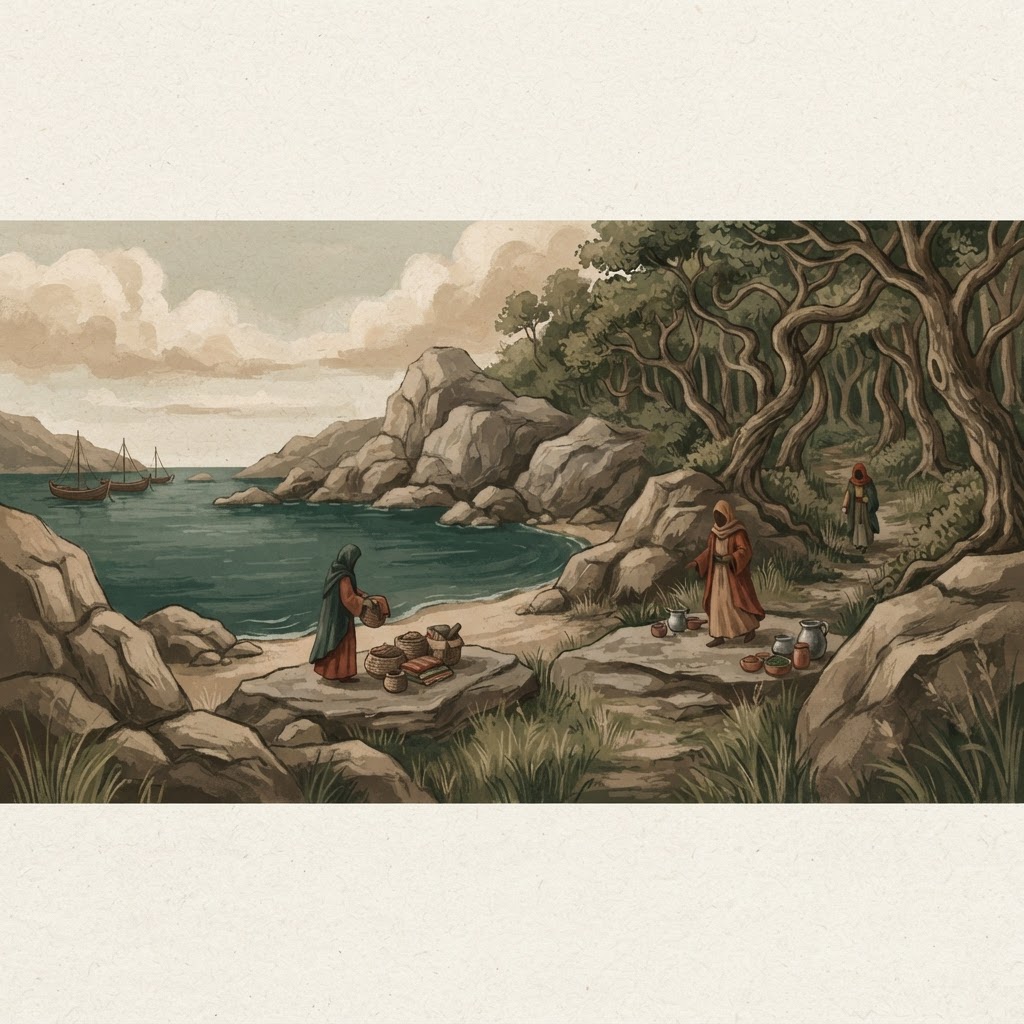
Consider this: can you engage in a transaction without ever meeting someone's eyes, speaking a word, or even seeing their face? Today, the answer seems simple, as this is exactly how we shop online. However, there is a scene described by Herodotus centuries ago that answers this question without the aid of technology, relying solely on the nuances of human behavior. This form of exchange between Carthaginian merchants and local populations on the North African coast knew neither written contracts nor arbitrators. Yet, it functioned effectively for a long time. I am writing this text because silent trade is a forgotten reminder of how little trust actually requires. ## The Rules of a Mute Exchange The scene described by Herodotus functioned as follows: one party, such as merchants arriving by sea, would leave their goods on the shore and withdraw, sometimes signaling their presence with smoke. The other party would arrive, inspect the goods, and place an amount of gold or another valuable item they deemed appropriate in return. Then they would also withdraw. If the first party returned and found the compensation sufficient, they would take it and leave; if they found it insufficient, they would wait without touching it, and the second party would see this and increase the offer. These back-and-forth movements continued until the parties reached an agreement. What is most striking here is not the existence of bargaining, but that bargaining could occur without requiring a single word. The functioning of this system shows us that language plays a less central role in human relations than we often assume. In silent trade, the rules were not written, yet they were not absent. Both parties knew this pattern of behavior, practiced it repeatedly, and this repetition became a contract of sorts. Here, it was habit, not paper, that created the agreement. One might think of the amount of gold left on the shore then as carrying the same meaning as a handshake or a signature in a meeting today. The difference was that this gesture lacked any legal enforcement; it relied solely on the predictability of mutual behavior. ## Trust Can Exist Without Institutions Today, when we make a purchase, we are actually trusting a vast, invisible network of institutions. Banks, courts, consumer rights regulations, contract law... they all work in the background, even if we do not notice them. This structure provides us with such comfort that we forget trust is not a natural occurrence, but something constructed. Yet, silent trade demonstrates how trust can be generated without this institutional skeleton. What produced trust here was not the fear of sanction, but the continuity of mutual interest. If one party had attempted to cheat, the relationship would never have been established again, and both parties knew the cost of that. An objection comes to mind: what if someone cheats? Historical records do not suggest this system functioned entirely without deception, but the system itself carried a mechanism that punished cheating because once trust was broken, the entire trade relationship ended. In other words, the penalty was not a court ruling but the termination of the relationship itself. This tells us something interesting: the most solid form of trust can sometimes be a balance based on the parties' own interests rather than a rule imposed from the outside. Modern economics seems to have forgotten this because we link every relationship to a contract and every contract to a sanction. Yet, silent trade shows that trust can sometimes produce itself without any external coercion. At this point, it must be added: the success of silent trade might have been possible not in spite of the parties not knowing each other, but precisely because of it. Since they did not meet face-to-face, it eliminated the tension, emotional manipulation, and pressure that could arise during bargaining. The parties did not trust each other as individuals, but through the goods.nd compensation they left—that is, solely through their behavior. This is familiar in today's digital world, is it not? ## Today's Contactless Trade When I place an order on an online shopping platform today, I do not know who is on the other side. I do not see the seller's face, hear their voice, or shake their hand. Yet, I send the money because the system provides me with a guarantee that if the product does not arrive, my money will be refunded. Here, the guarantee is produced by the platform itself, an institution. But in some digital currency systems, even this institution does not exist; what produces trust is a ledger visible to everyone that cannot be altered, and the constant verification of this ledger. Here, just as in silent trade, parties exchange value without knowing each other and without any intermediary institution. The difference lies in the nature of the tools. In silent trade, trust was produced by repeated behavior; in today's intermediary-free systems, it is produced by mathematical verification and transparent records. But the problem they both strive to solve is the same: how two strangers can exchange value without looking at or believing in each other. This makes me think that the problem of trust has not changed throughout human history; only the tools for the solution have. The gold left on the shore once has become an encrypted record on a blockchain today. Both answer the same question: even if I do not see you, how can I trust you? There is an interesting irony here. While we think technology connects us more to each other, the most advanced digital systems actually distance us from one another, much like how silent trade kept two parties on the shore apart. Perhaps this distance is not a condition of trust, but sometimes the very thing that makes trust possible. Because a form of relationship where only behavior and results speak, free from the emotional bargaining, persuasion, and pressure that come into play when we meet face-to-face, may well be the purest form of trust. Reflecting on silent trade, one is compelled to ask: does trust really require language, contact, and familiarity, or are these just the crowded tools we use while building trust? Perhaps the most fundamental form of trust is that silent agreement established by repeatedly doing a behavior correctly without saying a word. The thousands of years between the gold left on the shore and today's encrypted records show us that humanity has always grappled with the same question. Only the form of the silence has changed; the silence itself has perhaps remained as the oldest and most permanent language of trade.
İlgili Denemeler
The Mechanical Turk: History's Chess-Playing Mystery
The chess-playing automaton known as the Mechanical Turk deceived figures like Napoleon and Benjamin Franklin, masking a hidden human operator as a machine.
Bournville: The Utopian Town Built by Chocolate
The streets, gardens, and teetotal order of Bournville reveal how the Quaker faith imprinted a distinct form of morality upon the foundations of industry.
Levi's: The Story of Riveted Jeans Born from Gold Rush
In 1873, a tailor's discovery of a riveted solution for torn pockets redirected the true fortune of the gold rush toward the enduring garment industry.
Tartışma (0)
Henüz yorum yok. İlk yorumu siz yapın.
Join the Newsletter
New essays, once a week, delivered to your inbox.