Bournville: The Utopian Town Built by Chocolate
In selling chocolate, the Cadbury family was actually constructing a moral order.
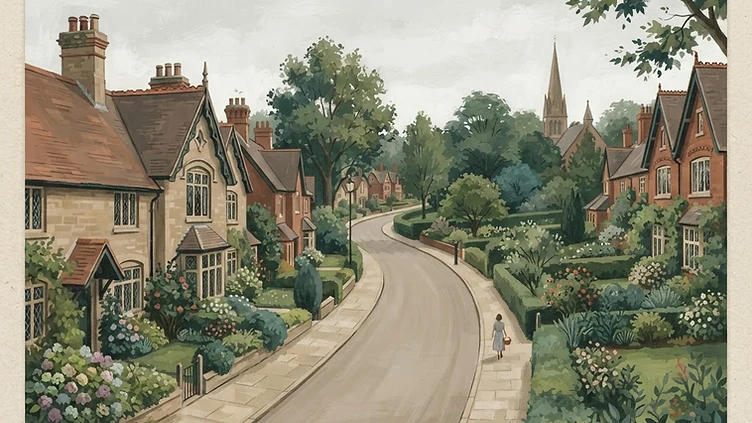
Have you ever wondered if there is a sense of guilt attached to the taste of chocolate? Perhaps not, because in our minds, chocolate aligns not with sin, but with childhood memories, holidays, and small rewards. Yet, in nineteenth-century England, there was a period when sugar, especially chocolate, carried a heavy moral burden. The Cadbury family did not merely alleviate this burden; they built a new morality upon it. Walking through that extraordinary company town called Bournville, one wonders: what was a family actually selling while selling chocolate? The answer lies deeper than we might think; for what was being sold there was not just cocoa, but a way of life. ## Translating Religion into the Factory The Quaker faith was a movement that stood on the margins of British society, eschewing ostentation and regarding simplicity as a virtue. The Cadbury family lived this faith not only during Sunday services but carried it through the factory gates every day of the week. While the relationship between worker and employer turned into a ruthless reckoning in most industrial cities, in Cadbury’s workshops, it became a matter of conscience. The employer was not merely someone paying wages; they felt partially responsible for the worker's spiritual salvation. This sense of responsibility transformed, in a peculiar way, into a discipline that emerged long before most modern management concepts. Today, working hours, leave days, and even canteen arrangements in a factory are considered products of management science. In Cadbury, however, these arrangements were rooted in religion. Working hours were distilled from the Quaker doctrine regarding the use of time; idle time was not a blessing, but a test. The reading rooms, sports fields, and even music groups established for the worker's self-improvement were the industrial translation of the faith's principle that the human soul must not be left empty. Some may object; you might argue this was just a cunning way to create more productive workers. But the persistence seen in the Cadbury family’s letters and records points to an obsession far more complex than mere profit; they wanted their faith to seep into every corner of the factory because, according to their belief, work itself was a form of worship. ## The Morality of Stone and Grass When you first step into Bournville, you do not think you are in a factory town, but in a garden city. The streets are wide, the houses have front gardens, and trees are planted at regular intervals; as if someone believed that by organizing a person's surroundings, one could also organize their soul. In fact, they did believe that. When the Cadbury family designed the neighborhoods where workers lived, they used architecture as a tool of control; but this control was not established with walls and cameras, but with grass, light, and distance. It was no coincidence that every house had its own garden; they wanted family life to take root on its own soil, not in the corners of taverns. There were no taverns in Bournville; this was a deliberate void. The Quaker tradition, which believed alcohol was the greatest enemy of the working class, applied this belief to the town's plan to the letter. Imagine a town that has no bar, but has a library, a swimming pool, and a tea garden. One asks: is this a restriction of freedom or a design for well-being? Perhaps both. Because architecture here did not just meet the need for shelter, it shaped behavior; the width of the street pushed people to walk, the garden to engage with the earth, the library to read. Stone and grass worked here like silent preachers. ## The Commercial Face of Philanthropy Was this well-being that Cadbury offered its workers pure altruism? This is where things get complicated, because this investment has two faces. On one hand, an unrequited generosity viewed as a religious duty; on the other, a brand strategy that modern marketing had not yet named but which functioned flawlessly. Perhaps the Cadbury family was first easing their own conscience by treating their workers well, but this relief had a commercial echo. Chocolate produced by clean, healthy, happy workers took on a new meaning in the eyes of the consumer; it was as if inside the box, not just cocoa, but a sense of moral ease was being sold. You could dismiss this as just a good marketing story, and there is merit in that objection. But the matter is not that simple; for there are investments in the Cadbury family archives that have no direct return on profit, tasks done purely because the faith required them. Still, it must be admitted: this moral stance eventually turned into perfect advertising material. As people bought Cadbury chocolate, they felt they were somehow purchasing the gardens of Bournville and its tavern-free streets. Religion and commerce did not devour each other here; they fed each other. One provided legitimacy for the other, while the other created a market for the first. Imagine a worker leaving the workshop at the end of the day, returning to their own garden, and sharing a chocolate produced by Cadbury with their children. In this scene, religion and commerce meet in the most concrete way; the well-being the worker enjoys turns into the story of the product they produce, and the consumer buys this story. The Cadbury family might not have designed this as a conscious marketing move, but the result led to the same place: goodness became a commodity that advertised itself. Anyone visiting Bournville today might see only a pleasant garden city; but one must realize how, behind those stones, those grasses, and those tavern-free streets, a family transformed their faith into a way of life, and a way of life into a business. The Cadbury story reminds us of this: sometimes the most mundane product is built upon the most complex moral order. Sugar itself may be sinless, but the order that produces it is never merely a commercial matter; for behind every design decision lie the traces of a belief, a fear, or a hope. Perhaps the question we should ask today while eating a chocolate is this: what order, what faith, what control is hidden behind this taste?

İlgili Denemeler
The Mechanical Turk: History's Chess-Playing Mystery
The chess-playing automaton known as the Mechanical Turk deceived figures like Napoleon and Benjamin Franklin, masking a hidden human operator as a machine.
Levi's: The Story of Riveted Jeans Born from Gold Rush
In 1873, a tailor's discovery of a riveted solution for torn pockets redirected the true fortune of the gold rush toward the enduring garment industry.
Kurukahveci Mehmet Efendi: A Brand Story
This essay explores how a small shop established in 1871 Istanbul turned a simple name into an enduring brand of trust through the consistency of coffee production.
Tartışma (0)
Henüz yorum yok. İlk yorumu siz yapın.
Join the Newsletter
New essays, once a week, delivered to your inbox.