Aspirin: From War Reparation to Global Brand
The story of how a medicine name patented by Bayer in 1897 became a common language for everyone as a form of war reparation.
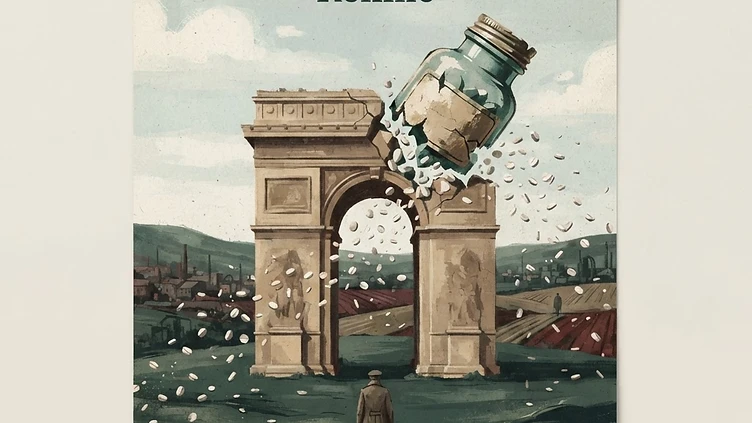
It feels strange to think that a word, just like a piece of land or a ship, can change hands. Brands often appear to us as abstract, intangible entities, far removed from the crude realities of war; yet history offers a peculiar example that proves otherwise. A medicine's name was laid on the table as a reparation item, entered into treaty texts, and ultimately transformed into a word that belongs to no one but is used by everyone. The story of Aspirin, therefore, is not just the story of a painkiller, but the story of how a word was nationalized. How does a name become part of a war? To ask this question is to shake the assumptions we hold about what a brand is. ## The Birth of a Molecule Could Felix Hoffmann, working in Bayer's chemistry laboratory in 1897, have guessed that his success in stably producing acetylsalicylic acid would still be discussed a century later? Perhaps he did, or perhaps he was merely concerned with solving the chemical problem before him. But for the Bayer company, this moment was more than a scientific achievement: there was a product, and that product required a name, an identity, and a market. When the name Aspirin was chosen, we were witnessing the birth of a marketing strategy, not just a molecule. The company registered this name because it knew that what was truly valuable was not the formula itself, but the word that would define that formula in the minds of people. What is interesting here is how science and commerce became inseparable. The work Hoffmann did at his laboratory bench was merely an effort to reduce a side effect; he wanted to soften the irritating effect of salicylic acid on the stomach. Yet in Bayer's hands, this technical correction turned into a global brand. Perhaps this is the most striking feature of modern capitalism: even the most modest scientific improvements can turn into massive economic value when packaged with the right name. In this sense, Aspirin was one of the first great examples of a pattern established at the turn of the twentieth century; the distance between science and branding had been reduced to almost zero by Bayer. ## A Name Declared Enemy Property Yet history has a mischievous side: the conditions that make something strongest can also be the very ones that leave it most vulnerable. When World War I broke out, Bayer was no longer just a German name but one recognized globally; however, it was precisely this global recognition that would work against the company at the end of the war. In peace treaties with Germany, Allied powers did not just focus on territory and military restrictions; they also brought economic assets to the table. Bayer's Aspirin brand was one of these assets, and as part of war reparations, it was nationalized in Allied countries. A company's most precious intellectual property had suddenly been listed as war booty. Let us try to imagine what that feels like: you wake up one morning and the name your company spent years building, which people trusted and thought of when they were ill, is no longer yours. In the United States, the word aspirin was declared generic by a court ruling, meaning any manufacturer could now use it. While this might seem like a technical legal detail, it was, in reality, the state-mandated stripping away of a company's identity. Some might see this as fair compensation, arguing that countries having experienced the devastation of war deserved a return from Germany. But the interesting point here is that the compensation was not land or money, but a word. War was redrawing not just borders, but language itself. ## The Legacy of Imitation An unexpected irony enters here. When Bayer lost the brand, the word aspirin did not die; on the contrary, it began to live everywhere. When a brand moves from private ownership to becoming common property, it does not disappear; paradoxically, it becomes immortal. No matter where you go in the world today, you hear the word aspirin, and no one remembers that Bayer was once.e.e behind it or that the name changed hands after a war. The moment a name became independent of its owner, it ceased to be the name of an institution and became a concept. This shows us that the greatest success of a brand may be to lose its specific identity and become part of general language, much like thermos or nylon. Of course, to think this way is to underestimate the loss Bayer felt at the time. For the company, this was a financial blow, signifying years of legal battles and concerns over reputation. But from a historical distance, we see that everything lost also transforms into a gain. If Aspirin had remained a registered trademark, would it be as widespread or as integrated into daily language today? Perhaps the opposite would have occurred; tightly protected brands usually remain within certain limits, whereas liberated words proliferate boundlessly. Here, imitability appears not as a weakness, but as a form of legacy. Today, when you walk into a pharmacy and ask for aspirin, you are actually pronouncing a word that carries the traces of a treaty signed a hundred years ago, a war, and a company's loss. This reminds us that words have their own histories, sometimes shaped at a laboratory bench, other times in the halls of a peace conference. Perhaps the most interesting aspect of language is that it is full of such silent migrations; something private becomes common for a time, and then can never be private again. The word aspirin, as one of the best-known examples of this silent migration, still tells us this story, unknowingly, with every headache.

İlgili Denemeler
The Mechanical Turk: History's Chess-Playing Mystery
The chess-playing automaton known as the Mechanical Turk deceived figures like Napoleon and Benjamin Franklin, masking a hidden human operator as a machine.
Bournville: The Utopian Town Built by Chocolate
The streets, gardens, and teetotal order of Bournville reveal how the Quaker faith imprinted a distinct form of morality upon the foundations of industry.
Levi's: The Story of Riveted Jeans Born from Gold Rush
In 1873, a tailor's discovery of a riveted solution for torn pockets redirected the true fortune of the gold rush toward the enduring garment industry.
Tartışma (0)
Henüz yorum yok. İlk yorumu siz yapın.
Join the Newsletter
New essays, once a week, delivered to your inbox.