Ralph Lauren: From Bronx to American Aristocracy
A child of immigrants with no noble lineage transformed his dream of an English gentleman into a wearable legend.
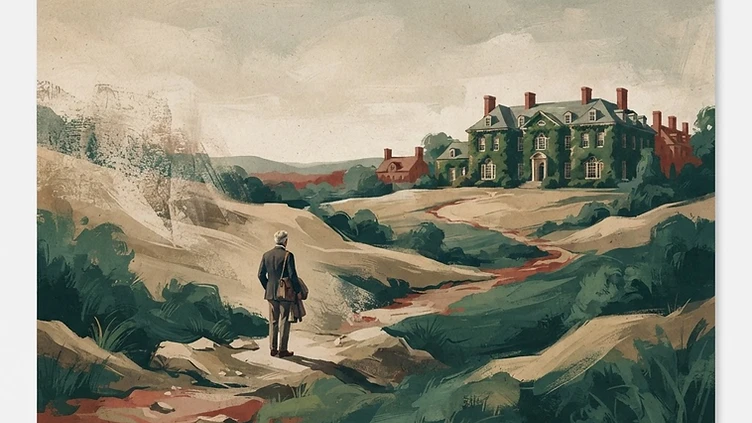
Does a brand's logo truly need to represent the class it carries, or is it enough to construct the most convincing fantasy of that class? Every time I look at Ralph Lauren's story, this question arises, for the empire he built sells not an existing reality, but a reality he believed should exist. For a child of immigrants growing up in the Bronx, translating the atmosphere of British estates he had never stepped foot in into a wearable language is a peculiar lesson not only in fashion history but also in identity formation. Because what is being told here is not the success of a tailor, but the persuasive power of a dream.## A Dream Born in the Bronx Ralph Lifshitz grew up in one of New York's working-class neighborhoods as the child of an immigrant family. The life he saw around him did not overlap with the life he watched on the movie screen; that effortless elegance in old Hollywood films, the perfectly cut jackets, the confident postures of men photographed on horseback signaled a world that did not belong to him but one he desperately wanted. Most children forget such fantasies as they grow up, surrendering themselves to the reality of daily life. But for Lifshitz, these images became not an escape, but a project; he acted as if there could be a way to carry that elegance he saw on screen into his own life. Choosing to change his name to Ralph Lauren was the first and sharpest step of this project. A name change might seem like a simple marketing decision, but there is something deeper here; a person decides to rewrite his own biography. I ask myself: can a person build a new identity upon their past without denying it? Lauren's answer was to do both. He never hid the streets of the Bronx, but he put the material those streets gave him at the service of the gentlemanly ideal in his mind. This was a translation rather than a denial; it was the act of translating the language of deprivation into the aesthetics of wealth.## Inventing Aristocracy The choice of the Polo logo was no coincidence. This sport, played on horseback, was a symbol of privilege that almost no one in America actually practiced but everyone recognized in some form. Even though Lauren had never been a part of this world, he took this symbol and placed it at the heart of his brand. What is interesting here is not that the falsity went unnoticed, but that it was accepted even when it was recognized; people knew this logo did not represent true nobility, yet they wanted to believe in it anyway. Perhaps the power of every fantasy comes from this: clinging to something because it makes us feel good, even though we know it is not real. Someone might say: this is just an imitation, a simulacrum, a performance without authenticity. This objection is not unfair. But what is overlooked here is that imitation itself can be a creative act. Lauren did not copy the true history of the British aristocracy; he took its aesthetic codes and blended them with the American dream's narrative of individual ascent. The result was neither entirely British nor entirely American; it was a new visual language, a new class fantasy of its own. Therefore, calling what he created fake would be to miss the essence of the matter; he did not just invent a past that did not exist, he gave that past a form that everyone could believe in. The most striking aspect of this invention process was that Lauren made his own image a part of this fiction. In advertising visuals and photos taken with his own family, he always appeared within that same elegant, slightly distant, and nostalgic world. This is perhaps one of the oldest and most effective examples of a brand founder turning his own life story into marketing material. The viewer believed they were purchasing not the product, but the life of its owner; yet what they were buying was an industrially reproduced version of one man's childhood dream.## Selling a Lifestyle The true revolution of the Ralph Lauren brand was selling the narrative woven around the garment, not the garment itself. When you bought a shirt, you were not buying a piece of fabric, but a way of life that the fabric promised you; you were becoming an imaginary part of yacht clubs, English country houses, and elegance passed down from generation to generation. This was the first major application of a formula that would be repeated many times in luxury marketing later on. While previous luxury brands usually highlighted their craftsmanship, materials, and mastery, Lauren sold a sense of belonging instead; it was not the quality of the product, but the promise of the social status the product conferred upon you that stood out. The fact that this strategy worked shows how universal the human desire for class is. No one had to actually become a member of the British aristocracy; it was enough to believe that by wearing its visual codes, they could bring a piece of that prestige into their own lives. There may seem to be a contradiction here: selling the aesthetics of an elite class to everyone in a democratic society. But in fact, it is not a contradiction; on the contrary, this is the American dream itself: the idea that anyone can achieve a status they were not born with by adopting the right look. By translating this idea into clothes, catalogs, and storefront windows, Lauren turned an abstract desire into a concrete act of purchase.## Closing As I think about Ralph Lauren's story, I realize that aristocracy has always been a matter of narrative; something that can be reconstructed with the right images and the right stories even without genealogies, titles, or castles. A tailor's apprentice from the streets of the Bronx built a legacy that no one had given him with his own hands, and he was able to sell this legacy to people all over the world. This perhaps demonstrates the most brutal and liberating truth of modern identity: who we are has more to do with which story we can tell convincingly than where we come from. The legend of Lauren reminds us that falsity can sometimes be more permanent and more effective than reality itself; because in the end, what was sold was not a fabric, but a belief, and that belief is still sitting on the shelves.
İlgili Denemeler
Ecce Homo: How a Failed Restoration Became a Hit
A century-old fresco in a small Spanish town was transformed into an entirely different work during an amateur restoration, ultimately changing the town's fate.
Anish Kapoor and Vantablack: Art's Color Monopoly
Anish Kapoor's monopoly over Vantablack reignited debates on artistic ownership, authenticity, and whether colors can be confined to a single creator's signature.
Why Was the Guernica Tapestry Covered at the UN?
This essay explores the untold story behind the blue curtain that covered Picasso's Guernica tapestry during the Iraq war speech at the UN in 2003.
Tartışma (0)
Henüz yorum yok. İlk yorumu siz yapın.
Join the Newsletter
New essays, once a week, delivered to your inbox.