Anish Kapoor and Vantablack: Art's Color Monopoly
When an artist claimed the world's blackest black, the question of who owns color shook the art world.
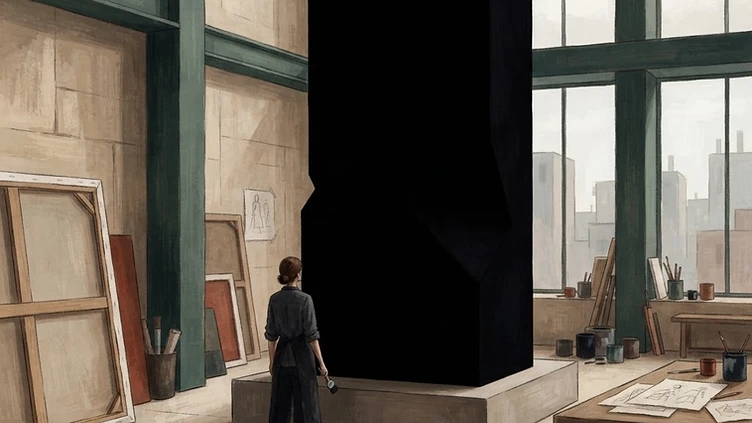
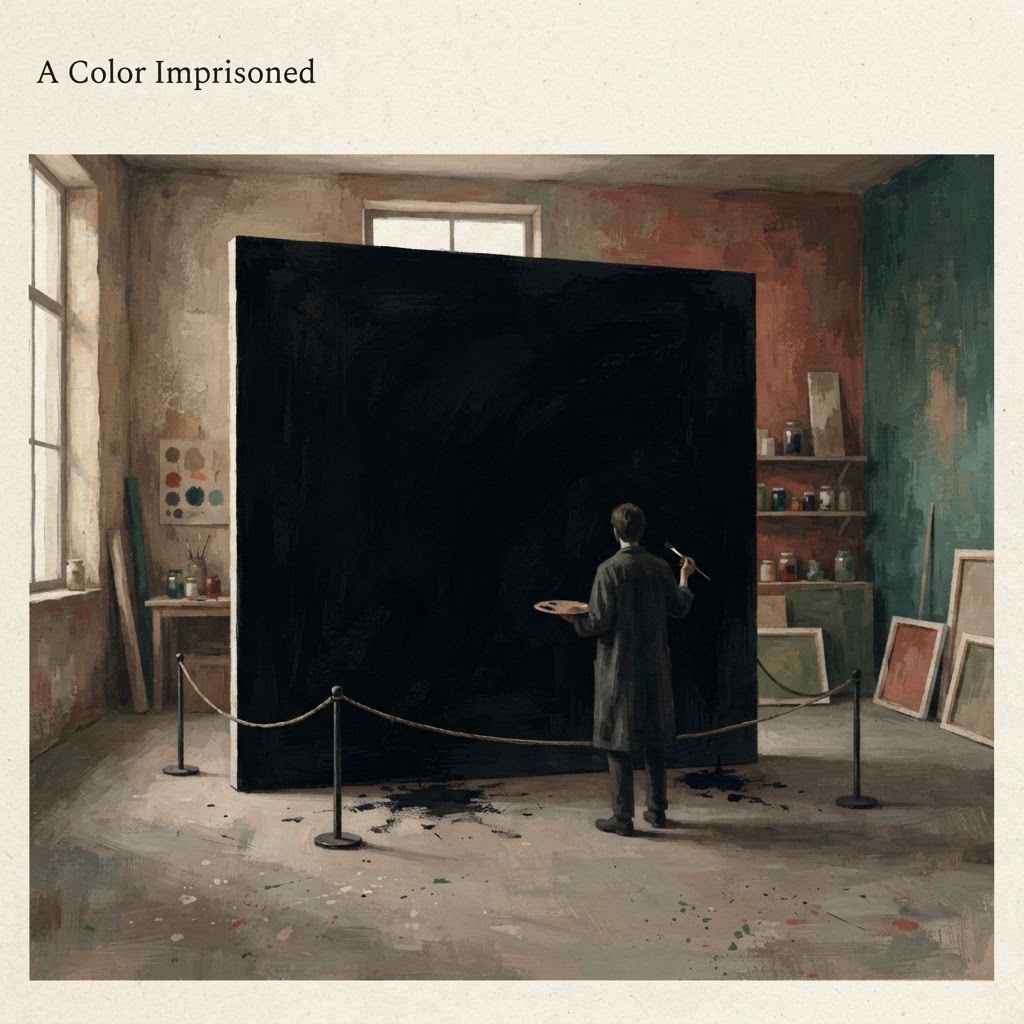
We tend to think of color as belonging to everyone, an unspoken agreement between the eye and light, a common heritage too vast for anyone to monopolize. Yet, when an artist registered the darkest black ever produced as his own, this seemingly unbreakable pact suddenly fractured. It was not merely about who could buy a pigment, but whether a color could be imprisoned by a single person's signature. While this might appear to be a curious legal detail, it actually laid bare art's oldest and most unsettling debate: is creation truly free, or does it always spring from a resource already claimed by someone else? ## The Seizure of Black Vantablack was created as a material that absorbs almost all light, evoking a void rather than a surface before the viewer's eyes. It was born as a technical invention for aerospace and optics, but it quickly became an elusive legend that artists dreamed of. When Anish Kapoor acquired exclusive rights to use this material for artistic purposes, it was more than just a commercial deal; it was the act of snatching a color from the hands of thousands of artists worldwide and locking it away in one studio. Imagine a painter unable to capture that deep, light-absorbing darkness on canvas because that darkness bears another person's signature. This became an unprecedented threshold in the history of paint, for never before had a pigment been claimed by someone in such an explicit, legal manner. What is striking is that Kapoor defended this not as an act of malice, but as an artistic strategy. He argued that every artist has a distinct language and signature, and that this material had become part of his. There is a logic to this defense; after all, a sculptor may identify with a specific marble quarry, or a painter with a certain brush technique. But a quarry does not deprive anyone else of marble, nor does a technique prevent others from learning it. With Vantablack, the situation was different because there was a legal prohibition, an impossibility. For the first time in art history, a color itself was officially locked away based on a substance rather than an idea. This enclosure confronted us with our unshakable belief that art should circulate freely in a concrete and disturbing way. ## The Rebellion of Pink Stuart Semple's response demonstrated how art can still find an escape route against such confinement. Semple created a vibrant, eye-catching pink pigment and made it available for everyone in the world to purchase, with one exception: Kapoor was forbidden from touching it. This gesture might seem like a petty revenge, like a child refusing to share a toy with a sibling, but it carried a deeper rationale. Semple turned the same weapon against the idea that a color could be closed off; in doing so, he highlighted the absurdity of this monopoly and reminded us that art is fundamentally a shared language. The power of this move was not just in creating controversy, but in its effectiveness. Artists from all over the world used this pink to create works, staging a small scene of resistance on their own canvases. Interestingly, this resistance never reached the point of saying, let us claim a color for ourselves; on the contrary, it defended the idea that no color can be locked away. Semple's pink was not a claim of ownership, but a mockery, a counter-discourse directed at ownership itself. It showed us that the art world is not entirely helpless against commercial monopolies; sometimes the most effective answer is not a serious legal battle, but a simple gesture that everyone can understand. ## The Question of Who Owns Color To view this event merely as a colorful spat between two artists is to miss its true depth. Looking back at art history, we realize that access to materials has always been a form of power. In the Renaissance, ultramarine produced from lapis lazuli was so expensive that only the wealthiest churches and dynasties could afford to have it included in their works; a painter's abilityy to use that blue often depended on the depth of his pockets rather than his talent. In other words, color has always been distributed across an invisible threshold; who could use which shade was often a matter of economic permission, not artistic choice. The Vantablack case brought this old truth to light, this time in a far more explicit and striking manner. The question to be asked here is not who owns a color, but why a color can belong to someone at all. If access to materials is always a matter of power, then artistic freedom has never truly existed; these restrictions have simply been sometimes invisible, and sometimes, as in the Vantablack example, painfully visible. Perhaps this is where the unease stems from, because we prefer to forget the invisible thresholds we are accustomed to, but when an artist turns that threshold into a legal document, the luxury of looking away is taken from us. This wakes us from the fairy tale that art is a completely free space, for even within that tale, there was always a room where someone held the key. What remains in the end is not a resolved debate, but a more carefully posed question. The imprisonment of a color shows us that art was never a perfectly innocent space of freedom, and that in every era, there has been a silent struggle over materials, tools, and access. Kapoor's black and Semple's pink are two sides of the same coin; one shows how easy it is to close off, the other how possible it is to open up. Perhaps the lesson to draw is not that a color is never truly free, but that for every color locked away, one day someone else might find their own pink and pry that door back open. This is why color is never just a pigment; it is an enduring question about who holds the power.
İlgili Denemeler
Ralph Lauren: From Bronx to American Aristocracy
The true story of Ralph Lauren reveals how a non-existent aristocratic past was successfully transformed into a global fashion empire.
Ecce Homo: How a Failed Restoration Became a Hit
A century-old fresco in a small Spanish town was transformed into an entirely different work during an amateur restoration, ultimately changing the town's fate.
Why Was the Guernica Tapestry Covered at the UN?
This essay explores the untold story behind the blue curtain that covered Picasso's Guernica tapestry during the Iraq war speech at the UN in 2003.
Tartışma (0)
Henüz yorum yok. İlk yorumu siz yapın.
Join the Newsletter
New essays, once a week, delivered to your inbox.