Project Stormfury: What Did America Do to Stop Hurricanes?
In a secret government program spanning nearly two decades, scientists attempted to tame nature's most powerful storms.
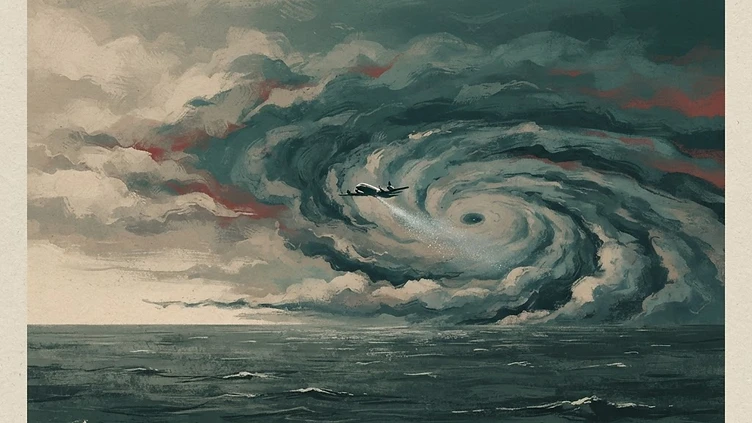
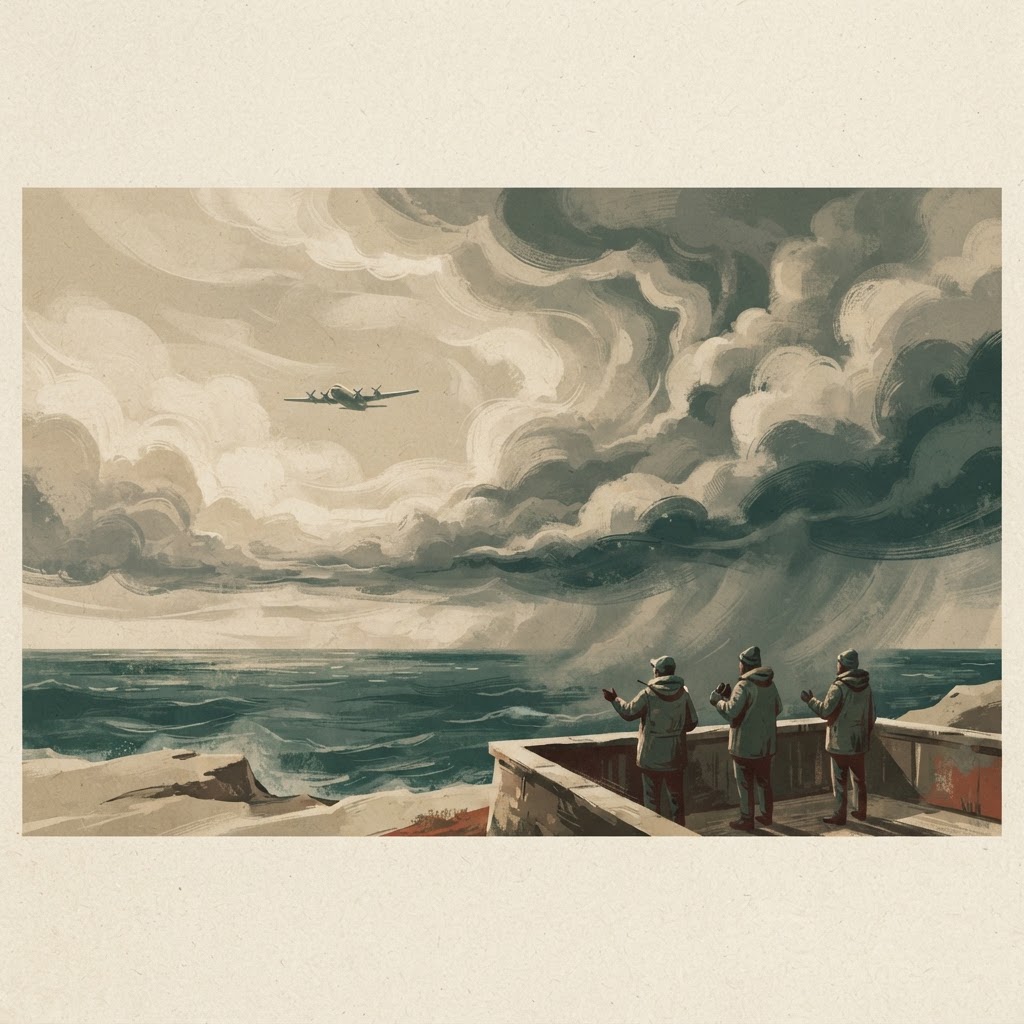
What does the belief that we can stop a storm tell us about ourselves? Throughout history, humanity has dreamt of curbing nature's wild outbursts rather than bowing to them; from priests calling for rain to pilots attempting to pierce the clouds, this dream has never faded. Even today, as we watch a satellite image of a hurricane, we feel how small we are in the face of that colossal, swirling eye; yet, half a century ago, some scientists genuinely believed they could shrink it. In the mid-twentieth century, amidst the paranoid yet limitless ambition of the Cold War, the United States transformed this dream into a scientific program: Project Stormfury. The goal seemed simple: seed hurricanes with silver iodide and drain these monsters of their energy. But like any idea that seems simple, its application simultaneously revealed both human arrogance and our helplessness in the face of nature.## The Idea of Tricking CloudsHurricanes are fueled by the wall of clouds surrounding their eyes, that dense ring of energy known as the eyewall. In the 1960s, scientists developed an idea: if silver iodide were seeded just outside this wall, where supercooled water droplets reside, the droplets would suddenly freeze and release heat. This heat would create a new ring of clouds further out, causing the original central eyewall to weaken and expand. The logic was elegant on paper: take the energy from a dense point and spread it over a larger area, thereby diffusing the hurricane's most destructive power.Moreover, this idea perfectly suited the spirit of the era. The person of the atomic age had begun to view nature as an engineering problem; they had tamed nuclear energy and reached space, so why not bring a hurricane to heel? The Navy and national ocean research institutions funded this project, planes flew into storms to disperse silver iodide, and after each attempt, the results were carefully recorded. Yet, there is an interesting detail here: scientists believed they could deceive the clouds, but perhaps they were the ones being deceived, for the nature of a hurricane was vast enough to ignore this minor intervention on a human scale. Nevertheless, viewed within the history of science, this endeavor did not seem absurd at the time, as humanity did not yet grasp the chaotic nature of the atmosphere as deeply as it does today, and every new technology felt as though it would make the next impossibility possible.## Promising Results, Ambiguous CausesThe excitement following the initial trials was significant. A visible drop in wind speed was recorded in some of the seeded hurricanes, and to some scientists, this drop seemed to prove that the project was working. The press greeted this news with enthusiasm; at last, humanity had a weapon against the most ruthless force of nature. But we must stop and ask: if a hurricane weakens, is it truly because of the silver iodide, or is it part of the hurricane's own natural cycle?Hurricanes are systems that live in a fluctuating rhythm, strengthening and weakening on their own; an eyewall can collapse and a new one can form in its place—a process that happens continuously without human intervention. Therefore, scientists could never fully distinguish whether the weakening they observed in a seeded hurricane was a phase the storm would have undergone regardless. This is one of the most frustrating traps of experimental science, as there is no second world to compare with; you cannot observe the same hurricane simultaneously with and without intervention. Every result carried both evidence and doubt.This uncertainty became increasingly uncomfortable for the institutions funding the project. On one hand, there was hope, as some data appeared positive; on the other, the statistical foundation was not robust enough to support that hope. Later research revealed that natural, unseeded hurricanes could show similar weakening patterns, which severely shook the project's primary assumption. This situation highlighted a dilemma often seen in the history of science: proving a hypothesis is sometimes much harder than disproving it. The years of trials eventually proved not the efficacy of the method, but rather that it could not be proven.## The Silent End of the Project and Echoes TodayProject Stormfury did not end with a loud failure but with a quiet withdrawal. Following nearly two decades of trials, the program was shuttered in the early 1980s; there was no major press release, nor did the public feel a sense of defeat. Scientists, at least among themselves, had accepted that it was impossible to control such a complex natural system with such a simple intervention. This acceptance was not a defeat but a moment of maturation, for science sometimes learns its most valuable lessons through failure.Yet, the human dream of curbing nature has never ended; it has simply changed form. Today, in the field of climate engineering, many ideas are debated, from spraying aerosols into the stratosphere to fertilizing the oceans, and all these ideas struggle with the same fundamental question: how do we draw the line between intervention and natural change? Perhaps what Project Stormfury taught us is that nature operates with so many variables that any claim of causality where human hands have touched can easily turn into an illusion. Silver iodide has been replaced today by different chemicals and different technologies, but the uncertainty remains the same.Perhaps the real issue is not whether we can stop hurricanes, but why we feel such a need to ask this question. Remaining helpless in the face of nature is one of the emotions humans find most difficult to accept, and Project Stormfury was born as an answer to this helplessness. But history shows us that sometimes even the strongest scientific desires must begin by acknowledging the magnitude of the system they face. Silver iodide could not trick the clouds, but it tricked us for a long time; perhaps it is worth remembering this old lesson as we enter today's climate engineering debates. Indeed, nature reminds us not only of its power but also of its patience, as behind every attempt, a lingering, unanswered question always waits.
İlgili Denemeler
Can the Human Brain Detect Magnetic Fields?
Geophysicist Joseph Kirschvink's experiment at Caltech indicates that the human brain responds to magnetic fields, raising questions about a potential sixth sense.
Jan Hendrik Schön: The Physicist Who Fooled Science
The scandal of Jan Hendrik Schön's fabricated data at Bell Labs highlights the critical vulnerabilities in the scientific peer-review system.
Barry Marshall Drank Bacteria to Prove Stomach Ulcer Theory
Barry Marshall made medical history by consuming harmful bacteria to prove that stomach ulcers are caused by an infection rather than stress alone.
Tartışma (0)
Henüz yorum yok. İlk yorumu siz yapın.
Join the Newsletter
New essays, once a week, delivered to your inbox.