Fatal Familial Insomnia: The Mystery of No Sleep
How did a single genetic mutation passed down through generations prove that sleep is not a luxury, but a fundamental requirement for survival?
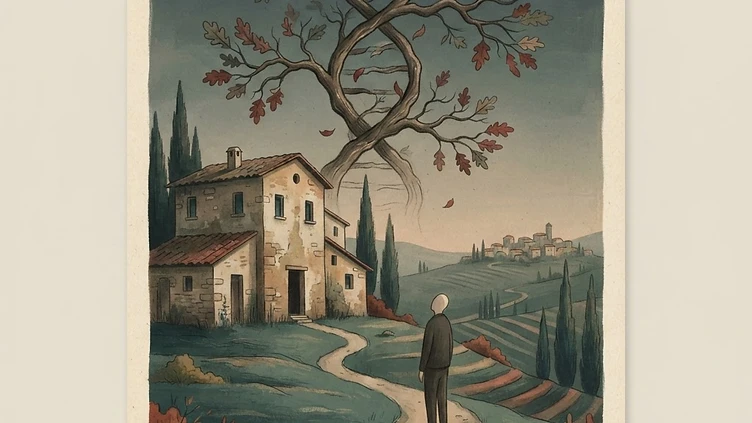
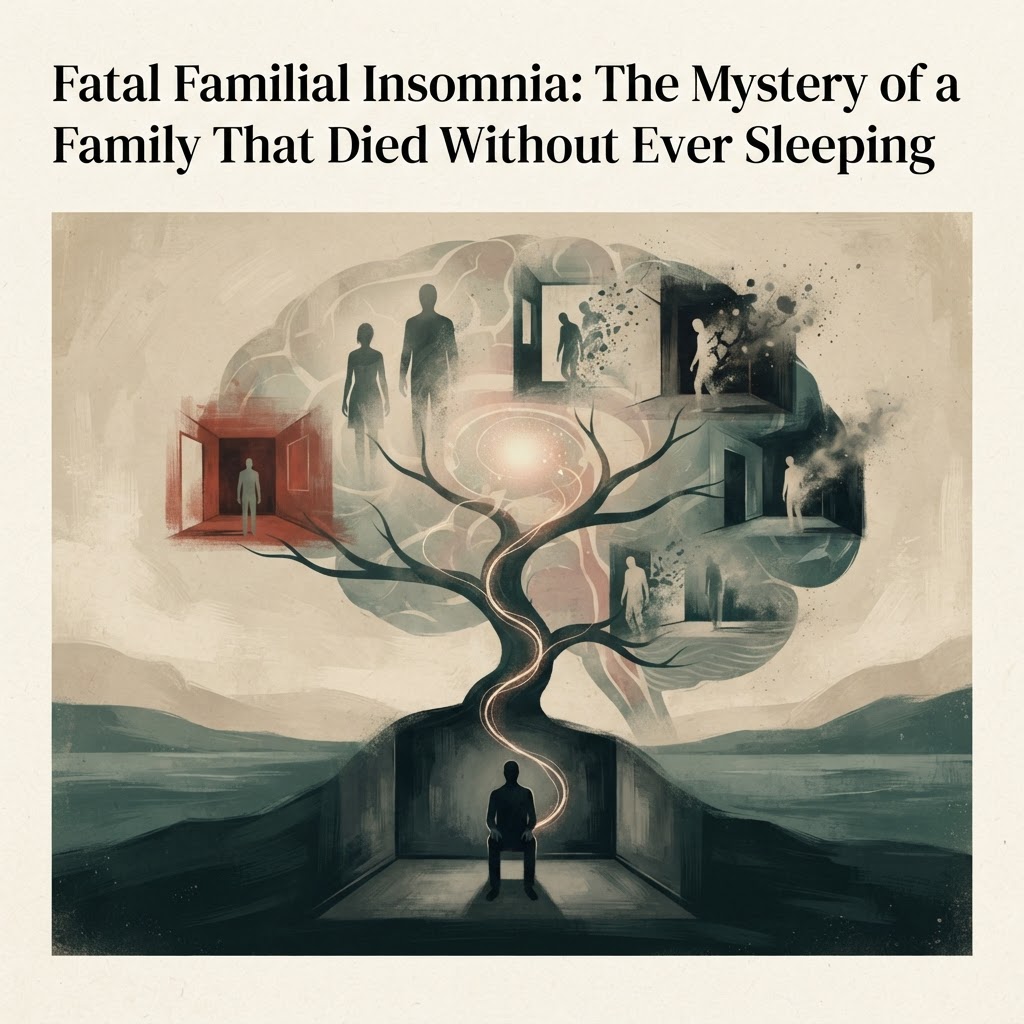
For most of us, sleep feels like a brief respite stolen from the day, perhaps a well-deserved reward. When we are tired, we lie down, rest, and wake up feeling better; it seems as if sleep is an optional rhythm accompanying the main flow of life. But what would you think if an entire family were to die, generation after generation, without ever being able to sleep? This true story, which proves that sleep is not a luxury but a fundamental condition for survival, forces us to redefine it. A family living near Venice, Italy, experienced the answer to this question in the most painful way for generations, and the medical world is still trying to digest what it learned from their tragedy today. ## The Family in Venice and a Strange Pattern of Death The beginning of this story was shaped by a physician’s careful observation of deaths within his own family. He noticed that family members across different generations fell ill and died in a similar manner; first came the insomnia, followed by sweating, strange changes in heart rhythm, mental confusion, and ultimately, death. This was not a standard complaint of sleeplessness; the patients could not sleep for months, not just nights. There was no such definition in the medical literature of that era because no one had ever considered that the complete disappearance of sleep could be a form of disease. The physician tried to understand how far back this pattern of death went by digging into family history, old records, and even gravestones. What he found was astonishing: the disease could be traced back centuries. Some family members fell ill at a young age, others in middle age, but the result was always the same. The question the reader must ask here is: why does a disease remain so loyal to a specific family? The answer lay in genetics, but the scientific tools required to make that connection did not yet exist in those years. The physician’s method was patient observation, treating his own family’s tragedy as a riddle. This was a rare moment in medical history; the researcher was not a distant observer, but someone directly caught in the throes of loss. ## Sleep is a Necessity for the Brain, Not an Option When we trace the progression of the disease, we see quite strikingly how fundamental a biological need sleep is. Patients began with mild insomnia, and then became unable to sleep at all, save for short bouts of drowsiness. Over time, this evolved into a disintegration far deeper than simple fatigue: memory deteriorated, coordination vanished, and the body essentially consumed itself. The question to ask here is clear: if sleep is merely rest, why does its absence result in death? The lack of rest creates fatigue, but not death; yet, in these patients, the loss of sleep directly threatened life. At this point, the truth emerges that sleep is not an option for the brain, but a necessity. During sleep, our brain does not simply rest passively; it cleanses toxins, performs cellular repairs, organizes memory, and rebalances neural networks. This family became proof of how rapidly the body can collapse when this process is halted. Perhaps the most striking aspect was that patients wanted to sleep consciously but could not; they felt exhausted, their eyes longed to close, but the brain could not complete the transition. This shows us that sleep is not a behavior we can control with our willpower, but a part of the brain’s own internal order. One might counter that these patients were not dying of insomnia alone, but of another side effect of the disease, and that insomnia was merely a symptom. But the progression of the disease does not support this view; the timing between the loss of sleep and physical disintegration was so tightly synchronized that the link could not be a coincidence. The area where brain damage intensified was exactly the region that regulates sleep, showing that at its core, the disease targeted sleep itself. Thus, science learned from this tragic example that sleep is not a system working quietly in the background, but a mechanism at the very center of survival. ## Prion: A Form of Disease That Spreads Without DNA When the cause of the disease was understood, the biological community experienced a different kind of shock. The disease was not caused by a virus or bacteria as we know them; it originated from a protein form that did not require genetic material, such as DNA or RNA. Normally, proteins fold in specific ways to perform their duties; but in some cases, this folding goes wrong, and the protein begins to convert neighboring proteins into its own faulty shape. This process creates an effect similar to the replication of a virus, but there is no genetic copying involved; only the shape itself becomes infectious. This idea was radical enough at the time to shake the fundamental assumptions of biology, as the belief that genetic information was required for a disease to spread had been accepted without question for years. In this family, the mutation carrying the disease slightly altered the structure of a specific protein; this small change led the protein to exhibit a tendency toward misfolding over time. The misfolded protein accumulated over years, settling in the regions of the brain that regulate sleep and destroying the tissue step by step. What is interesting here is that this process operated in total silence; the patient noticed nothing until symptoms appeared, because the damage was the result of years of patient accumulation. This reminds us that some diseases do not progress like a sudden attack, but like a silent erosion. Perhaps the most striking point this disease showed us is this: life is not always about the replication of genes; sometimes a shape, a form itself, can change an entire story. This family and the mutation they carried silently remain a subject of research for scientists today. Because if a protein can produce disease without the need for genetic information, the clear lines biology has drawn between heredity and disease must be rethought. Perhaps this is one of the most valuable lessons of science: sometimes what shakes our deepest assumptions is not a complex theory, but a truth silently passed on by a single family and a single mutation. That family, without knowing it, redrew the boundaries of sleep and heredity; their loss helps us understand other lives today. As I think about this story, I can no longer find sleep to be mundane. Being able to lie down and close my eyes when I am exhausted at night now feels like a small miracle; for I know what kind of abyss a family falls into when they lose this simple act. Perhaps the true value of this piece lies in its reminder to view sleep not as a reward, but as a silent partner in survival. The tragedy of that Italian family posed new questions to science; but the most personal lesson it left for us was the realization of how fragile and precious the system is that works behind our eyes, which close every night.
İlgili Denemeler
Can the Human Brain Detect Magnetic Fields?
Geophysicist Joseph Kirschvink's experiment at Caltech indicates that the human brain responds to magnetic fields, raising questions about a potential sixth sense.
Jan Hendrik Schön: The Physicist Who Fooled Science
The scandal of Jan Hendrik Schön's fabricated data at Bell Labs highlights the critical vulnerabilities in the scientific peer-review system.
Barry Marshall Drank Bacteria to Prove Stomach Ulcer Theory
Barry Marshall made medical history by consuming harmful bacteria to prove that stomach ulcers are caused by an infection rather than stress alone.
Tartışma (0)
Henüz yorum yok. İlk yorumu siz yapın.
Join the Newsletter
New essays, once a week, delivered to your inbox.