Victorian Post-Mortem Photography: A History of Death
Why did families in the nineteenth century choose to capture the lifeless bodies of their loved ones in photographs?
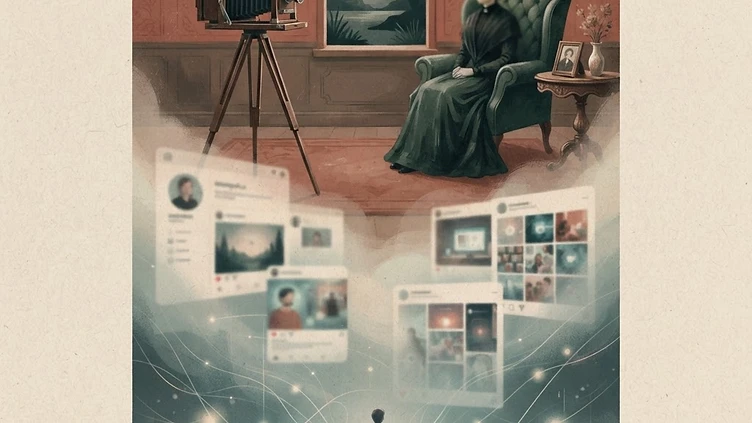
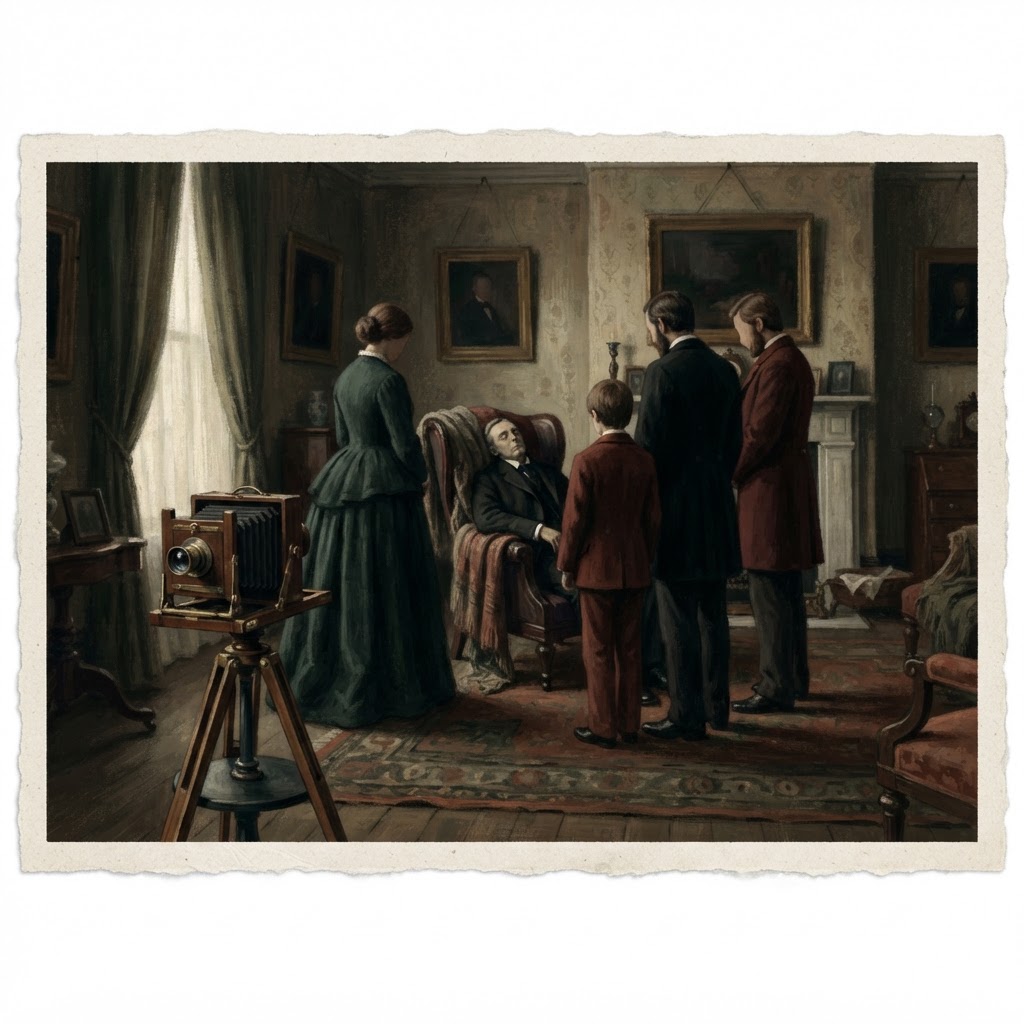
When we look at a photograph, we generally look for a moment where life is frozen, not for death itself. Yet, opening a family album from the mid-nineteenth century, it was not unusual to encounter a child with closed eyes and a face softened by candlelight, resting beside a smiling couple or a mother holding her baby. Today, these images strike us as strange, perhaps even disturbing; we feel as though a taboo has been broken. But at the time, this was a perfectly logical choice, blending love with desperation and making full use of the possibilities offered by new technology. The question is: how did we manage to normalize a habit that brings death so directly before us, only to forget it entirely later? ## Long Exposure, Silent Model Early photography required a perception of time vastly different from today's instant snapshots. To capture a daguerreotype, the subject had to remain perfectly still for minutes, sometimes nearly a quarter of an hour; even the slightest blink or the tremor of a breath could blur the image. Keeping a living child still for that long was nearly impossible, whereas a deceased body exhibited perfect patience. Photographers viewed this reality not as a flaw, but as an opportunity; death transformed a technical limitation into an aesthetic solution. This technical necessity eventually created its own visual language. Photographers began using special stands, iron supports, and painted irises on eyelids to position the body as if it were simply sleeping. The goal was to document a life that still lingered, not to highlight death. This demonstrates how different their relationship with death was from ours. We have turned death into something we hide away, confining it to clinical whiteness, while they brought it into the most visible stage of the home, photographing the family together just as they would at the dinner table or in the garden. What is strange here is not photographing the dead, but our ability to avoid it so comfortably today. ## Single Copy, Final Image In the early years of photography, having a portrait taken was not a task performed in seconds with a pocket-sized phone. It was a costly and time-consuming process, meaning many families, particularly those in rural areas, might never have the opportunity to take a portrait in their lives. When a child died and the family had no visual evidence of their existence, the post-mortem photograph was the only solution to fill that void. This was not just a form of mourning, but a material assurance of memory; for memories fade over time, but a photograph remains unchanged. A counter-argument might arise: perhaps these photos were merely a result of poverty, as the wealthy had already taken their portraits while living. This is partially true, but the issue was not purely economic. Infant mortality was common in upper-class families, and they acted with the same impulse because the primary concern was the irreversibility of the loss, not money. A photograph was a way to provide evidence to the world and to oneself that a child had lived. Today, we meet this need differently, but the need itself has not changed; only the medium has. ## Grief Continuing on the Screen Let us take our phones in hand for a moment. Think of the comments left under death announcements on social media, the last photos shared on a friend's profile, or even moments of death streamed live. These all re-enact the same impulse from a century-old daguerreotype studio, albeit through a different tool. The difference is that the image is no longer a single copy; digital memorial pages turn the deceased's digital footprint into a kind of infinite archive, a space of memory accessible not only to the family but to thousands of strangers. The question we must ask at this point is: as Victorian people moved death into the home, into the family portrait, we are moving it onto the screen, a space where everyone can see it. Is this progress, or just a different face of the same urge? To me, both are responses to the same fundamental need: the desire to concretize loss, to turn it into an object, and to freeze it in a frame. But there is a difference: while a photograph once represented a private moment, a memory belonging only to the family, digital memorialization today often turns into a public performance, where grief becomes something to be watched. This shows how we have lost the intimacy of our relationship with death. Perhaps the core issue was never the photograph itself, but the desperation behind it; the human mind that cannot accept the absence of someone we love and attempts to keep them present in some way. Families of the nineteenth century did this in a frame, and people today do it on a screen, but both are attempts to fill the same void. When death posed for the lens, we were actually looking for a way not to forget ourselves; today, we are still walking that same path, only illuminated by a different light.
İlgili Denemeler
Ralph Lauren: From Bronx to American Aristocracy
The true story of Ralph Lauren reveals how a non-existent aristocratic past was successfully transformed into a global fashion empire.
Ecce Homo: How a Failed Restoration Became a Hit
A century-old fresco in a small Spanish town was transformed into an entirely different work during an amateur restoration, ultimately changing the town's fate.
Anish Kapoor and Vantablack: Art's Color Monopoly
Anish Kapoor's monopoly over Vantablack reignited debates on artistic ownership, authenticity, and whether colors can be confined to a single creator's signature.
Tartışma (0)
Henüz yorum yok. İlk yorumu siz yapın.
Join the Newsletter
New essays, once a week, delivered to your inbox.