The Nun Study: Brains Resilient to Alzheimer's
How did this years-long study prove that Alzheimer's brain markers do not always translate into cognitive decline?
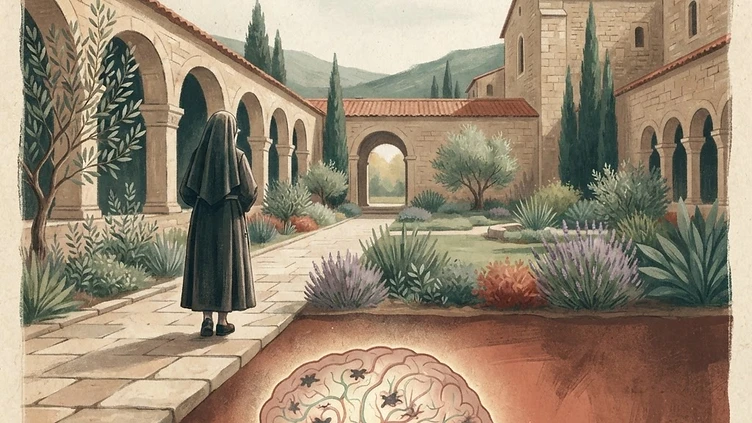
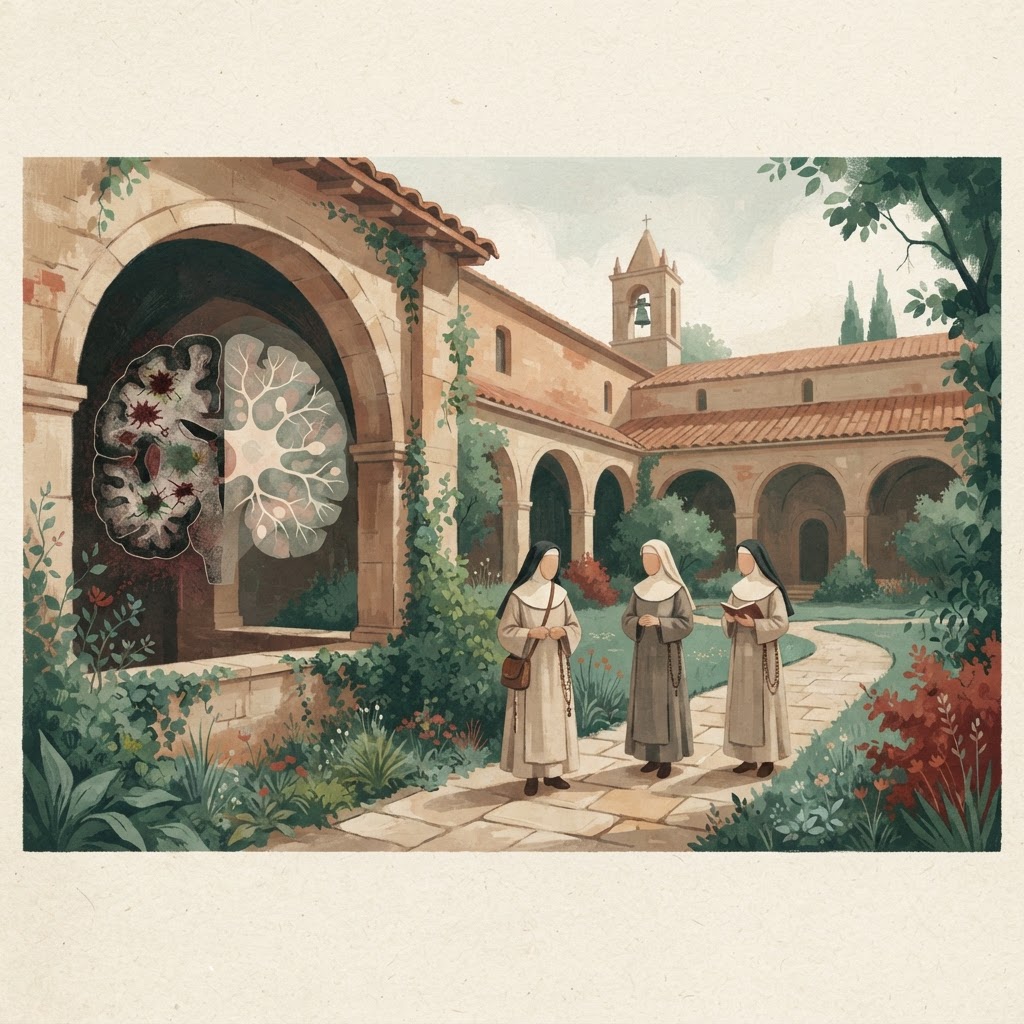
You can find all the classic hallmarks of Alzheimer's in a person's brain: plaques, tangles, cell loss; a textbook case. Yet, that same individual may have lived their entire life without experiencing any memory loss or mental fog. Isn't that strange? One of the most unsettling questions in neuroscience lies exactly here: why does the disease itself sometimes fail to manifest when its physical evidence is present? The extraordinary, long-running research known as the Nun Study did not leave this question as an abstract assumption; it sought answers within the real lives of real people. And what it found was a reality that disturbed anyone accustomed to viewing Alzheimer's strictly as a brain disease. ## Brain Damage Does Not Always Mean Disease When the brains of some nuns participating in the study were examined after their deaths, pathologists encountered a puzzling contradiction. The changes considered the signature of Alzheimer's were clearly present in the brain tissue; yet, while alive, these women could engage in daily conversation, keep diaries, and remember the people, events, and names around them. This situation posed a serious challenge to a medical understanding accustomed to thinking of the disease as a purely biological phenomenon. For if plaques and tangles exist without cognitive decline, where must we draw the definition of the disease: in the tissue or in the person's lived experience? A possible objection here is that perhaps these women were in the early stages of the disease and would have shown symptoms had they lived longer. However, the study showed that this was not the only explanation. Some brains carried that damage for years, yet the individual maintained mental clarity. This suggests that the relationship between the brain and the mind is much more layered than we imagine. Perhaps the brain develops a kind of reserve capacity against damage; perhaps the density of connections and the diversity of cognitive networks used can delay the effects of damage for a time, sometimes even for a lifetime. This possibility serves as a reminder of how incomplete it is to reduce the disease to a simple question of presence or absence. ## A Sentence Written in Youth, a Destiny Half a Century Later? Perhaps the most striking aspect of the study was its return to the autobiographical texts written by the nuns upon entering the convent. When these women were young, in their twenties, they had penned short texts about their life stories; mundane, personal writings with no formal scientific purpose. When these texts were reread years later, a connection was sensed between the richness of their language use and whether or not that person developed Alzheimer's decades later. The complexity of the sentences, the way ideas were connected, and the breadth of vocabulary acted as if they were a clue left behind for a door that would open in the future. When I first read this, my reaction was skepticism; how could how a person wrote in their youth predict what would happen in their brain fifty or sixty years later? But the more I thought about it, the more I realized this was not as mystical a connection as I had imagined. Linguistic richness could be a reflection of how active, flexible, and versatile the mind is. These mental habits formed at an early age might be laying the first bricks of a cognitive resilience that lasts a lifetime. This reminds us that brain health is shaped not only by precautions taken in old age but also by habits accumulated in youth. It seems that how a sentence is constructed is not an insignificant detail for forty years down the line. ## The Value of a Life Donated to Science The real reason this research was possible was the generosity with which the nuns opened their lives to science. They shared their daily routines, kept their childhood diaries, and ultimately allowed their brains to be examined after death. This is no ordinary donation; it is the act of a person handing over the most intimate traces of their own existence, the physical remnants of their own mind, so that others might learn. Behind such a gesture, alongside faith in science, was a silent acceptance that their own lives could hold meaning. I believe this is what constitutes the true human side of the research. Science often speaks of big data, statistics, and abstract patterns; but here, behind every data point was a name, a lived life, a page in a diary. When a sentence written by a nun in her twenties was placed side-by-side with her brain tissue in her eighties, science was, in effect, reading a biography. This shows that individual life stories can be a source of data richer than anything ever obtained in a laboratory setting. Perhaps some of the greatest discoveries of science are hidden not in test tubes, but in the generosity of someone willing to share their own life. The true legacy left to us by the Nun Study is not a definitive cure for Alzheimer's, but a more careful way of questioning. Thinking of the relationship between the brain and the mind as a one-way cause-and-effect chain is no longer sufficient in the face of the contradictions this study revealed. Perhaps the way to understand the disease is not just by examining tissue, but by listening to the entire story of a person from youth to old age. And perhaps science finds its deepest answers sometimes in the simplest gestures, in the generosity of someone willing to share a life.
İlgili Denemeler
Can the Human Brain Detect Magnetic Fields?
Geophysicist Joseph Kirschvink's experiment at Caltech indicates that the human brain responds to magnetic fields, raising questions about a potential sixth sense.
Jan Hendrik Schön: The Physicist Who Fooled Science
The scandal of Jan Hendrik Schön's fabricated data at Bell Labs highlights the critical vulnerabilities in the scientific peer-review system.
Barry Marshall Drank Bacteria to Prove Stomach Ulcer Theory
Barry Marshall made medical history by consuming harmful bacteria to prove that stomach ulcers are caused by an infection rather than stress alone.
Tartışma (0)
Henüz yorum yok. İlk yorumu siz yapın.
Join the Newsletter
New essays, once a week, delivered to your inbox.