How Social Norms Change: The Invisible Line of Normal
Is there an invisible line that allows a society to accept today as 'natural' what it considered 'irrational' yesterday?
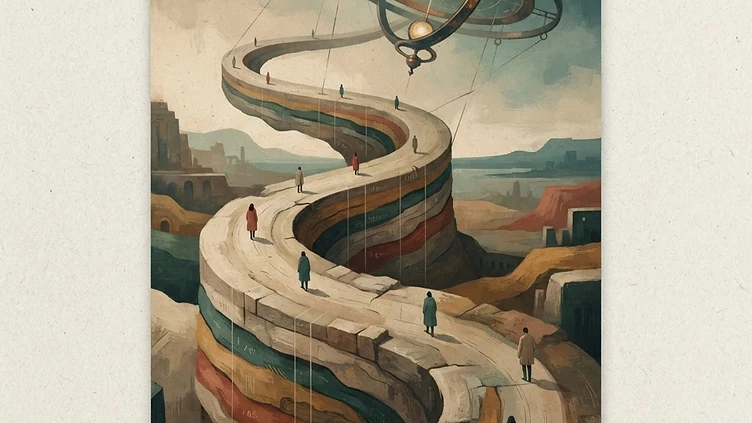
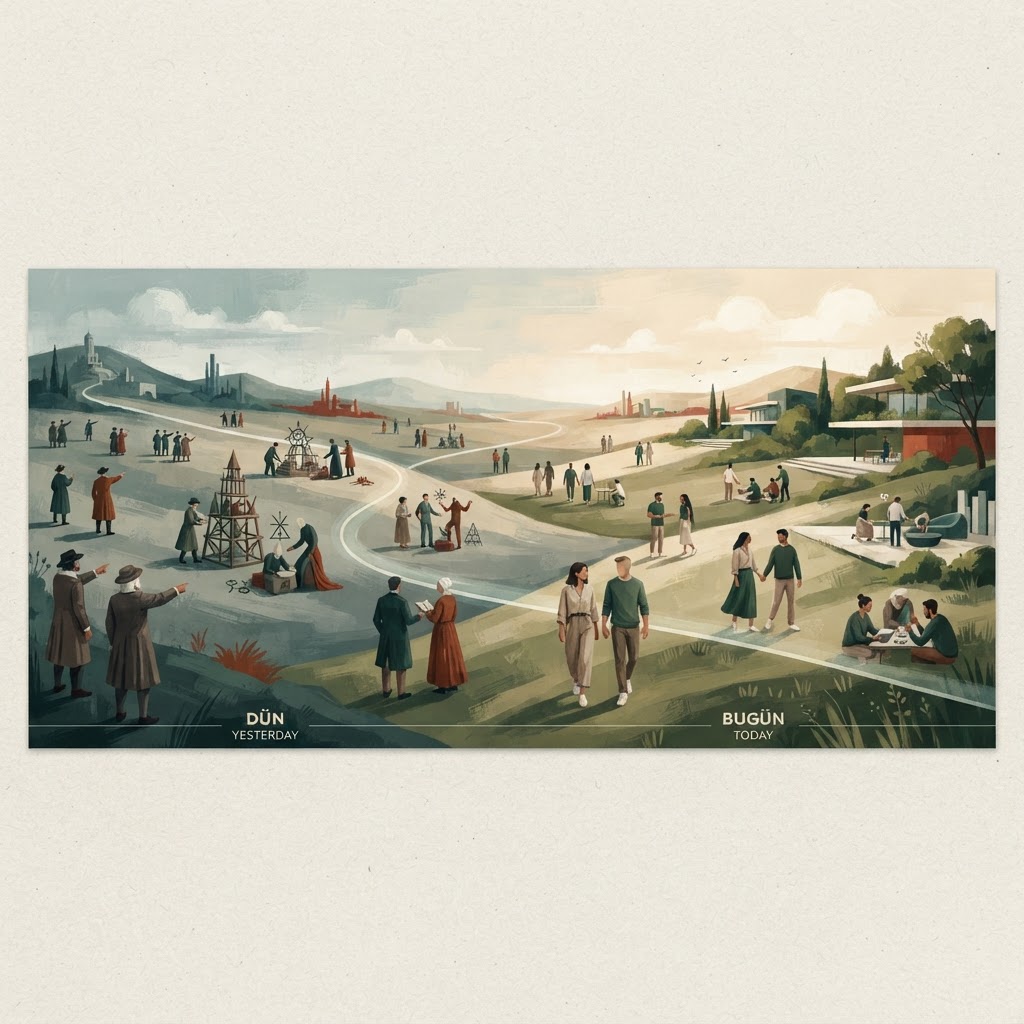
Have you ever opened a morning newspaper only to realize that yesterday's headline has become today's mundane news? A sentence branded as scandalous yesterday is discussed with a smile on a talk show today; a behavior once deemed irrational is now shared as a normal anecdote over a dinner table. No one can point to the exact moment this transition occurs because there is no such moment; somewhere, an invisible line is simply drifting. I am curious about this line: does the boundary that societies draw between the irrational and the natural move on its own, or is there a hand pushing it? Even asking this question may unsettle some, for acknowledging that what we call 'normal' is a fragile, portable boundary shakes our sense of solid ground. ## From Unthinkable to Law The social acceptance of an idea is rarely an abrupt leap as we often assume, but rather a patient march. First, there is the unthinkable; a realm where, when a proposal is made, a sense of disgust rather than mere surprise appears on people's faces, and the topic is dismissed before it is even discussed. Then one day, though no one remembers exactly when, the same idea becomes debatable; one who defends it is no longer thrown out of a parlor meeting, just considered strange. The debatability phase can last a long time, sometimes a generation or more, because here the idea is still a choice of camps; people feel compelled to take sides. Finally, in the third phase, the idea becomes mundane; no one debates it anymore, because to debate it would imply it is still debatable, whereas it is now perceived as part of the atmosphere. To illustrate these three phases, one need only remember the change in the roles women have taken in social life. Once, a woman pursuing an independent career outside the home was deemed unthinkable in some circles; then it became debatable, people argued at length, and domestic quarrels erupted; today, in many societies, this is no longer even a topic of discussion, but simply accepted as a fact of life. What is interesting here is that every phase produces its own rhetoric: in the unthinkable phase, it is said 'this is against nature,' in the debatable phase, 'perhaps, but we must be careful,' and in the state of mundanity, nothing is said, for there is no need. This silence is actually the most powerful form of acceptance; where an idea triumphs is where the talking ends. But it would be misleading to think this march is one-way. Some ideas can drift back from the debatable phase toward the unthinkable; a discourse once considered legitimate can, in another era, become taboo again. The line does not only move forward; it sometimes retreats, so one must think of the map of the normal not as a fixed geography, but as a sketch that is constantly being redrawn. ## Who Pushes the Drifting Line To say this line drifts on its own would be a comforting illusion; as if an idea were accepted one night while society slept. Yet, behind every shift, visible or invisible, there is persistence. An idea is repeated in a small circle, then that circle grows, then the same sentences are heard again and again from different mouths and through different channels; repetition itself turns into a tool of persuasion, because the human mind tends to find what it hears often familiar, and what is familiar, safe. To speak of organized discourse here is not to create a conspiracy theory, but to name an observable mechanism: when certain institutions, movements, and communities systematically repeat a specific idea across different platforms and under different guises, that idea's social visibility increases, and visibility begins to be confused with legitimacy over time. Linguistic engineering is also a silent but effective tool in this process. Changing how a concept is named changes its moral weight; the same behavior appears as a crime with one name and as a preference with another. An economic practice once harshly judged does not receive the same reaction when given.ven a different name.ven a different label.ven a softer, more technical name; a consumption habit once considered unacceptable gains a different meaning when framed with an emphasis on freedom or individuality. One must ask here: is this process always malicious manipulation? No, it often is not; people seek the most effective language to spread what they truly believe, which shows in the final analysis that language itself is a battlefield. As much as the idea itself, the choice of the words that carry it determines where the line will drift. ## The Melting Threshold in the Age of Speed In the past, this shifting process lasted for generations; a grandfather might find an idea unthinkable while his grandchild could greet it as mundane, because the intervening time was wide enough for society to digest, weigh, reject, or absorb the new idea. Today, this duration is shortening dramatically. The instantaneous spread of digital communication compresses the transition of an idea from unthinkable to debatable into weeks, sometimes days; an expression found strange one morning falls onto millions of screens by the evening, is shared repeatedly, commented upon, and parodied, and this intense contact artificially accelerates the sense of habituation. The human mind did not evolve to handle such rapid digestion; internalizing an idea takes time, yet algorithms do not grant us time, they only want us to move on to the next piece of content. This speed, while eroding society's capacity to digest ideas, also creates a strange paradox: some ideas behave as if they have been accepted without truly being accepted, simply by becoming familiar. A discourse passes in front of us so many times that we begin to see it as a familiar landscape without having the time to question whether we agree with it; we lose the distinction between familiarity and approval. A trend can be born, debated, adopted, and then forgotten within a week, but the mark it leaves during that short life may have truly shifted the line, for the line is composed not of a permanent agreement, but of accumulated moments of contact. There is a valid concern here: if the process of acceptance accelerates this much, will society have time to truly test its own values, or will everything just get swept away by the next viral wave? Yet, to say that this speed always leads to superficial acceptance would be unfair; even though some ideas spread rapidly, a deep, slow-acting negotiation begins afterward between different segments of society; the first viral wave just opens the door, and the actual digestion takes place in calmer waters. Perhaps what the age of speed brings is not the melting of the threshold, but the threshold becoming two-tiered: first a superficial familiarity, then—if the idea is to truly take root—a slower acceptance. The chart of the normal, therefore, neither moves entirely on its own nor is it managed like a puppet on a string; it is a fabric woven together by repetition, language, speed, and the human mind's weakness for familiarity. That an idea is considered irrational yesterday and natural today stems not from that idea reaching a truth within itself, but often from the sum of the moments of contact that accumulate around it. This leaves us with an unsettling but liberating question: how many of the things we currently accept as natural, indisputable, and beyond question are there simply because they were repeated enough and spread fast enough? Perhaps the greatest trick of the normal is presenting itself as an undiscovered truth, when in reality it is often nothing more than a well-organized habit.
İlgili Denemeler
Doorman Culture: The Loss of Community in Cities
This essay explores how the erosion of the apartment caretaker profession has transformed urban neighborliness, trust, and the collective memory of the neighborhood.
Hostile Architecture: Excluding Bodies in Public Spaces
In modern cities, a simple metal fixture added to benches silently exposes who public spaces are intended for and whose presence is systematically excluded.
The Third Place: Where Did Our Sense of Belonging Go?
Drawing on Ray Oldenburg's concept of the third place, this piece explores the societal cost of the vanishing communal spaces that once defined our daily lives.
Tartışma (0)
Henüz yorum yok. İlk yorumu siz yapın.
Join the Newsletter
New essays, once a week, delivered to your inbox.