The Neubauer Triplets: A Secret Scientific Experiment
Born in 1961 in New York, identical triplets were separated not by fate, but by a researcher's clandestine plan.
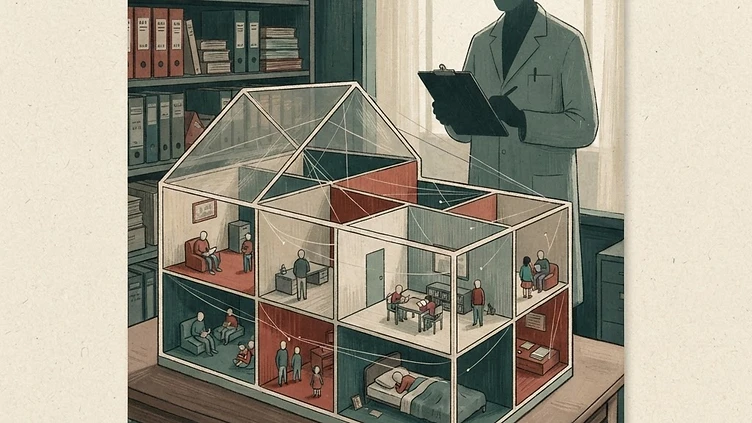
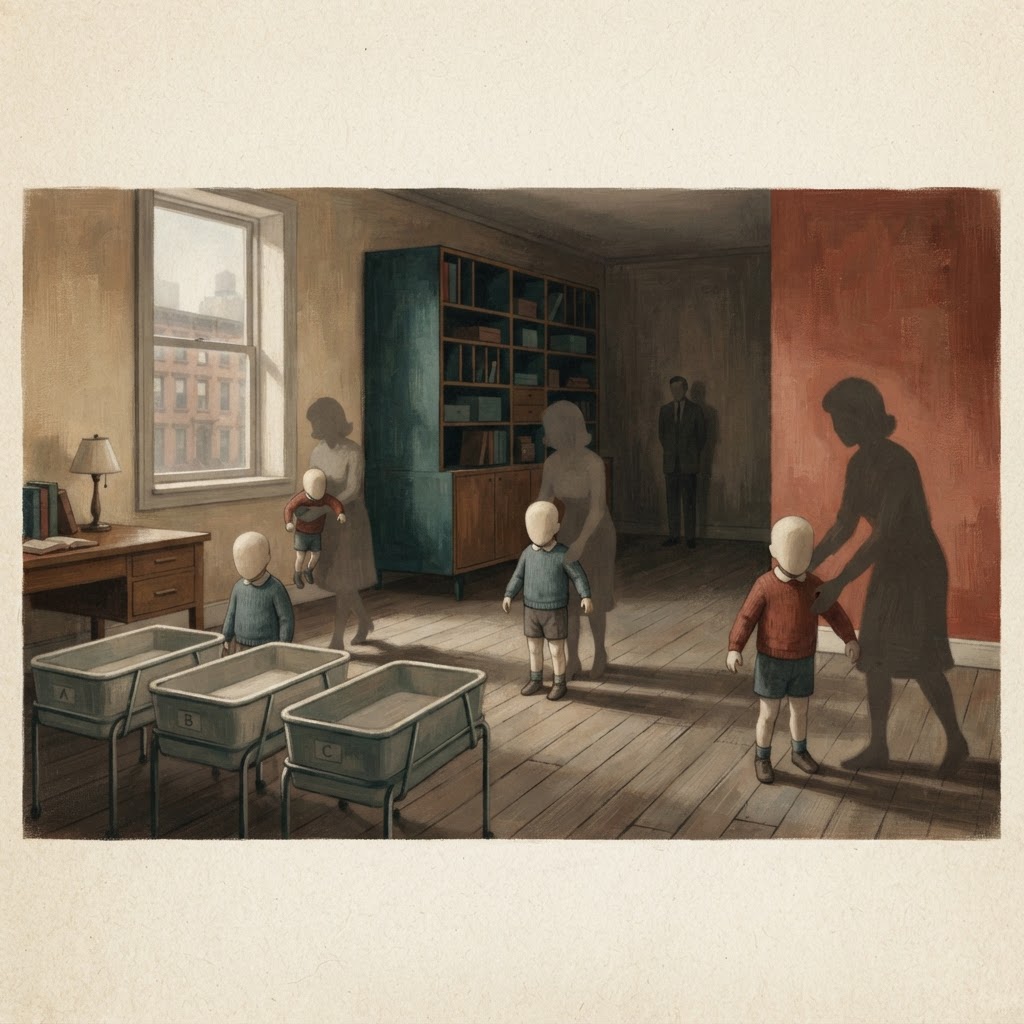
Some stories begin as ordinary coincidences, only to gradually transform into conspiracy theories. The tale of the Neubauer triplets follows exactly this path. The fact that identical triplets born in New York in 1961 grew up unaware of each other was not a strange twist of fate, but a deliberate design meticulously crafted at a psychiatrist's desk. Whenever I reflect on this story, I ask myself the same question: at what point does science, in its attempt to understand humanity, begin to inflict harm upon it? Drawing this line is not as simple as it appears, because curiosity often begins with an innocent impulse and quietly spirals out of control. ## A Chance Encounter Between Three Strangers In 1980, a young man moving into a university dormitory in New York noticed that everyone he passed in the hall looked at him with a strange sense of familiarity. Within days, he met another young man with nearly the same face, the same gait, and even the same laugh. It did not end there; soon, a third young man was added to this peculiar chain of resemblance. All three were born in the same year, adopted in the same city, and grew up completely oblivious to one another's existence. The media initially framed this reunion as a heartwarming human interest story; the brothers finding each other after years was presented as a beautiful joke played by fortune. Yet, this coincidence was not a coincidence at all. While the media adorned the reunion with the word fate, a much colder truth lay behind the scenes: these three children had been on a researcher's observation list since the day they were born, intentionally distributed to different families, and monitored for years without their knowledge. What is truly striking here is not the coincidence itself, but how long the plan behind what appeared to be a coincidence remained hidden. The human mind tends to interpret strange similarities as the work of the universe, yet in this instance, the universe had no hand in it; only the files on a desk did. ## Louise Wise Services and the Silent Protocol The source of these files was Louise Wise Services, a well-known adoption agency of the time. When the agency acquired identical twins or triplets, they directed them onto a path separate from the standard adoption process. Thanks to a secret agreement with psychiatrist Peter Neubauer, these infants were deliberately placed with families of varying socioeconomic status; while one grew up in a wealthy home, another was raised in more modest circumstances. The adoptive families were never told that their children had twins or triplets. They raised their children thinking they were living an ordinary adoption story, yet in reality, they had become unwitting players in an experiment. What is truly chilling here is not the magnitude of the lie, but how systematically it was maintained. For years, researchers conducted regular home visits, documented the children's development with video recordings, and administered tests, all under the guise of routine adoption follow-ups. Families opened their doors without ever knowing these strangers were part of a scientific protocol. In a sense, the most intimate space, home life, became a scene monitored for the sake of science, and this transformation occurred without any approval or consent. When one places themselves in the shoes of these families for a moment, they realize how disturbing it is that trust can be so easily instrumentalized. ## The Human Cost of the Nature-Nurture Question The question underlying all this secrecy was not inherently malicious: what determines a person, their nature or the environment in which they grow up? This is one of the oldest and most provocative debates in the history of psychology, and Neubauer's project promised a unique opportunity to answer it. By raising children with the same genetic structure in different environments, he imagined he could clearly distinguish which traits were inherited and which were shaped by the environment. From the perspective of scientific curiosity, this idea is seductive; humanity has been asking this question for centuries, yet has never had such a clean experimental design. But this is exactly where the internal logic of science and human responsibility diverge. A study being scientifically perfect does not make it ethically acceptable; because these children never consented to being treated like laboratory rats, as they never even had the chance to consent. Some might argue that no harm was done to the children, that they were only observed, but being observed without one's knowledge or permission is a form of violation. Reducing someone's life to a data point without their awareness, even if it causes no physical harm, steals that individual's right to their own story. Today, the fact that research ethics committees work so meticulously and that consent forms are so extensive is partly due to the shame left behind by this project; the scientific world binds itself with strict rules to ensure such silence is never allowed again. Reflecting on the story of these triplets, I realize how easily human curiosity can turn into hubris. Perhaps Neubauer truly desired to produce knowledge beneficial to humanity; perhaps he believed he was making a significant contribution to his discipline. However, good intentions do not justify assuming the right to possess another's life. This story reminds us that scientific progress sometimes leaves respect for humanity behind, and that striking a balance between the two never happens automatically. Three strangers looking at each other in bewilderment in a hallway was, in reality, the most silent opening of a laboratory door; and to understand what lies behind that door, we must first accept that that bewilderment was no coincidence at all.
İlgili Denemeler
Can the Human Brain Detect Magnetic Fields?
Geophysicist Joseph Kirschvink's experiment at Caltech indicates that the human brain responds to magnetic fields, raising questions about a potential sixth sense.
Jan Hendrik Schön: The Physicist Who Fooled Science
The scandal of Jan Hendrik Schön's fabricated data at Bell Labs highlights the critical vulnerabilities in the scientific peer-review system.
Barry Marshall Drank Bacteria to Prove Stomach Ulcer Theory
Barry Marshall made medical history by consuming harmful bacteria to prove that stomach ulcers are caused by an infection rather than stress alone.
Tartışma (0)
Henüz yorum yok. İlk yorumu siz yapın.
Join the Newsletter
New essays, once a week, delivered to your inbox.