The Mandela Effect: Is Our Memory Tricking Us?
The story of people who remember Nelson Mandela dying in prison in the 1980s reveals that memory can be faulty not only individually but also collectively.
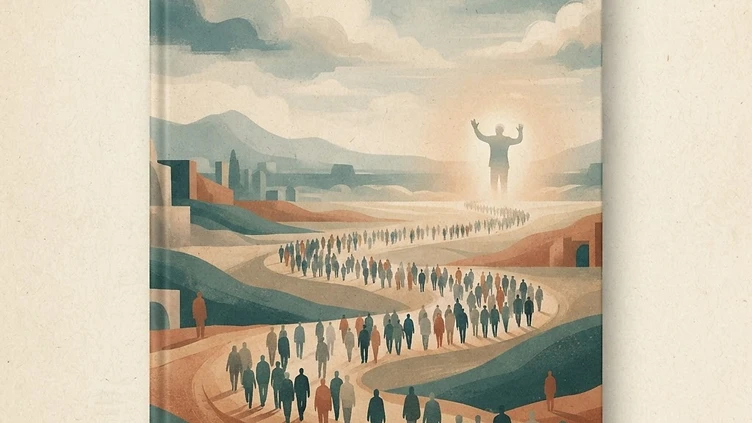
You are so certain of a memory that when someone tells you it did not happen that way, you are first surprised and then irritated. This is because memory is presented to us not as a subjective experience but as an objective reality, as if there were a tiny camera inside our skulls recording the past exactly as it was. Yet, there are moments in history when thousands of people are mistaken in the same way at the same time. These people may not know each other, may not live in the same city, and may not have read the same newspaper. Nevertheless, their memories overlap in a strange way, meeting at the same incorrect point. The story of Nelson Mandela's death is the most well-known example of this oddity and forces us to question our belief in how personal our memory truly is. ## The Strange Shared Discovery of Fiona Broome In 2009, during a science fiction conference, a researcher named Fiona Broome found herself in the middle of a strange moment during a casual conversation. She remembered Nelson Mandela dying in prison in the 1980s, his funeral being broadcast on television, and his wife making a statement to the press. This memory raised no doubts; on the contrary, it was extremely clear and vivid. However, Mandela was alive at that time, would go on to become the president of South Africa years later, and his actual death occurred in 2013. When Broome brought up this striking inconsistency to other attendees at the conference, something unexpected happened: most of the people she spoke to shared the same memory, complete with the same details. This encounter led Broome to launch a website where people began to write down their own false memories. Soon, hundreds, and then thousands of people were telling the same story in different words. Some even remembered the day they heard the news of Mandela's death and what the weather was like. What is truly striking here is that these people were not lying or being deceived; such a memory truly existed in their minds. This is how the phenomenon got its name: the Mandela Effect, the clear recollection of an event by a large group of people that never actually occurred. At this point, the question to be asked is: if so many people can be wrong in the same way, how much can we trust our memory? ## How the Brain Reconstructs Memory Most of us think of memory like a video recording, as if an event is recorded in our brains and we replay that recording every time we remember it. But what neuroscience shows us is quite the opposite. Memory is a structure that is reconstructed every time it is recalled, with pieces gathered from different places. When you remember an event, the brain assembles it by pulling pieces from various regions; during this assembly, fragments from other memories, stories you have heard, or even your imagination can slip in. Thus, remembering is not traveling into the past but reconstructing the past in the present. In this reconstruction process, the brain prioritizes creating a logical and consistent story, not necessarily an accurate one. In the Mandela example, people likely had memories of other prisoners who actually died in jail, similar news from the apartheid era, or perhaps the death of a different political leader. The brain took these fragments and turned them into a coherent and plausible story that Mandela died in prison. Furthermore, this story felt so clear that the person did not even question it. One might argue that perhaps these people were simply forgetful or had poor memory. But that is not the issue, because forgetting leaves a void, whereas here we have a full, detailed, and emotionally vivid memory. Memory has produced not a void, but a false yet convincing filler. ## The Spread of False Memories in the Internet Age So how do these individual memory errors turn into a mass phenomenon? This is where the role of the internet, especially social media, comes into play. The wave of sharing that started on Broome's website spread to forums and then to social media posts, and each share felt like evidence confirming the previous one. When one person writes, I remember it that way too, another person reading it transforms their own vague feeling into a stronger certainty. This is because the human mind tends to find a memory confirmed by others more reliable; social proof is one of the greatest weaknesses of memory. Interestingly, even though the internet makes instant access to verifiable information possible, it cannot prevent the spread of false memories. Logically, one could look up when Mandela died in a few seconds and find the truth. But people trust their own memories first, then share that trust, and once the sharing finds an echo within a community, it ceases to be an individual error and gains a sense of shared reality. Thus, the internet transforms memory errors from isolated misconceptions into a network that feeds and justifies itself. The false memory no longer feels like the strange quirk of a single person, but like a shared experience of a community, and the power of this feeling can be more persuasive than reality itself. Perhaps what the Mandela Effect teaches us is not how unreliable memory is, but how human it is. Because being mistaken, forgetting, and confusing things are not symptoms of a brain malfunction but a natural consequence of how it functions. Maybe the real question is not who remembers correctly, but why so many people need the same story. Some memories, even if they are not real, carry the trace of our mind's effort to make sense of the world. And this trace is perhaps the strangest yet most honest face of collective memory.

İlgili Denemeler
Can the Human Brain Detect Magnetic Fields?
Geophysicist Joseph Kirschvink's experiment at Caltech indicates that the human brain responds to magnetic fields, raising questions about a potential sixth sense.
Jan Hendrik Schön: The Physicist Who Fooled Science
The scandal of Jan Hendrik Schön's fabricated data at Bell Labs highlights the critical vulnerabilities in the scientific peer-review system.
Barry Marshall Drank Bacteria to Prove Stomach Ulcer Theory
Barry Marshall made medical history by consuming harmful bacteria to prove that stomach ulcers are caused by an infection rather than stress alone.
Tartışma (0)
Henüz yorum yok. İlk yorumu siz yapın.
Join the Newsletter
New essays, once a week, delivered to your inbox.