Venice Ports: What Is the Historical Origin of Quarantine?
The waiting period imposed by Venice on ships out of fear of the plague became the birth of a term that still shapes our lives today.
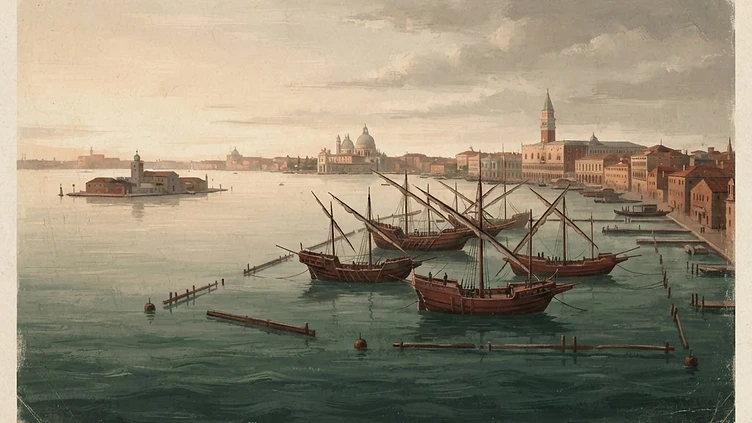
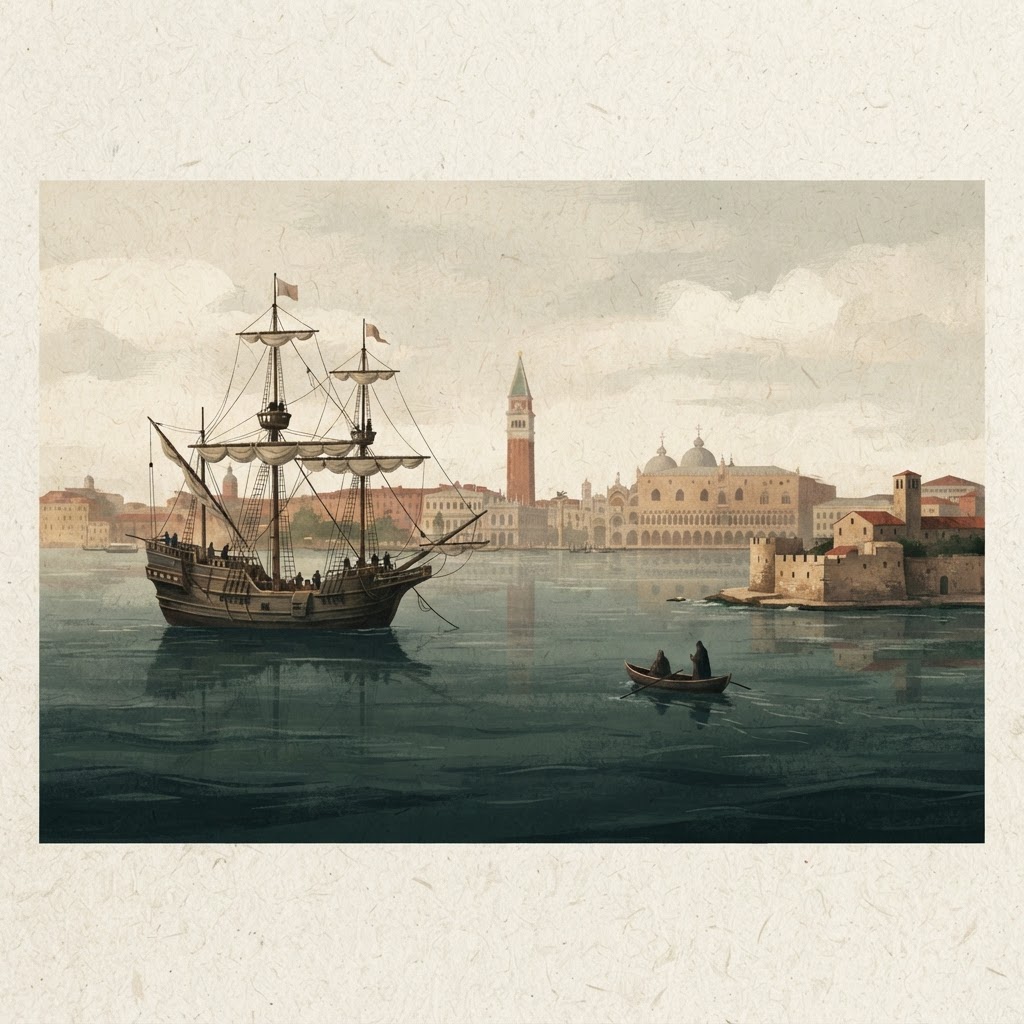
Wheven when scientific methods did not yet exist, the human mind sought a basis in repeated observations.n a ship appeared on the horizon, two emotions stirred simultaneously in the hearts of the port people: a desire for the goods it carried and a fear of the disease that might be hidden within. While this dilemma may seem distant to us today, it is precisely in this waiting that a word we still live by, quarantine, was born. The forty-day waiting period imposed by the Venetian Republic centuries ago was not merely a health measure; it was an invented method for coping with uncertainty. Why was this method based on forty days, and why was this specific number chosen instead of any other? The answer to this question sheds light on the origins of the distances we still create with the same logic today. ## The Invisible Burden Carried by the Merchant The Mediterranean was one of the oldest and busiest trade arteries in history; spices, silk, glass, and grain flowed from ship to ship in these waters, and ports became junctions. But this abundant circulation had a price: wherever people and goods traveled, microbes traveled with them. The plague moved from port to port, mingling with the merchant's bundles of fabric, the ship's dark hold, and the silent footsteps of rats. For a city like Venice, which owed its wealth entirely to maritime trade, this was a serious contradiction that had to be resolved; stopping trade meant economic collapse, while free trade could invite the city's own demise. Facing this contradiction, Venice and its fellow maritime power Dubrovnik tried to find a middle ground: instead of rejecting the ship entirely, they kept it at a distance for a while. Small islands near the port entrance or areas kept separate from the shore became places where ships and those inside were held under observation. This was the first institutional form of a reflex that is very familiar to us today; it was not about immediately excluding the suspicious, but testing it with distance first. The merchant's ship was no longer just a vehicle carrying goods, but also a bearer of invisible risk, and since port authorities could not see this risk with the naked eye, they chose to trust time. ## The Number Forty Came from Faith, Not Science The first question that comes to mind here should be: why did the authorities choose exactly forty days, and why not thirty or fifty? From today's medical knowledge, it is difficult to say that this period perfectly overlaps with the incubation period of the disease; in that era, the concept of a germ did not yet exist, nor was there any tangible knowledge about how the disease spread. The decisive factor in choosingg forty days was religious and cultural memory. In sacred texts, forty days was a duration synonymous with purification, testing, and waiting; in the human mind, this number already carried the meaning of a threshold. Without relying on scientific measurement, the authorities borrowed this symbolic duration that society already knew and accepted. It is easy, and even tempting, to criticize this situation from today's perspective; one might want to ask, how could a practice based on a non-scientific decision last so long? But what we overlook here is that the people of that time did not have laboratory data as an option. Trial and error, observation, and faith were the only tools they had, and forty days offered a compromise that satisfied both religious authority and public perception simultaneously. This number was not randomly chosen; it was a symbol that already held a place in the society's mental map. Authorities gained legitimacy by turning this symbol into a practical measure, making it easier for the public to obey this duration. Interestingly, this period later roughly overlapped with actual disease durations; whether this is a coincidence or a silent gain of observations accumulated over centuries, we cannot say for sure. Perhaps the port officials of that time, even while choosing a religious number, were relying on an intuition filtered through experience. This reminds us that even when the scientific method did not yet exist, the human mind could build meaning through repeated observations.xistence.ven when the scientific method did not yet exist, the human mind could extract a kind of pattern from repeated observations, it just lacked the language to express it other than the religious and symbolic one. ## The Same Fear Continues with New Words Centuries later, we can now see microbes, calculate incubation periods day by day, and map the genetic code of diseases. But strangely, our first reaction to uncertainty remains the same: to create distance, trust time, and isolate the suspect for a while. The practices of isolation and quarantine, the most basic tools of modern epidemic management, are in essence nothing but the transposition of that waiting logic in the Venetian port to the present day. Only the fact that the duration is based on scientific data has changed; the method itself has remained the same. We try to understand the unknown by placing time between it and us. Perhaps the real question here is why this instinct remains so strong. With our technology, knowledge, and laboratories having advanced so much, why is our most basic reaction still to close the door and increase the distance? I believe the answer lies in the fact that uncertainty itself is never completely eliminated. Even if we know how a disease spreads, we cannot fully predict who carries it, when it will appear, or where it will jump; in the face of this unknown, the human mind reverts to the oldest strategy it has learned throughout history: using time as a buffer. Forty days may now have turned into thirty, fourteen, or sometimes seven days, but the logic remains the same: maintain the gap until the suspicion is verified or resolved. That waiting at the Venetian port offers us not just a historical anecdote today, but a mirror of how humans cope with uncertainty. The authorities of that time, with the only tools they had—a religious number—laid the foundation for today's scientific quarantine practices; and today, with the most advanced tools at our disposal, we are still asking the same fundamental question: how much distance should we put between ourselves and the unknown? The word has changed, the method has been refined, but the fear itself reaches us from centuries ago, filtering through those forty days that the port locked away.
İlgili Denemeler
The Mechanical Turk: History's Chess-Playing Mystery
The chess-playing automaton known as the Mechanical Turk deceived figures like Napoleon and Benjamin Franklin, masking a hidden human operator as a machine.
Bournville: The Utopian Town Built by Chocolate
The streets, gardens, and teetotal order of Bournville reveal how the Quaker faith imprinted a distinct form of morality upon the foundations of industry.
Levi's: The Story of Riveted Jeans Born from Gold Rush
In 1873, a tailor's discovery of a riveted solution for torn pockets redirected the true fortune of the gold rush toward the enduring garment industry.
Tartışma (0)
Henüz yorum yok. İlk yorumu siz yapın.
Join the Newsletter
New essays, once a week, delivered to your inbox.