How Kodak Destroyed Its Own Invention
The engineer who invented digital photography was told by his superiors to keep it a secret.
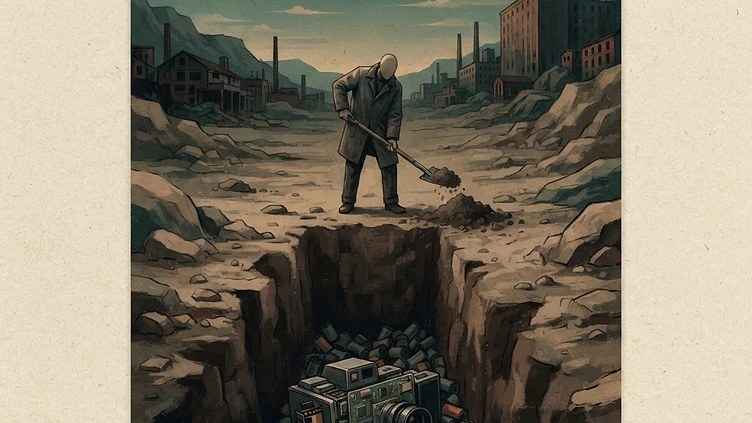
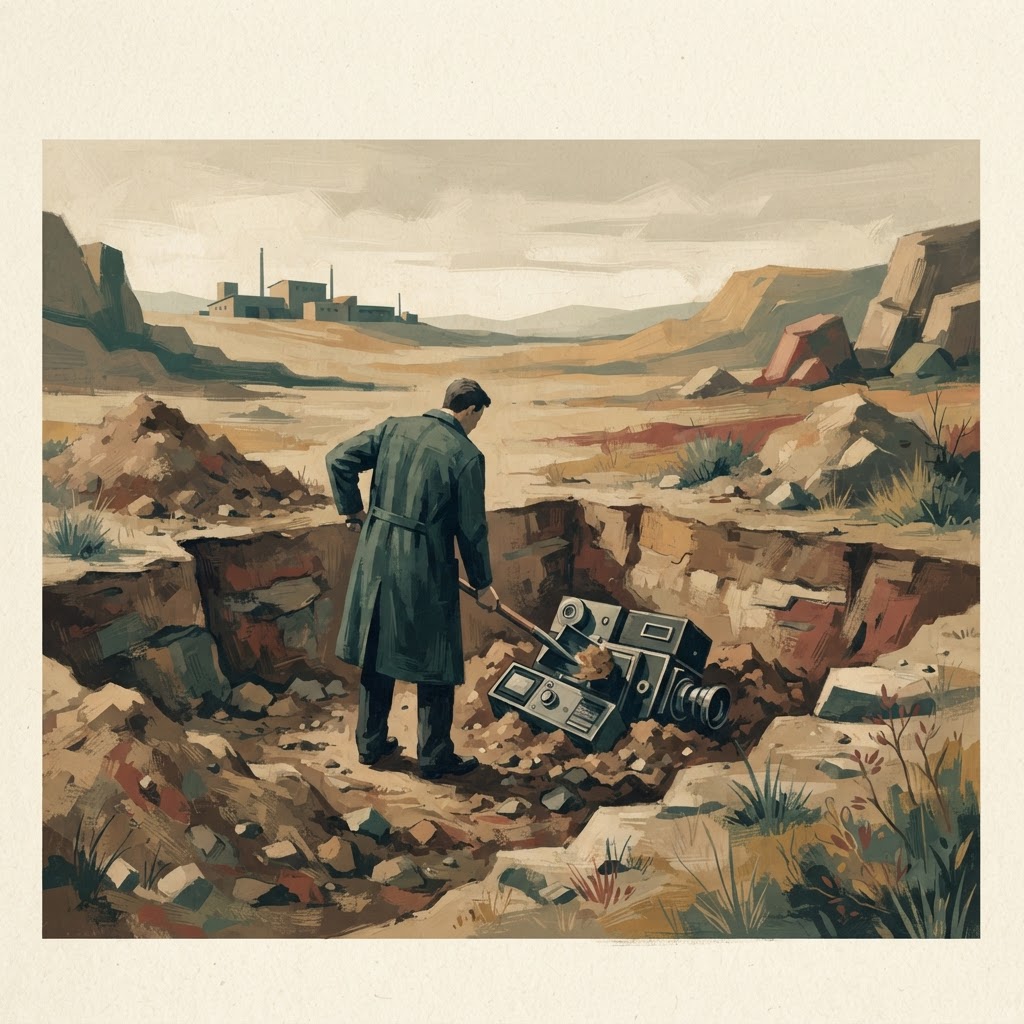
Can an inventor truly foresee the future of their creation? The question may sound strange, as the very essence of invention is based on anticipating the non-existent and bringing it into reality. Yet, when a young engineer working with a thirty-kilogram device in the darkrooms of Kodak in 1975 explained his invention to his superiors, he was met not with applause, but with quiet unease. Steven Sasson held a camera that required no film, chemicals, or paper—a device that fundamentally questioned the very reason for Kodak's existence. This essay explores the story of a company that invented its own future only to lock it away in a drawer. The true tragedy of Kodak is not that they missed digital photography, but that they held it in their hands and intentionally let it go. ## The Future Offered Silently by the Engineer Sasson's prototype seems laughable compared to today's smartphones: a bulky box that recorded black-and-white images onto cassette tapes, requiring seconds to process. Yet, inside that box, the idea that would end a century-old industry was already complete. Photography was no longer a chemical transformation but numerical data; the light was captured not by film, but by a sensor. When Sasson introduced this machine during an internal presentation, the faces of his audience showed both curiosity and dread. What he described was not merely a new product, but an objection to why Kodak existed at all. The interesting part is that this reaction did not stem from ignorance. Kodak's engineers and senior executives understood the implications of digital technology perfectly well; the problem was not a lack of understanding, but discomfort with what they understood. It is a common irony in history for a company to suffocate an idea born within its own laboratory walls. Sasson's invention was not a mistake, but a foresight; however, when foresight arrives at a moment when an institution is unprepared to redefine its future, it is often perceived as a threat. To claim the company was blind would be unfair; the real issue is that it deliberately looked away from what it clearly saw. ## The Film Company's Fear of Digital For decades, Kodak's strength stemmed from film, chemical printing materials, and the massive distribution network built around them. Each roll of film and sheet of paper formed the backbone of the company's profitability—a backbone so robust that executives found it unnecessary to imagine a world that functioned differently. The digital camera was an idea that targeted exactly this backbone: if people could view photos on a screen without printing them, who would buy film? While the question seemed simple, its answer shook the foundation of Kodak's corporate identity. When a company encounters an invention that threatens its most profitable business, it usually chooses to delay it rather than destroy it, which is exactly what Kodak did. A counter-argument might arise: perhaps management was merely cautious, believing the market was not ready, or that the costs of technology were prohibitive. While these explanations sound reasonable, they overshadow the central question: where is the line drawn between caution and self-sabotage? The resources Kodak allocated to digital research were incomparable to those spent on film; this was not a coincidence but a conscious choice. To the executives, a film company accelerating the shift to digital felt like shooting itself in the foot; yet, the bullet they refused to fire was eventually triggered by others. Kodak's fear was understandable, but being understandable did not make it wise. ## The Right Invention, The Wrong Courage When Kodak declared bankruptcy in 2012, many commentators read it as a failure of foresight, as if the company collapsed because it could not see the future. However, the most striking aspect of the story suggests the exact opposite. Kodak had seen the future; it had even built it with its own hands in the laboratory. The true cause of the collapse was a lack of the corporate courage required to act on what was seen. When a company faces information that contradicts its internal truth, it sometimes chooses to ignore the information rather than act upon it; the history of Kodak is one of the most instructive examples of this refusal. At this point, another question arises: which is more dangerous, a company without foresight, or a company that has foresight but does not trust it? In the first case, collapse is a surprise; in the second, it is a confession. Kodak's story is a confession of the latter type, as an early and accurate report on its own future already existed in the company archives; the courage to implement that report was simply missing. Technological intelligence and corporate courage are not the same; one involves seeing, while the other involves re-establishing oneself based on that sight. Kodak was brilliant at the former and weak at the latter; history held it accountable where it was weak. Telling Kodak's story today could easily turn into a simple exercise in drawing lessons, but the truly curious matter lies elsewhere. The issue is not just a company making the wrong decision, but the fact that possessing the right information does not automatically lead individuals or institutions to the right behavior. As Sasson's thirty-kilogram box gathered dust on Kodak's shelves, others elsewhere took the same idea and grew it. Perhaps the question this essay leaves behind is this: how many ideas do we already have in our possession that we choose to ignore? Kodak's story holds up a mirror for us to ponder this, because what collapsed was not a company, but a lack of courage; and that deficiency can grow silently within every institution and every human being.
İlgili Denemeler
The Mechanical Turk: History's Chess-Playing Mystery
The chess-playing automaton known as the Mechanical Turk deceived figures like Napoleon and Benjamin Franklin, masking a hidden human operator as a machine.
Bournville: The Utopian Town Built by Chocolate
The streets, gardens, and teetotal order of Bournville reveal how the Quaker faith imprinted a distinct form of morality upon the foundations of industry.
Levi's: The Story of Riveted Jeans Born from Gold Rush
In 1873, a tailor's discovery of a riveted solution for torn pockets redirected the true fortune of the gold rush toward the enduring garment industry.
Tartışma (0)
Henüz yorum yok. İlk yorumu siz yapın.
Join the Newsletter
New essays, once a week, delivered to your inbox.