The Rise and Fall of Nokia: An Industrial Legend
The story of how a Finnish paper mill built and lost the mobile phone era.
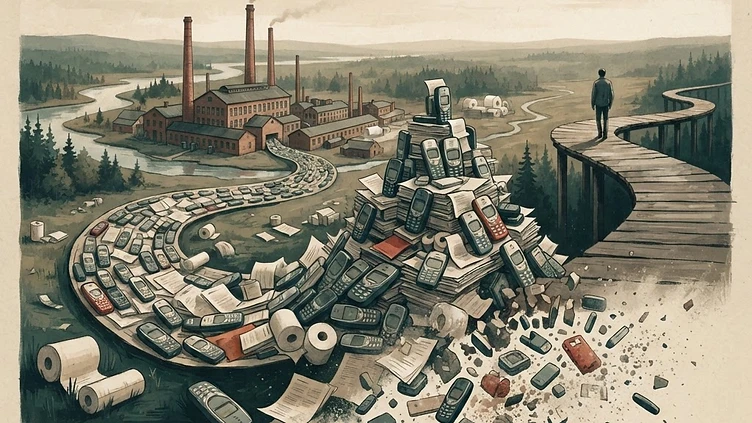
Attempting to read the history of an object through its most familiar form is often misleading. If the brand of the phone in our hand bears the name of a factory that once boiled paper pulp by a river, what does this oddity tell us? The story of Nokia is not actually a story about a mobile phone; it is the story of a company's capacity to constantly redefine itself and its subsequent loss of that capacity. If the first things that come to mind when we hear that name today are screens and keypads, that is nothing more than the shortness of our memory. Because Nokia was founded on a legacy of transformation far older and more rooted than the mobile phone.
The Beginning by a River
Founded in 1865 in Finland as a paper mill, Nokia drew its strength from the river that flowed past the small settlement from which it took its name. At that time, paper production was a highly local and modest industrial sector that drew its energy directly from the flow of water. This was the company's initial identity: a production facility that converted forest raw materials into paper, serving regional needs. But the truly interesting part is that this identity was not permanent. Over the years, the company expanded into rubber production, and then into cables and electrical equipment. Each transition was not a total abandonment of the previous product, but the application of the same industrial reflex to a different material.
One must pause here and ask: is a company's strength in what it produces, or in its ability to change what it produces? Looking at Nokia's history spanning over a century, the answer becomes obvious. Each of the transitions from paper to rubber, from rubber to cable, and from cable to electronics shows that the company held no emotional or strategic attachment to any specific product. This might appear as cold pragmatism, but it is actually something deeper: the ability to read what a changing world needs and to melt and reshape itself according to that need. When it entered the electronics industry, Nokia had already been operating with this reflex for over a century. Therefore, the mobile phone was not the company's destiny, but merely the final link in this long chain of transformation.
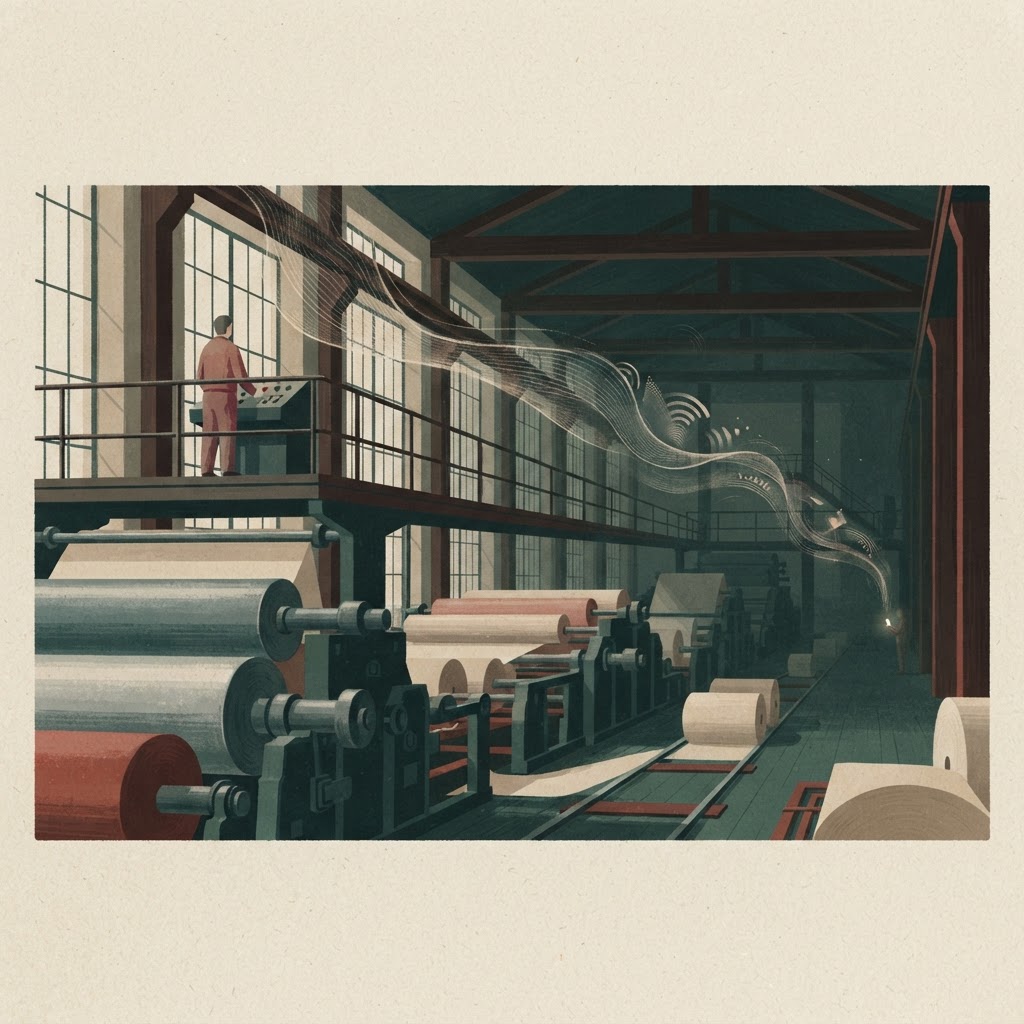
An Empire That Fit in a Pocket
By the end of the 1990s, the picture was clear: Nokia had become the world's most preferred mobile phone brand. The secret to this success was not, as many believe, in technological superiority, but on the contrary, in a sense of simplicity. Nokia phones were not complex; they were durable, intuitive, and did not exhaust their users. You could guess what would happen when you pressed a button, and this predictability was a great source of relief for millions of people still unfamiliar with technology. Engineering here operated not as a display, but as a tool for producing trust.
So how can a brand single-handedly shape a market just by being reliable? The answer lies in the nature of the relationship the consumer established with the phone. People at that time did not expect miracles from their phones; they just wanted to be able to call and text, and to own a device whose battery lasted for days. Nokia met this expectation perfectly, and because it did, it left its competitors almost no room to maneuver. What emerged was not just a commercial triumph, but a cultural habit: people all over the world began to view that familiar device in their pocket as a natural extension of their lives. Such widespread acceptance gave the company unwavering trust, but unfortunately, this trust would eventually turn into a burden.
The Logic of the Fall from the Peak
The arrival of smartphones was not an unexpected threat for Nokia; the company had been experimenting with touchscreens, internet-connected devices, and even software-based operating systems years before. The problem was not a lack of technical knowledge, as its engineering capacity was undisputed. The real breakdown occurred when the institution's confidence in its own success turned into a kind of blindness. Being the architect of a product used by millions sometimes makes it easier not to notice change early, but to ignore it. The decision-making mechanisms within Nokia, while being slow to respond to the market's new expectations, chose to maintain a belief that the old formula for success would persist.
An opposing view might come to mind here: perhaps the problem was just timing, perhaps a decision made a year earlier or a year later could have changed everything. But this explanation does not reach the root of the matter. Because the transition to the smartphone era was not just a product update, but an entire shift in mindset; it required moving from hardware-centric thinking to software and ecosystem-centric thinking. Nokia's corporate structure lost the flexibility to make this mental leap by strangely becoming deprived of the most deeply rooted feature of its own history. The company, which had viewed change as natural for a century, became an institution that resisted change at the most critical threshold. The comfort provided by being at the top had eroded its ability to read change as a necessity rather than a threat.
When we look at Nokia's story today, what is truly cautionary is not the collapse itself, but how different it is from where the collapse came. This company, which once produced paper by the river and then drifted into rubber, cable, and electronics, had mastered the art of losing and finding itself; but the victory it achieved in mobile phones was so great that it made that mastery forgotten. Perhaps within every great success lies a small trap that prepares its own end: when a person or an institution does something very well, they begin to feel that giving that thing up is a loss. The real lesson of Nokia is not about technology, but about trust; because even the strongest bridges start to collapse when they leave those who cross them feeling too comfortable.
İlgili Denemeler
The Mechanical Turk: History's Chess-Playing Mystery
The chess-playing automaton known as the Mechanical Turk deceived figures like Napoleon and Benjamin Franklin, masking a hidden human operator as a machine.
Bournville: The Utopian Town Built by Chocolate
The streets, gardens, and teetotal order of Bournville reveal how the Quaker faith imprinted a distinct form of morality upon the foundations of industry.
Levi's: The Story of Riveted Jeans Born from Gold Rush
In 1873, a tailor's discovery of a riveted solution for torn pockets redirected the true fortune of the gold rush toward the enduring garment industry.
Tartışma (0)
Henüz yorum yok. İlk yorumu siz yapın.
Join the Newsletter
New essays, once a week, delivered to your inbox.