Jacques Benveniste and the Water Memory Myth
A study published in the journal Nature divided the scientific community by suggesting that it had proven the scientific foundation of homeopathy.
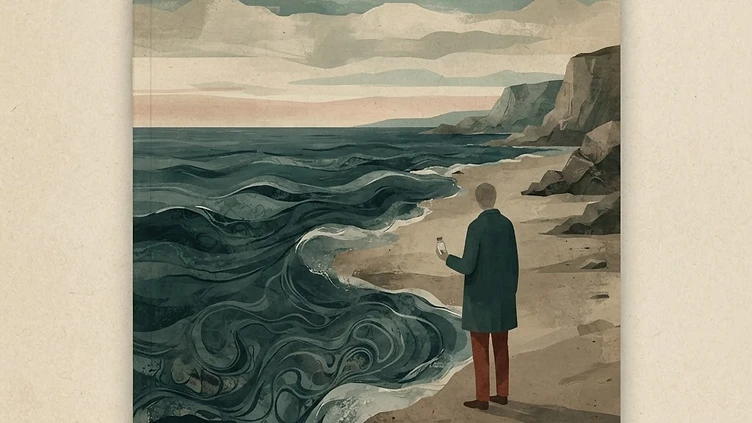
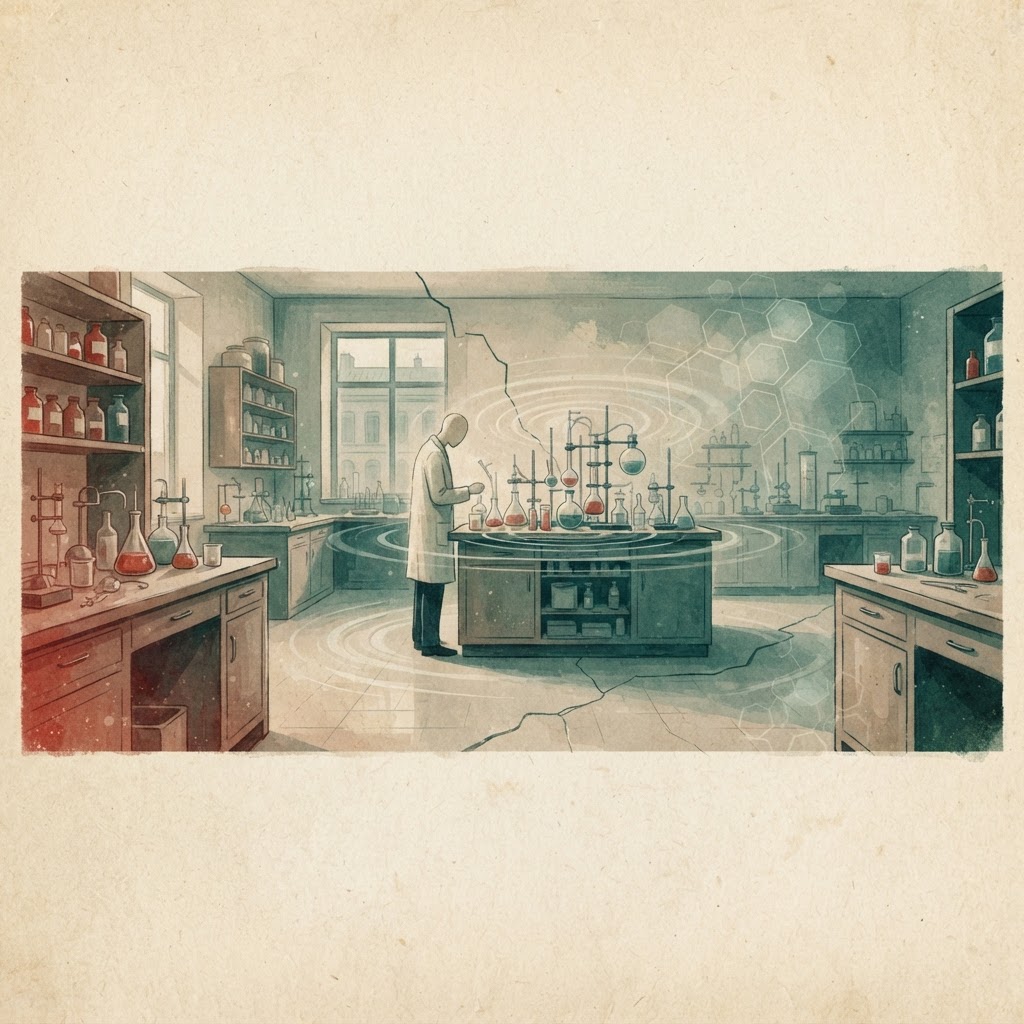
A scientist's greatest adversary can sometimes be their own discovery. In 1988, Jacques Benveniste made a bold claim in the pages of Nature: water could remember the substances once mixed into it. More precisely, an antibody solution was so diluted that not a single molecule remained, yet the water continued to behave as if it were reacting to the presence of that antibody. This assertion suddenly provided a scientific backbone to homeopathy, a practice that had stood on the fringes of medicine for centuries. How does a laboratory result find its way into one of the world's most prestigious scientific journals only to descend into a scandal? The answer reveals the internal conflict of science and that delicate line between skepticism and curiosity. ## The Claim of Antibody-Free Effects Benveniste’s team had spent years at their laboratory near Paris studying allergic and immune responses. Their experimental method appeared simple: they diluted an antibody solution repeatedly until, at a certain point, no molecules remained chemically; there was only water. The expected result was the disappearance of any effect, as classical chemistry dictates. However, the data reported by Benveniste showed the opposite: cells continued to react to the absent antibody. This was not merely a laboratory quirk, but a claim that shook a fundamental assumption about the nature of matter. The striking aspect was how closely this finding aligned with the logic of homeopathy. Homeopathy suggests that the more one dilutes a substance, the more its effect is amplified, a belief the scientific community has long dismissed as superstition. Benveniste’s experiment seemed to offer concrete evidence for this belief, implying that water possessed a form of molecular memory and encoded the substances it had previously held. Even as Nature's editor, John Maddox, agreed to publish the paper, he did not hide his doubts, urging readers to be cautious in an accompanying note. It was a rare moment in scientific history where a journal essentially took precautions against its own publication. ## The Investigation Team Sent by Nature Shortly after the article was published, Maddox decided to test the claim with his own eyes. He did not go alone; he was accompanied by Walter Stewart, an expert in detecting scientific fraud, and James Randi, a magician and skeptic. This selection was intentional, as Randi’s expertise lay in understanding how the human eye can be deceived; someone familiar with how a stage trick fools an audience could also spot a potential illusion in a laboratory. The three-man team traveled to Benveniste’s Paris laboratory to repeat the experiment, this time under strict controls. During the experiment, samples were labeled with blind coding; no one knew which tube contained which solution until the results were revealed. Even this simple precaution changed everything. Under blind conditions, the striking results previously obtained by the laboratory evaporated, and the antibody-free water showed no special reaction. Randi’s presence was particularly symbolic, as it sent a message to the scientific community: sometimes the sharpest scientific skepticism is uncovered by an outsider, an eye accustomed to illusions. The investigation team's report concluded that while Benveniste’s team had not committed intentional fraud, their experimental design was prone to bias and unintended effects. ## The Self-Correcting Mechanism of Science This story paints a more honest picture of how science works than we often assume. We frequently imagine science as a flawless process where every step is inherently correct. Yet the Benveniste incident shows that science is a system capable of error and subsequently recognizing and correcting that error. Even Nature’s decision to publish the paper is part of this dynamic, as the journal chose to bring the claim into the light rather than silence it, and then test it in the public eye. Proving a claim false is not a failure of science but, on the contrary, evidence of its functionality. Still, the impact of this event is more than a methodological lesson. Although Benveniste’s career was severely damaged after the scandal, he never fully abandoned his claims and continued to attempt similar experiments in various forms for years. This resistance serves as a reminder that a scientist's devotion to their own discovery can sometimes outweigh objectivity. The human mind struggles to let go of what it has once believed, and this holds true even for a trained scientist. Perhaps this is why the testing of the scientific method by independent, outside observers is so valuable, for those looking from within are much more prone to seeing what they hope to see. Looking back today, Benveniste’s story is less about whether homeopathy has a scientific basis and more about how science defines its own boundaries. The question of whether water molecules have memory is secondary; the real issue is how rigorously the process of verifying a claim is executed. This event shows that while a striking finding can rapidly generate excitement within the scientific community, that same community possesses internal mechanisms to extinguish it. Perhaps the most beautiful aspect of science lies exactly here: regardless of how tempting a claim may be, it must eventually undergo a cold and patient examination; no amount of fame or editorial prestige can bypass that test.
İlgili Denemeler
Can the Human Brain Detect Magnetic Fields?
Geophysicist Joseph Kirschvink's experiment at Caltech indicates that the human brain responds to magnetic fields, raising questions about a potential sixth sense.
Jan Hendrik Schön: The Physicist Who Fooled Science
The scandal of Jan Hendrik Schön's fabricated data at Bell Labs highlights the critical vulnerabilities in the scientific peer-review system.
Barry Marshall Drank Bacteria to Prove Stomach Ulcer Theory
Barry Marshall made medical history by consuming harmful bacteria to prove that stomach ulcers are caused by an infection rather than stress alone.
Tartışma (0)
Henüz yorum yok. İlk yorumu siz yapın.
Join the Newsletter
New essays, once a week, delivered to your inbox.