Silk Espionage: How Monks Stole China's Secret
How did Byzantium seize China's millennial secret within the hollowed canes of two monks?
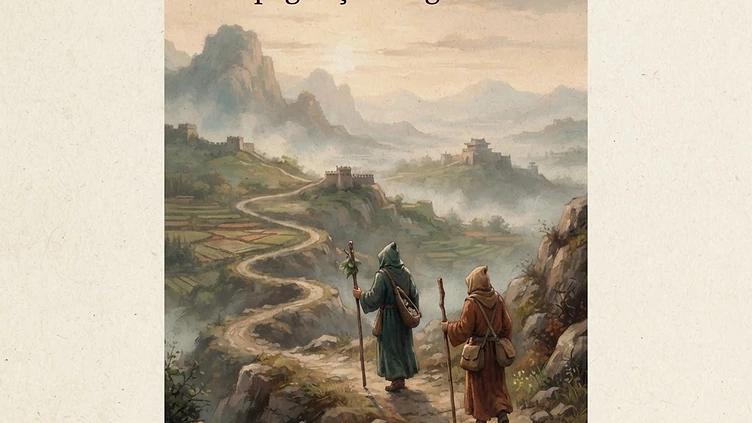
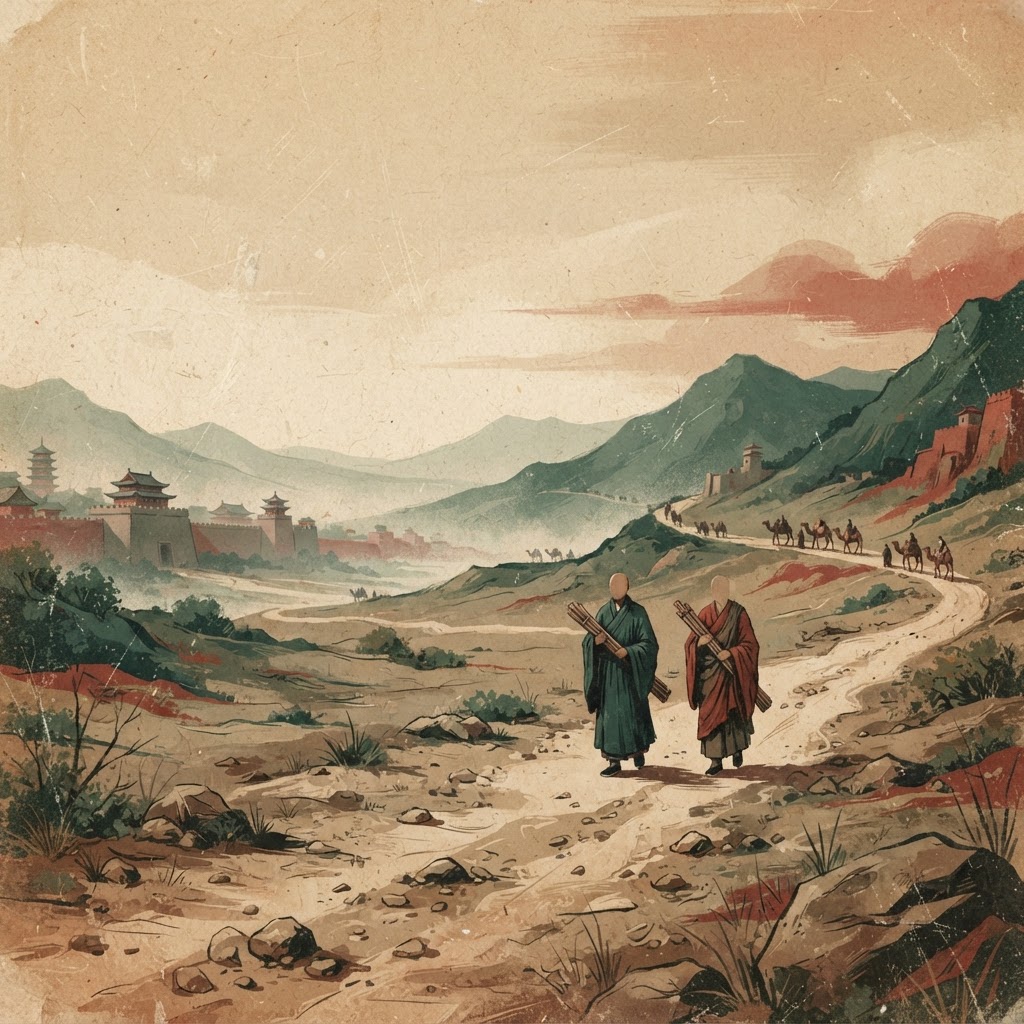
What is the first thing that comes to mind when we think of silk? Perhaps the shimmer of a gown or rolls of fabric glistening on the dusty shelves of a market. Yet behind this fabric lies one of the longest-standing trade secrets in human history. One day, two seemingly ordinary canes carried by two monks spirited this centuries-old secret out of China and into Byzantium. When I reflect on this story, I always face the same question: how can a society keep a production method under monopoly for so long, and how is that monopoly broken? Today we live in a world where tech companies lock away their algorithms and states engage in patent wars, but it turns out the rules of this game are much older.## China's Centuries-Old MonopolyTo understand China's dominance over silk, one must first accept that this was not merely craft knowledge; it was state strategy. The entire chain of information—how the silkworm was fed, how the cocoon was unwound, and how the thread was spun and woven—was protected by the threat of the death penalty to ensure it never left the imperial borders. For a farmer or merchant to attempt to cross the border with this secret was an act that endangered not only their own life but the future of their family. Given such deterrence, it is not surprising that the secret was kept for centuries; what is surprising is that no one foresaw that a crack would inevitably emerge despite such pressure.Why was this monopoly so precious? Because in the ancient world, silk was not just a fabric; it was a language of status. When a Roman noble wore silk, they felt close to the heart of the empire, to luxury and power; yet they did not even know where that fabric came from or how it was produced. This ignorance gave China incredible bargaining power: you create the demand, but I alone control the supply. In today's language, this was pure supply chain dominance, perhaps the first global supply chain power in history. What is interesting here is that it was not the severity of the laws protecting the secret that mattered, but the continuity of demand; for the value of a commodity comes not only from its rarity but from the endurance of the desire for it, and the desire for silk never waned for centuries.## The Conspiracy in the CaneThis is where Emperor Justinian enters the scene. Byzantium was tired of depending on intermediaries along the Silk Road, especially Persian traders; with every silk transaction, it contributed to the profit of another country and the strategic power of another empire. Justinian's question was simple: why not produce it ourselves instead of buying it? This question might seem as mundane as a modern head of state asking why they should develop technology instead of importing it, but in the sixth century, this question transformed directly into an espionage operation. Sending two monks to China, likely under the guise of a religious mission, created a moment where faith, trade, and politics intertwined; because those who stole the secret moved under the cloak of clergy, they did not arouse suspicion.The inside of the cane had been hollowed out, and silkworm eggs were hidden there; perhaps mulberry seeds accompanied the journey as well, for the worms fed only on mulberry leaves, and to steal the secret without this knowledge would have been a hollow theft. Imagine that: the centuries-old economic power of an empire packed inside a wooden stick held by two men; such a fragile, such a human moment. One might raise an objection here: could such a great secret really be stolen in a single journey, a single attempt? The answer is likely no, because knowledge transfer is usually gradual, attempted multiple times, and often fails. But history remembers the version that remains, the most striking moment, the most symbolic event; thus these two monks, perhaps as the final link in a process, became the heroes of the story.## The Modern Echo of the SecretWhen we read this story of ancient smuggling through today's lens, we encounter a familiar pattern. A country holds a technology or production secret, rival nations seek official or unofficial ways to access that information, and eventually, the information leaks. We see the same dynamic in everything from semiconductor technology to artificial intelligence algorithms, from drug formulas to agricultural seeds: a tension where one side says, "this is ours," and the other responds, "this should be the common heritage of humanity." In the case of the silkworm, from China's perspective, this was theft; from Byzantium's perspective, it was merely a strategy for economic survival. This dual perspective is perfectly repeated in today's debates on technology transfer; because the concept of property is not as old as information itself, but an invention that emerges the moment information becomes valuable.Moreover, this story reminds us of something else: no monopoly, no matter how strictly guarded, lasts forever. When China lost the secret of silk, world trade was reshaped, Byzantium established its own silk workshops, Europe gradually gained access to this production, and over time, silk ceased to be the property of the East alone and became that of the whole world. For a company or a country today to say, "this information will never leak," means ignoring this lesson of history. Information behaves like water; no matter how tight a dam you build, it will one day seep through a crack, because human curiosity and economic interest are more permanent motives than the strictest prohibitions. This is why today's intellectual property law is, in essence, an attempt to manage a war that can never be truly won, just as the Chinese emperors tried to do centuries ago.The day silk was stolen is not a moment marked by a precise date in history, but perhaps the symbolic peak of a slowly accumulating process. But this symbol teaches us much: power is measured not only by the resources one possesses but by the ability to protect or seize that resource. Those small eggs in the monks' canes form the oldest and most elegant example of the competition, espionage, and information wars that shape the global economy today. Perhaps the real question is: are we living inside an ""inherent silk secret"" that we are currently unaware of, and will someone emerge one day to hide it inside a cane?
İlgili Denemeler
The Mechanical Turk: History's Chess-Playing Mystery
The chess-playing automaton known as the Mechanical Turk deceived figures like Napoleon and Benjamin Franklin, masking a hidden human operator as a machine.
Bournville: The Utopian Town Built by Chocolate
The streets, gardens, and teetotal order of Bournville reveal how the Quaker faith imprinted a distinct form of morality upon the foundations of industry.
Levi's: The Story of Riveted Jeans Born from Gold Rush
In 1873, a tailor's discovery of a riveted solution for torn pockets redirected the true fortune of the gold rush toward the enduring garment industry.
Tartışma (0)
Henüz yorum yok. İlk yorumu siz yapın.
Join the Newsletter
New essays, once a week, delivered to your inbox.