Placebo Effect: How the Mind Triggers Healing
If a pill containing no active ingredients can provide the same healing as a real drug, what is the body actually believing in?
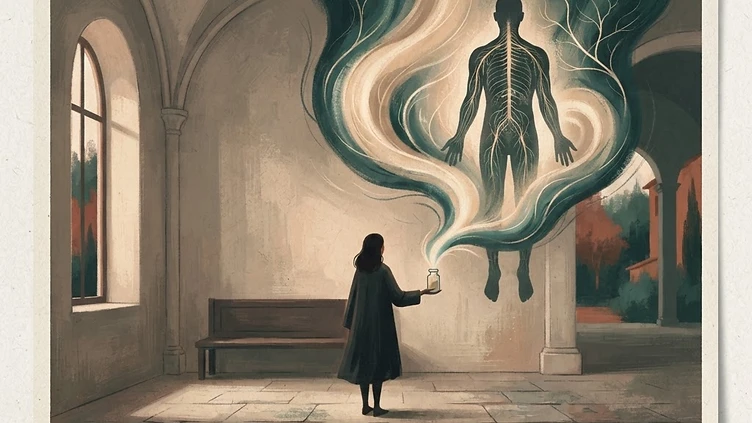
One morning, a person suffering from nausea takes a pill from the pharmacy and feels better within half an hour. Yet, that pill consists only of sugar, containing no active ingredients at all. Still, the nausea fades, the headache lightens, and sometimes even chronic pain begins to subside. This simple but unsettling observation brings one of medicine's oldest questions back to us: what is the body really reacting to, the substance itself or the mind that believes in it? This strange phenomenon, which we call the placebo effect, has blurred the fine line between science and belief for years; because a recovery that occurs without any chemical intervention compels us to rethink the very definition of the word real. ## The Biochemistry of Expectation Most of us assume the placebo effect is a form of self-deception, an imaginative trick that masks pain. However, brain imaging studies tell a different story. When a person is given a substance containing no active ingredients but is told it is a painkiller, the brain's own opioid systems are activated; the body begins to produce its own pain relief without waiting for an external drug. This is not the mind deceiving the body, but rather the mind truly reprogramming it; neural pathways, neurotransmitters, and even immune responses are set in motion at the moment of this expectation. What is truly striking here is that the effect is not merely a subjective feeling of relief, but a measurable biological change. It has been observed that placebo injections given to Parkinson patients increase dopamine release in the brain; this has led to a genuine reduction in tremors. In other words, the body reads the sentence I believe I will be helped as a chemical instruction and reacts accordingly. At this point, one asks oneself: if belief can produce such tangible biochemistry, where is the line drawn between a real treatment and a fake one? Perhaps, for the body, this distinction is far less important than we imagine. Still, it would be wrong to say that this effect heals everything. A placebo does not shrink a tumor, nor does it knit a broken bone back together; its impact is seen primarily in subjective symptoms closely tied to the nervous system, such as pain, nausea, and fatigue. Yet even this limitation suggests something important: the mind's power is not infinite, but it operates in a much wider field than we assume. Expectation serves as a trigger for the body to mobilize its own resources; it is as if the body opens its own medicine cabinet when it receives a sign it can trust. ## The Doctor's Voice, The Body's Response There are experiments showing that the same drug produces different results in different contexts. A painkiller in expensive packaging is found to be more effective than one that looks cheap; a branded box creates a stronger sense of relief than a generic one. Yet, the molecule inside is exactly the same. This shows that treatment is not just a substance, but also a narrative; the story the patient constructs in their mind that this will help me becomes an inseparable part of the drug itself. Perhaps this is why the calm, reassuring voice of a doctor produces a different result than the voice of a doctor who writes the same prescription but is rushed and indifferent. It is easy to underestimate the ritual dimension of the physician-patient relationship because modern medicine often views everything outside the active ingredient as noise. But the prick of a needle, the whiteness of an examination table, the touch of a doctor's hand on a shoulder, all transmit a message to the body: here there is care, there is trust, and healing is possible. The power of this message is sometimes so decisive that the same pill can be found more effective when administered in a hospital than when taken at home. One cannot help but wonder: perhaps a large part of medicine is, unknowingly, performing a kind of ceremony, and the effect of that ceremony is intertwined with the chemical formula itself. There is, of course, the opposite situation, the dark twin known as the nocebo effect. A person warned about the side effects of a drug can genuinely feel those symptoms even without taking any active ingredient. This shows that expectation possesses not just a healing power, but a sickening one as well. It seems the signal sent by the mind to the body is not neutral; both hope and anxiety travel the same neural pathways and leave marks on the body. Perhaps the real issue is not which story we listen to, but how deeply we believe in that story. ## The Blind Spot of Medicine The modern drug development process views the placebo effect as an enemy; double-blind studies are specifically designed to neutralize this effect. But the irony is that the recovery in the placebo group sometimes rises to a level close to the real drug group. In such cases, researchers are forced to measure not the effect of the drug, but how much more effect the drug produces compared to the placebo. That is to say, the power of the mind infiltrates the very center of what is considered objective scientific process and becomes a variable that must be accounted for. Science, in order to maintain its own objectivity, constantly tries to deactivate the real effect that belief creates in the body, but even this effort proves just how powerful belief is. In recent years, some researchers have gone even further, testing a method called open-label placebo: they told the patient clearly that the pill they were taking was a placebo, and yet they still observed a recovery. This shows that the issue is not about deception, but about expectation and the ritual itself. The patient is able to activate their body without needing any illusion, simply by creating a moment of regular intake, an intention, and an attention. This further expands medicine's blind spot; because the question is no longer how do we deceive the patient, but rather how do we use this power of the mind in an ethical and transparent way? Science comes face-to-face with its own limits here, because what it is measuring is no longer just a molecule, but the human being's trust in their own body. The fact that the placebo effect has not yet been fully solved deepens this blind spot. Which individuals it works more strongly on, in which diseases it remains limited, and the exact mechanisms by which the brain triggers this change are still among the questions being researched. This uncertainty disturbs medicine because medicine loves what is measurable and repeatable; but belief works with a slightly different dosage in every human. Perhaps that is why the placebo is both a nuisance and a treasure for modern science: it is the most concrete, most repeatable evidence we have regarding the body's capacity to heal itself. All these observations lead us back to a simple but profound question: is belief a byproduct of the body, or is it the way the body itself functions? The placebo effect does not close this question with a definitive answer; it only reminds us that the boundary between mind and body is not nearly as rigid as we think. The sugar in a pill does not deceive the body; it calls upon the body to communicate through the meaning assigned to it. Perhaps healing is not only about finding the right molecule, but also about finding the right dose of belief, and this dose requires a slightly different prescription for every person.
İlgili Denemeler
Can the Human Brain Detect Magnetic Fields?
Geophysicist Joseph Kirschvink's experiment at Caltech indicates that the human brain responds to magnetic fields, raising questions about a potential sixth sense.
Jan Hendrik Schön: The Physicist Who Fooled Science
The scandal of Jan Hendrik Schön's fabricated data at Bell Labs highlights the critical vulnerabilities in the scientific peer-review system.
Barry Marshall Drank Bacteria to Prove Stomach Ulcer Theory
Barry Marshall made medical history by consuming harmful bacteria to prove that stomach ulcers are caused by an infection rather than stress alone.
Tartışma (0)
Henüz yorum yok. İlk yorumu siz yapın.
Join the Newsletter
New essays, once a week, delivered to your inbox.