Ignaz Semmelweis: The Tragic Fate of the Hygiene Pioneer
Why was one of science's simplest and most life-saving ideas branded as madness by the physicians of its time?

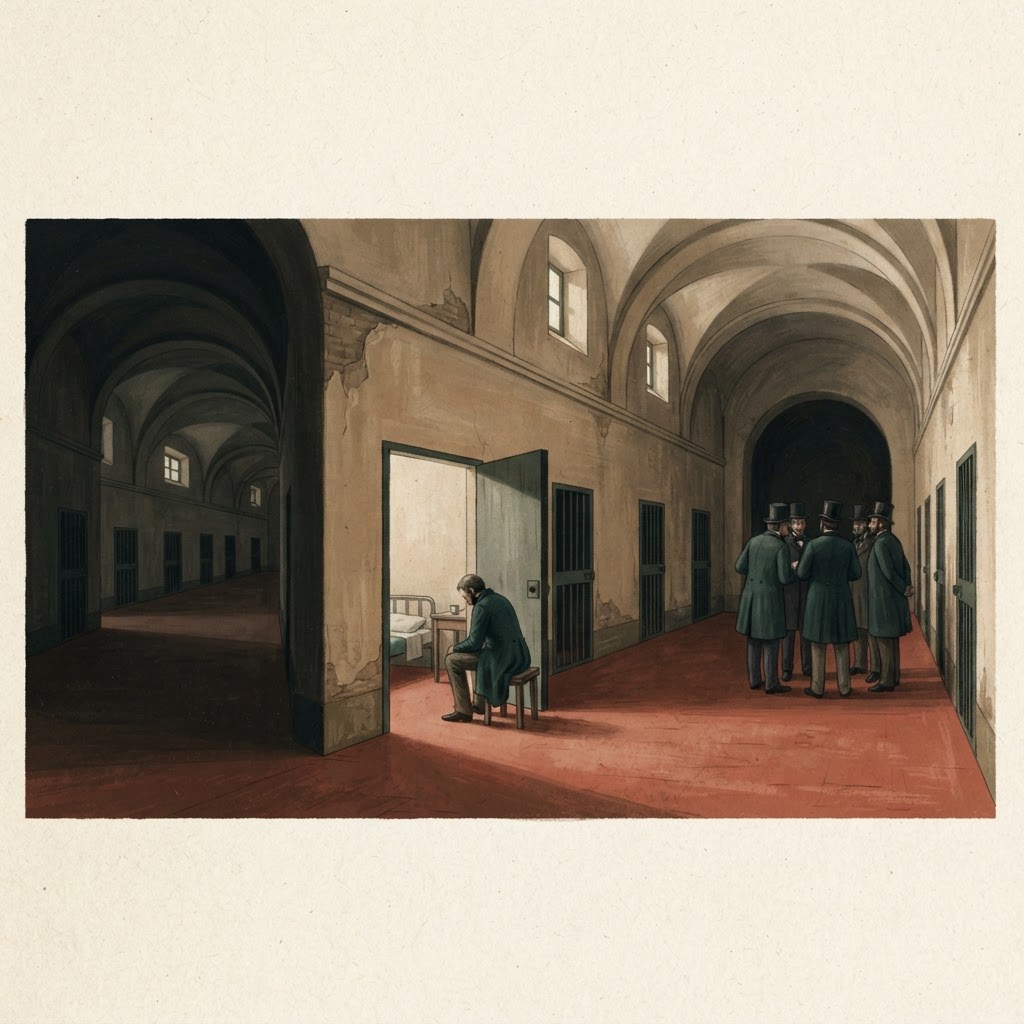
Imagine a doctor discovering a solution that could halve the mortality rate of women in his hospital, with the solution being as simple as washing one's hands. He has the evidence, the figures are clear, and deaths are visibly decreasing. Such a doctor should be declared a hero, right? The story of Ignaz Semmelweis holds a dark mirror to us: it reveals the chasm between finding a scientific truth and getting others to accept it. Because Semmelweis was right, but being right did not save him; on the contrary, this righteousness isolated him, discredited him, and eventually led to him breathing his last within the cold walls of an asylum. Behind this ordinary habit, which we perform today without a second thought, lies a tale of unbelievable resistance. ## A Silent Killer in Vienna In nineteenth-century Vienna, childbirth was an act more dangerous than we could imagine today. In maternity wards, women were dying in droves from a common infection, puerperal fever, and no one could explain why these deaths were so concentrated. While working at the Vienna General Hospital, Semmelweis noticed a strange difference: in one clinic, doctors and medical students delivered babies, while in the other, midwives worked. The mortality rate in the doctors' clinic was far higher than in the midwives'. This difference was too large to be a coincidence, and Semmelweis possessed the kind of curiosity that would not allow him to rest until he found the answer. The turning point came with the death of a colleague. A doctor named Kolletschka accidentally cut his hand during an autopsy and soon died with symptoms very similar to puerperal fever. Semmelweis drew a connection here: doctors would work with corpses in the autopsy room in the morning, then move to the maternity ward to examine women without washing their hands. He theorized that something invisible from the corpses was being carried to the women via their hands. To test this, he made handwashing with a chlorine lime solution mandatory for doctors, and the result was striking: the mortality rate dropped dramatically within months. He now had concrete proof, supported not just by intuition, but by numbers. ## Evidence Is Not Enough Here we encounter the most frustrating side of human nature: evidence is sometimes not enough. What Semmelweis proposed was radically contrary to the medical understanding of the time, as germ theory had not yet been born; Pasteur's work would come later. Doctors lacked the necessary theoretical framework to accept the idea that something invisible was being transferred from their hands to the patients; therefore, they preferred to view Semmelweis's figures as an oddity, perhaps even a coincidence. Even more painful was the implicit suggestion of this idea: if Semmelweis was right, these respectable doctors' own hands were carrying death. For the medical community of the time, this thought was far more than an acceptable embarrassment; it felt like a blow to their professional identity. Semmelweis's own character did not make things easier. Instead of presenting his evidence gently and trying to persuade his colleagues, he adopted an increasingly harsh, angry tone; he openly accused those who opposed him of ignorance, describing them in his letters as purveyors of death. This approach perhaps stemmed from a righteous anger, but instead of finding allies to support him, it led to him gaining more enemies. Eventually, he was removed from his post, his reputation was tarnished, and his ideas were pushed to the margins of the scientific community. Being right was not an armor that could save him; instead, he paid the heaviest price for defending a truth that found no acceptance. ## The Semmelweis Reflex This form of resistance, named after him, has evolved into a concept: the Semmelweis Reflex defines the rejection of strong evidence contrary to established beliefs simply because it is unconventional. This reflex is fueled not by malice, but by the human mind's deep discomfort with change. No matter how well-proven an idea may be, if it shakes the existing worldview, first the evidence itself is questioned, then the person who puts it forward. This is why Semmelweis's story is read not just as an anecdote of medical history, but as a universal example of how knowledge is rejected. One does not need to look far to see that this reflex is still active today. When a new treatment method, a study questioning a deep-rooted habit, or data refuting an institution's long-standing practice emerges, the first reaction is usually not to examine the evidence, but to disparage the person who brought it or the method itself. When a report arrives showing that a task performed the same way in an institution for years is inefficient, the report is often not discussed; instead, the experience or intentions of the person who wrote it are questioned. This shows that what Semmelweis experienced is not a strange, bygone case, but a tendency that appears before us today in different guises. Semmelweis's story was ironically redeemed years after his death when Pasteur proved germ theory; but this redemption could not bring back the suffering he endured while alive. Today, as we wash our hands in an operating room, a hospital corridor, or just in our kitchen, remembering that behind this habit lies the persistence of a man once accused of madness is perhaps the smallest gesture of respect we owe him. Because his story reminds us: being right is not enough to get an idea accepted; sometimes, the simplest truth encounters the most resistance.
İlgili Denemeler
Can the Human Brain Detect Magnetic Fields?
Geophysicist Joseph Kirschvink's experiment at Caltech indicates that the human brain responds to magnetic fields, raising questions about a potential sixth sense.
Jan Hendrik Schön: The Physicist Who Fooled Science
The scandal of Jan Hendrik Schön's fabricated data at Bell Labs highlights the critical vulnerabilities in the scientific peer-review system.
Barry Marshall Drank Bacteria to Prove Stomach Ulcer Theory
Barry Marshall made medical history by consuming harmful bacteria to prove that stomach ulcers are caused by an infection rather than stress alone.
Tartışma (0)
Henüz yorum yok. İlk yorumu siz yapın.
Join the Newsletter
New essays, once a week, delivered to your inbox.