Henrietta Lacks: How Her Immortal Cells Changed Medicine
The cells of a woman taken for laboratory research without her consent have remained a cornerstone of modern medicine for seven decades.
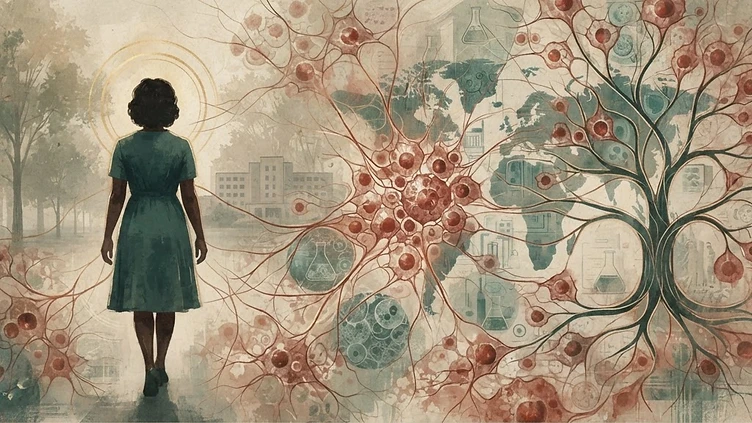
Have you ever wondered if a few cells taken from a human body could outlive that person by many years? You may have never heard the name Henrietta Lacks, yet her cells might lie at the foundation of a medication used in your laboratory, a vaccine you have received, or even experiments conducted in space. This is a story where one of the most impressive triumphs of science intertwines with one of the darkest violations in medical history. While the woman's name was forgotten, her cells became immortal; this striking contrast presents an unresolved question of justice that remains with us today. ## A Tissue Sample Taken Silently at Johns Hopkins In 1951, tumor tissue was taken from a young woman undergoing treatment for cervical cancer at Johns Hopkins Hospital in Baltimore without any explanation provided to her. At that time, the concept of patient consent was not bound by the strict rules of today, yet even this does not mitigate the ambiguity experienced by Henrietta Lacks. Imagine for a moment: while struggling with cancer in hospital corridors, you are unaware that a piece taken from your body will be sent to laboratories and subsequently distributed to every corner of the globe. This silence was not just negligence; it was a reflection of institutional habit. Some might defend this event by saying it must be evaluated by the standards of the era; indeed, patient rights in the 1950s were very different from today's framework. But this argument misses the essence of the matter. Because the problem was not merely a legal vacuum, but an implicit hierarchy regarding whose body serves whose scientific interest. Henrietta Lacks was a Black woman, and in the America of that era, the bodies of Black patients were at a much higher risk of being viewed as objects of research. This context makes the event not just an individual violation, but part of a systemic pattern. ## Cells That Never Die in the Laboratory The cells taken from Henrietta Lacks possessed an unprecedented trait in the history of science: they could multiply indefinitely under laboratory conditions. Until then, scientists could only keep human cells alive for short periods, but these cells refused to die. Known as the HeLa cell line, they soon reached laboratories in every corner of the world and became the invisible engine of scientific research. They were used in the development of the polio vaccine, helped us understand the fundamental mechanisms of cancer biology, and were even sent to space to study the effects of the space environment on cells. One must stop here and ask: while the widespread use of a cell line is certainly a tremendous gain for the advancement of science, what was the cost of this gain? While HeLa cells became part of thousands of scientific papers, hundreds of patents, and a multi-billion-dollar pharmaceutical industry, the family from which these cells originated saw no financial compensation. This contribution, rare in its scale in the history of science, had emerged from the body of an individual human being, and that person was not even aware of this contribution. At this point, the tension between the advancement of science and the dignity of the individual turns from an abstract ethical debate into a concrete matter of conscience. ## The Truth the Family Learned Years Later and Today's Bioethical Legacy The family of Henrietta Lacks learned decades later that her cells had become so widespread, commercialized worldwide, and legendary in the scientific community. This delay was not just a lack of communication, but an extension of institutional silence. How did the family members feel when they learned that Henrietta's cells were still living? When we ask this question, we realize that the matter is not only a scientific success story but also part of a grieving process. The fact that pieces taken from the body of a mother and a wife were being used in experiments all over the world caused the family to relive their loss again and again. Today, this story stands at the center of debates regarding biobanking and the ownership of genetic data. Tissue samples taken in hospitals, genetic tests, and blood samples stored for research purposes all raise the same question: can biological material taken from a body become an object of property independent of that body's owner? Some might argue that scientific progress takes precedence over individual consent, but this argument, as in the case of Henrietta Lacks, is usually exercised over the bodies of weak and marginalized communities. Racial inequality here is not just a historical note, but a living issue that shapes today's bioethical framework. ## Conclusion The story of Henrietta Lacks reminds us that even the most brilliant achievements of science come at a human cost. While her cells have been multiplying in laboratories for over seventy years, she could not reclaim her own name for a long time. The question we should ask ourselves while reading this story should not be just what went wrong in the past, but whether we are repeating the same mistake today in a different form. Because in the age of biobanking, genetic data collection, and personalized medicine, every sample taken from our bodies raises a similar question of trust and consent once again. While Henrietta Lacks's legacy remains one of the greatest gifts science has given to humanity, we must not forget the silence behind this gift.
İlgili Denemeler
Can the Human Brain Detect Magnetic Fields?
Geophysicist Joseph Kirschvink's experiment at Caltech indicates that the human brain responds to magnetic fields, raising questions about a potential sixth sense.
Jan Hendrik Schön: The Physicist Who Fooled Science
The scandal of Jan Hendrik Schön's fabricated data at Bell Labs highlights the critical vulnerabilities in the scientific peer-review system.
Barry Marshall Drank Bacteria to Prove Stomach Ulcer Theory
Barry Marshall made medical history by consuming harmful bacteria to prove that stomach ulcers are caused by an infection rather than stress alone.
Tartışma (0)
Henüz yorum yok. İlk yorumu siz yapın.
Join the Newsletter
New essays, once a week, delivered to your inbox.