Emily Rosa: The 9-Year-Old Who Debunked Pseudoscience
How a simple experiment, designed as a primary school project, scientifically dismantled a multi-million dollar therapeutic practice.
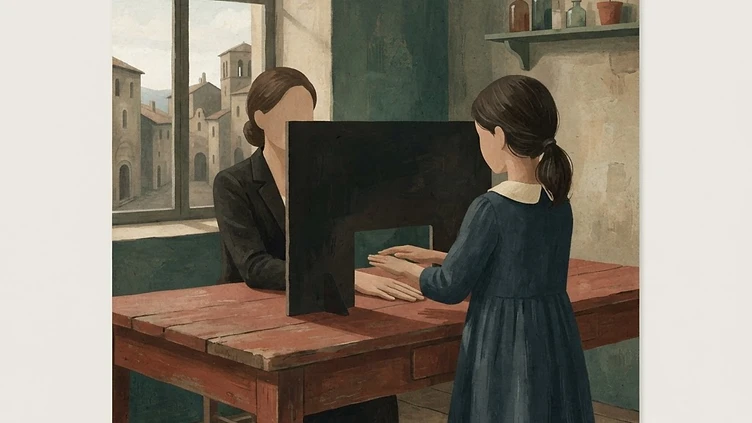
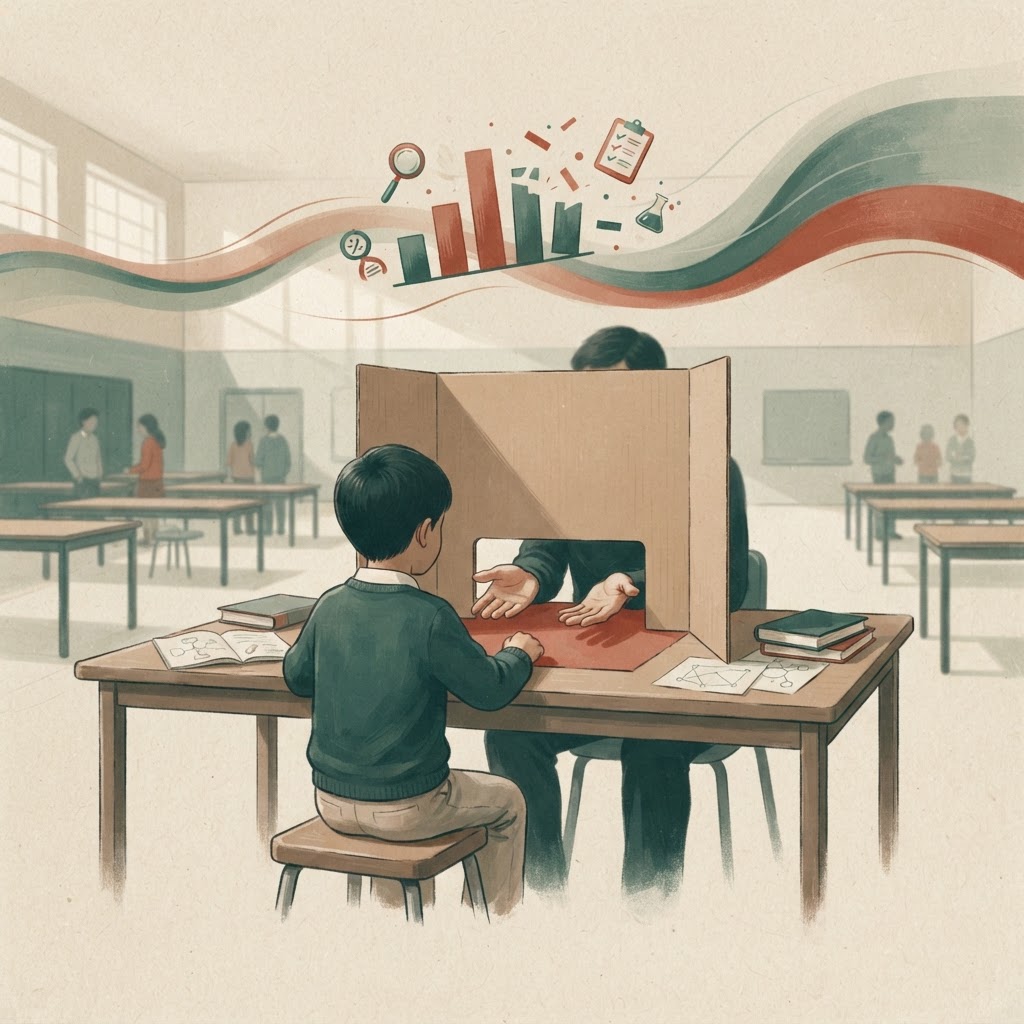
The most striking moments in the history of science sometimes emerge not from the largest laboratories, but from kitchen tables. An experiment conceived by a nine-year-old girl with a pen, paper, and a bit of patience shattered the foundation of a therapeutic practice that had been profiting in hospitals for years and in which thousands of people believed. Emily Rosa's story invites us to rethink the question of who science belongs to: do we need grand titles, thick hardcover journals, and years of experience to see the truth, or is sometimes just honest curiosity enough? This is precisely the question this essay pursues. ## From a Science Fair Project to a Scientific Paper In 1996, in a small American town, fourth-grader Emily Rosa was preparing a project for her school science fair. Because her mother was a nurse, she frequently heard about a practice called Therapeutic Touch at home; practitioners claimed they could feel an energy field allegedly radiating from the human body by moving their hands in the air without touching the patient. A simple question occurred to Emily: if these people could truly sense an energy field, shouldn't they be able to distinguish it even with their eyes closed? This question became the seed of an experiment that would go down in the history of science. The experiment she devised was surprisingly simple. Emily asked volunteer practitioners, separated by a screen, to extend their hands onto a table. From behind the screen, she randomly chose which hand to approach and then asked the person on which hand they felt an energy. If the claim were true, the practitioners' accuracy rate should have been significantly above chance levels. The picture that emerged after hundreds of trials was clear enough to catch the scientific community off guard: the accuracy rate was no different from a coin toss. What was truly striking here, even more than the result of the experiment, was the intelligence of the experiment itself; it showed that without large budgets, complex devices, or expert teams, simply asking the right question in the right way could dismantle a practice. ## Therapeutic Touch Had No Scientific Foundation Therapeutic Touch was a practice developed in the early 1970s by a nursing academic, based on the assumption that the human body is surrounded by an invisible energy field that can be sensed and regulated by trained hands. Practitioners claimed that by hovering their hands over a patient's body without touching them, they could detect energy blockages and speed up healing by resolving them. Behind this story, which sounded plausible, there was neither evidence that this energy field physically existed nor data suggesting that practitioners could consistently perceive it. So, how did such a baseless practice manage to find a place in hundreds of hospitals and nursing curricula? The answer is often simpler than we think: a practice being helpful to patients does not mean it is scientifically validated. Patients said they felt relief, some nurses believed they saw benefits, and these subjective experiences eventually turned into institutional legitimacy. No one denies the real effects of the placebo effect, a compassionate touch, or a calm environment on human psychology; however, these do not prove the existence of the claimed energy field. Emily's experiment targeted exactly this point: the question she asked was not whether the practice makes patients feel relaxed, but whether the practitioners could actually do what they claimed. And the answer to that second question was far less ambitious than the advertisement of the practice. Some might object here: just because a method is not scientifically proven does not mean it is completely wrong, right? While this objection sounds reasonable, it reverses the logic of how science works. The claimant is responsible for proving their claim; when we say it is not proven, we are not saying that the thing does not exist, but only that we have no reliable evidence that it does. Emily's experiment did not prove that Therapeutic Touch was impossible; it only showed that practitioners could not demonstrate their claimed ability under controlled conditions. This distinction may seem small, but the entire weight of scientific debate rests exactly upon it. ## Very Little Changed After the Publication When Emily's findings were published in JAMA in 1998, this journey she began at age nine earned her the title of the youngest author in medical literature. News bulletins, newspaper headlines, and science journals covered this story for days; the fact that a little girl had published an article in a prestigious scientific journal that shook a million-dollar industry caught everyone's attention. But the question that must be asked here is this: even when a finding is this clear and this publicized, does the practice really disappear? Even years after the publication of Emily's article, Therapeutic Touch continued to maintain its existence in some hospitals and some nursing programs. This situation shows that scientific evidence alone is not enough, and that institutional habits and economic interests can have an incredible resistance to evidence. When a practice touches an institution's identity, a professional group's self-confidence, or even the hope of some patients, a single article is not enough to root it out. Perhaps this is the real lesson: science is a powerful tool for showing what is wrong, but removing that error from people's daily practices, beliefs, and institutional structures is a much slower, much more stubborn process. Emily Rosa's experiment showed us the truth; but it also reminded us that there is still a wide gap between the truth being seen and the truth being adopted. The value of retelling Emily's story today does not come solely from it being a cute child prodigy anecdote. This story shakes our prejudices about who science belongs to and who has the right to ask questions; it shows that what is needed to test an idea is sometimes just honest curiosity and a clear method. At the same time, it teaches us that evidence alone is not sufficient and that change often comes much more slowly than evidence. Emily Rosa grew up and lived an adult life, but the experiment she left behind still stands: small, elegant, and with some questions that remain unanswered.
İlgili Denemeler
Can the Human Brain Detect Magnetic Fields?
Geophysicist Joseph Kirschvink's experiment at Caltech indicates that the human brain responds to magnetic fields, raising questions about a potential sixth sense.
Jan Hendrik Schön: The Physicist Who Fooled Science
The scandal of Jan Hendrik Schön's fabricated data at Bell Labs highlights the critical vulnerabilities in the scientific peer-review system.
Barry Marshall Drank Bacteria to Prove Stomach Ulcer Theory
Barry Marshall made medical history by consuming harmful bacteria to prove that stomach ulcers are caused by an infection rather than stress alone.
Tartışma (0)
Henüz yorum yok. İlk yorumu siz yapın.
Join the Newsletter
New essays, once a week, delivered to your inbox.