David Reimer: A Tragic Scientific Experiment
The story of how a scientist turned a child's life into an experiment to validate his theory challenges the very boundaries of science.
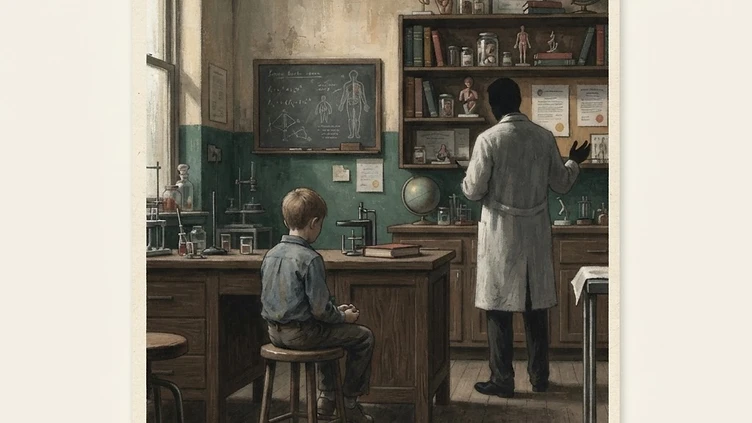
How much can a child's identity cost in the pursuit of proving a scientist's theory? This question lingered silently in a dark corner of medical history for years, until a man named David Reimer dared to tell the story of his own life. His tale became one of the most painful responses to the question of whether we are shaped by nature or nurture; because the scientist attempting to answer it turned a baby's body and mind into a testing ground to prove his results. Retelling this story today is not just about remembering a past error, but questioning how far science can carry its power over human beings. ## Theory: Is Gender Innate or Formed by Nurture? John Money was a bold figure in the psychology world of the 1960s who argued that gender identity was not a biological datum but a social construct. To him, infants arrived in the world gender-neutral; their identities were shaped later by external factors such as upbringing, clothing, names, and societal expectations. This claim was received as revolutionary in the scientific community of the era, as it offered a liberating alternative to biological determinism. The idea that gender was not fate and could be changed spread rapidly in both academic circles and popular culture, making Money a pioneering name in his field. But the appeal of this theory was also the reason it went unquestioned. Money's claim was a theory that needed to be believed rather than proven; for it seemed ethically impossible to conduct an experiment of this nature on a human, and it could not be tested in laboratory conditions. Precisely for this reason, a single case that came his way seemed to him a unique opportunity to prove his theory. When that moment of natural experimentation, which a scientist awaits to verify their own hypothesis, arrived, we see how scientific excitement can overshadow ethical boundaries; for curiosity sometimes walks faster than conscience. ## The Experiment: How an Infant Was Turned into Evidence Born in Canada in 1966 as one of a pair of twin brothers, Bruce Reimer lost his genitalia during a botched routine circumcision. As his parents desperately sought a solution, they reached out to John Money; Money saw this situation as the perfect opportunity to test his theory. His proposal was clear: the child should be surgically reshaped as a girl, supported by hormonal treatment, and raised as a girl. Thus, Bruce was given the name Brenda; his twin brother Brian, born from the same womb, would grow up in the same family, under the same conditions, but with a male identity, continuing his life as if he were a comparative sample. For years, Money presented this case in scientific literature as a success story; he wrote that Brenda had adopted her female identity without issue and that his theory was proven correct. Yet the reality was very different from what was described. From a young age, Brenda never felt like a girl, shied away from dolls, gravitated toward her brother's toys, was constantly ostracized at school, and grew up in a state of deep distress. This reality, which did not appear in Money's reports, manifested in every moment of the child's daily life; but for a researcher who had built his scientific reputation on this case, admitting failure would shake the very foundation of his theory. ## Collapse: What Did Science Learn When the Truth Came Out? The truth only came to light in the 1990s through the years-long research of biologist Milton Diamond. When Diamond found Brenda and spoke with her, he did not find the happy, well-adjusted girl Money described, but a young man who had experienced a profound identity crisis and had chosen to return to a male identity at the age of fourteen. Reimer, who had taken the name David, decided to share his story with the public; this courageous confession sparked an earthquake in the medical world. It could no longer be hidden that the theory Money had defended for years was actually a fragile fiction built upon the suffering of a child. The impact of this revelation was not limited to scientific circles. In the literature of medical ethics, the limits of informed consent and irreversible surgeries performed on children began to be debated once more; it was acknowledged that gender identity could not be explained solely by social conditioning and that biological factors played a powerful role. But for David Reimer, this belated scientific honesty did not give back his lost childhood. In 2004, he took his own life under the weight of the traumas he had endured; the legacy he left to the history of science became both a warning and a call for accountability. After reading David Reimer's story, one cannot help but ask: how far can science go to verify a hypothesis? This question extends far beyond laboratory walls to the very boundaries of human dignity. John Money's theory might have been tested in another way, or perhaps it should never have been tested at all; but what is certain is that a child's body and identity should not exist to pay the price for any scientific curiosity. Today, beneath every discussion on gender identity, the silent cry of David Reimer echoes; and this echo continues to be one of the most powerful lessons for us to remember the humility of science in the face of humanity.
İlgili Denemeler
Can the Human Brain Detect Magnetic Fields?
Geophysicist Joseph Kirschvink's experiment at Caltech indicates that the human brain responds to magnetic fields, raising questions about a potential sixth sense.
Jan Hendrik Schön: The Physicist Who Fooled Science
The scandal of Jan Hendrik Schön's fabricated data at Bell Labs highlights the critical vulnerabilities in the scientific peer-review system.
Barry Marshall Drank Bacteria to Prove Stomach Ulcer Theory
Barry Marshall made medical history by consuming harmful bacteria to prove that stomach ulcers are caused by an infection rather than stress alone.
Tartışma (0)
Henüz yorum yok. İlk yorumu siz yapın.
Join the Newsletter
New essays, once a week, delivered to your inbox.