Clair Patterson: How He Banned Leaded Gasoline
How a geochemist's quest to solve laboratory contamination led him into the greatest public health battle of the century.
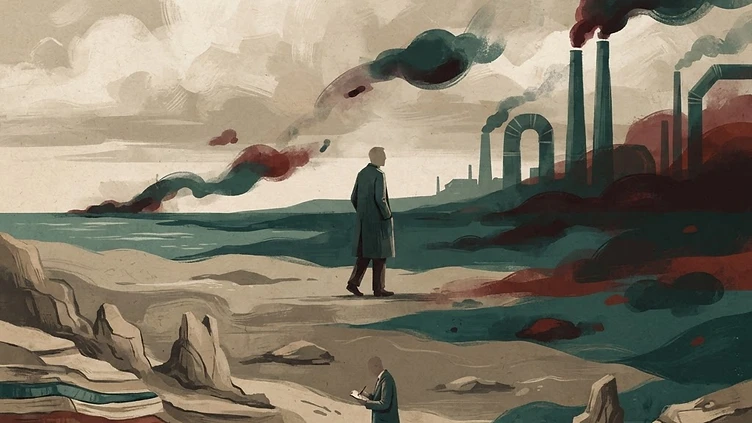
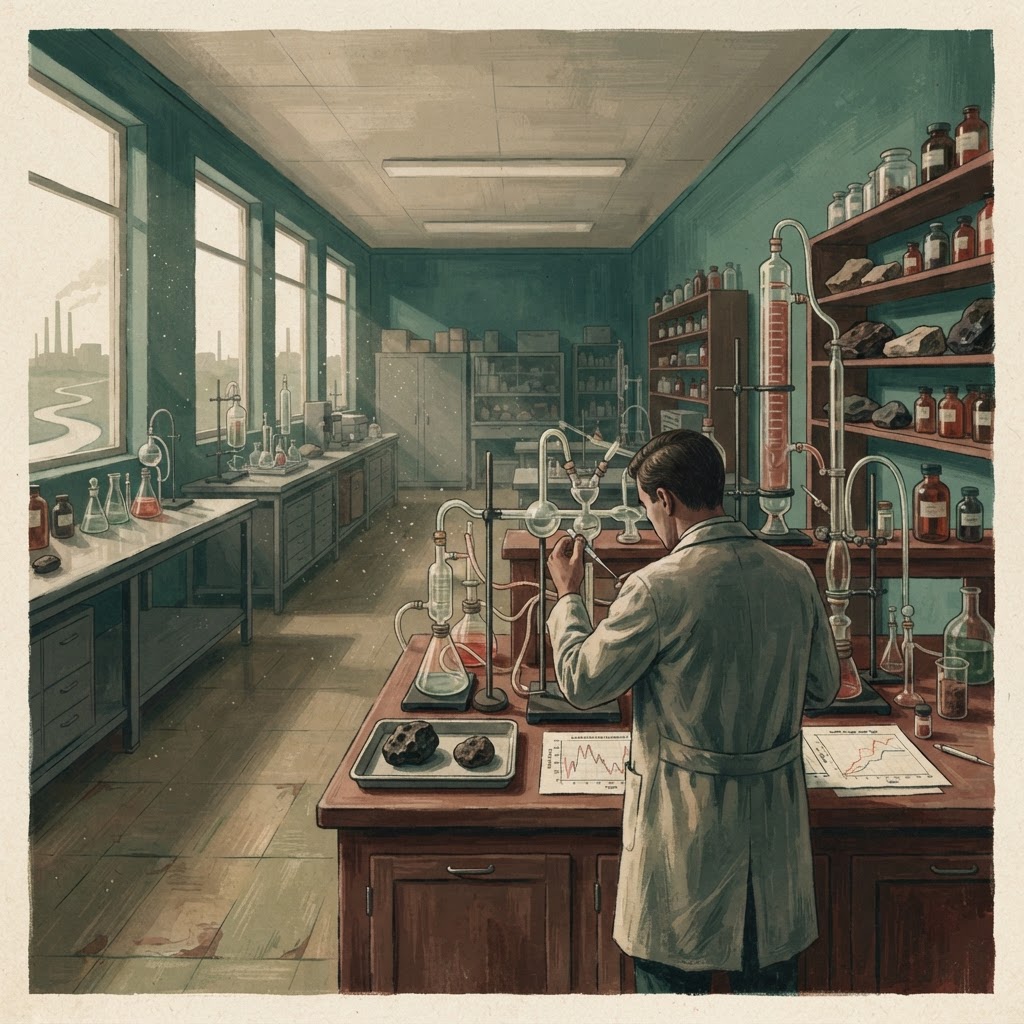
Sometimes a scientist's greatest adversary is their own laboratory. The story of Clair Patterson is a striking example of this; while attempting to measure the age of the Earth, he stumbled upon a source of contamination that was poisoning his samples, a trail that led him first to confusion, then to suspicion, and finally to a half-century-long struggle. How did this journey, which began on a geochemist's workbench, transform into a public health battle that changed the air millions of people breathe? The answer is a poignant testament to how science begins with pure curiosity and evolves into profound social responsibility. ## The Man Who Measured the Earth's Age In the early 1950s, while working at the California Institute of Technology, Patterson wrestled with a question: How old was the Earth really? Until then, scientists could only offer estimates, as the Earth's own rocks were constantly recycled through melting and reshaping, masking their original formation time. Patterson's idea was simple yet ingenious: if meteorites could be found that formed at the same time as the Earth from the remains of the same cosmic cloud, the lead isotopes within them could reveal the Earth's age. It was a search for indirect evidence, an attempt to read the Earth's past by studying its celestial kin. Working with samples from the Canyon Diablo meteorite, Patterson measured lead isotope ratios and reached the figure of 4.55 billion years—a number still accepted today in science textbooks. Imagine it for a moment: a person holding a piece of stone, attempting to read the history of the entire planet. This was not merely a technical achievement; it was a testament to the human intellect's ability to reach into the depths of the universe. Yet, this victory would lead Patterson back to the beginning of the real story, to a silent nightmare in his own lab. ## Contamination in His Own Laboratory Patterson's measurements remained stubbornly inconsistent. Unexpectedly high lead levels kept disrupting his calculations. Initially, he suspected measurement errors, malfunctioning instruments, or flawed methods. However, no matter how carefully he worked, lead seemed to seep in from everywhere—the air, the dust, and even his own hands. Most scientists might have settled for a "clean enough" result and moved on, but it was precisely here that Patterson's curiosity took hold. To solve the problem, he recreated his laboratory from scratch, building one of history's first clean rooms, filtering the air, repurposing chemicals, and even changing his clothes. Despite these efforts, the lead remained. This led to his true discovery: the contamination was coming from outside his lab, from the surrounding air. He found lead levels far exceeding expectations in city air, rainwater, and even deep within Antarctic ice cores. This was no ordinary pollution; it was human-made, industrial-scale contamination. While trying to measure the age of the Earth, Patterson had inadvertently measured what humanity was doing to its own atmosphere. Perhaps the most valuable trait of a scientist is the refusal to ignore a new question when the answer to the current one remains elusive. ## A One-Man War Against Industry Finding the source of the lead was simple: tetraethyl lead, or leaded gasoline. Added to automotive fuels since the 1920s to improve engine efficiency, this compound was spewed into the air with every exhaust. Patterson's data was clear: humanity had created pollution levels many times higher than natural background levels. However, this data brought him face-to-face with a formidable power. The petroleum and lead industries deployed their own scientists, reports, and safety thresholds to counter his findings. Figures like Robert Kehoe established a scientific front arguing that lead was harmless at safe doses, spending years attempting to overshadow Patterson's work in journals, at conferences, and before the public. The challenge Patterson faced was political, not just scientific. He was threatened with the loss of funding, excluded from projects, and shunned by prestigious institutions. Yet he did not retreat; instead, he expanded his data, collecting samples from ocean floors to ice sheets to demonstrate how lead pollution grew exponentially with human activity. It was a battle fought by one man against a massive industrial complex using only data, patience, and persistence. Eventually, starting in the 1970s, the United States began the process of banning leaded gasoline. Though it took decades, the scientific struggle initiated by Patterson achieved the power to change public policy. Looking back today, Patterson's story reveals not only the victory of a scientist but the complex relationship between science and society. Having discovered global pollution while trying to resolve a laboratory error, his greatest achievement may have been his refusal to buckle under industrial pressure while remaining faithful to his data. His legacy is not limited to the reduction of lead in our air; it remains a reminder of how scientific integrity can serve as a shield against short-term interests. Perhaps the real question is this: how many scientists today are ignoring similar forms of pollution in similar silence?
İlgili Denemeler
Can the Human Brain Detect Magnetic Fields?
Geophysicist Joseph Kirschvink's experiment at Caltech indicates that the human brain responds to magnetic fields, raising questions about a potential sixth sense.
Jan Hendrik Schön: The Physicist Who Fooled Science
The scandal of Jan Hendrik Schön's fabricated data at Bell Labs highlights the critical vulnerabilities in the scientific peer-review system.
Barry Marshall Drank Bacteria to Prove Stomach Ulcer Theory
Barry Marshall made medical history by consuming harmful bacteria to prove that stomach ulcers are caused by an infection rather than stress alone.
Tartışma (0)
Henüz yorum yok. İlk yorumu siz yapın.
Join the Newsletter
New essays, once a week, delivered to your inbox.