The Benjamin Libet Experiment: Is Free Will an Illusion?
A simple hand-movement experiment conducted in the 1980s ignited a debate that shook the concept of free will within neuroscience.
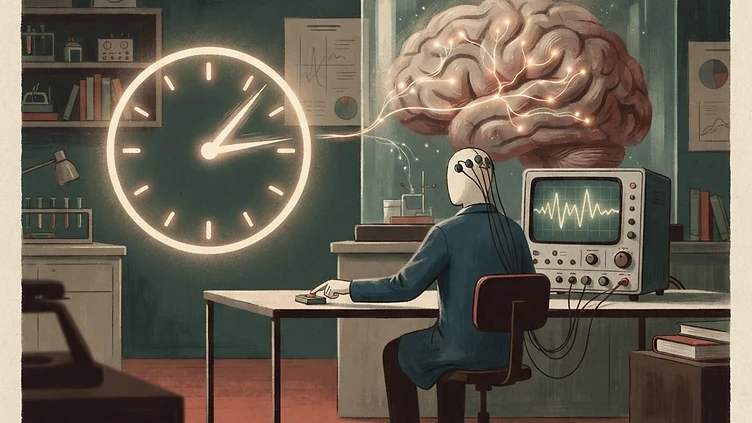
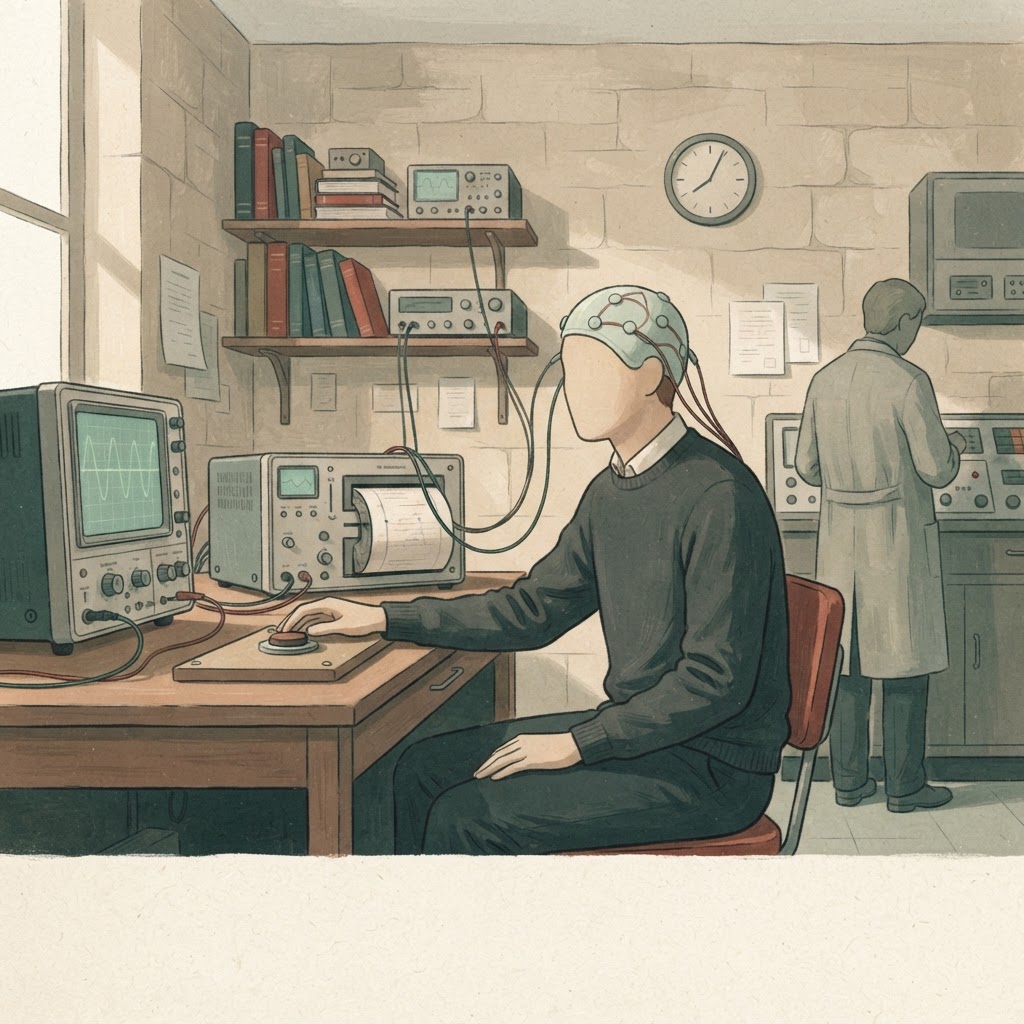
Before lifting a coffee cup one morning, did I truly initiate that movement, or had my brain already decided while I merely became aware of this decision? The question may sound overly philosophical, almost like a curiosity belonging to casual coffee-shop banter. However, in the 1980s, a neuroscientist named Benjamin Libet moved this question into the laboratory and, with a simple hand movement, undermined the concept of free will. The results of the experiment were so unsettling that for over four decades, philosophers, neuroscientists, and ordinary readers have been unable to close this debate. Perhaps that is precisely why a simple finger-flicking experiment still forces us to ask one of the sharpest questions about how humans perceive themselves. ## Clocks, Fingers, and Electrodes: The Simple Yet Destructive Design of the Experiment Libet's setup was surprisingly straightforward. Participants sat in front of a special clock screen with a dot rotating rapidly and were asked to move their wrists or fingers at will, whenever they felt the urge, without any external cues. Immediately after the movement, the individual was expected to report the position of the dot on the clock when they first felt the urge to move. This was a way of measuring the moment of conscious intention. Simultaneously, electrodes placed on the scalp recorded a slow electrical change known as the readiness potential, which is specific to voluntary movement in areas near the motor cortex. Neuroscientists knew of this signal's existence; the question Libet asked was different: did this signal start at the same time the person said, 'I am going to move now,' or before it? The result was so jarring that it carried the experiment far beyond the lab walls. The readiness potential began about three hundred milliseconds—and in some analyses, even earlier—before the participant became aware of their conscious urge to move. In other words, the brain had already acted before the conscious 'I' that claimed, 'I want this.' This small time difference transformed an experiment consisting only of a clock and a finger into a threshold questioning whether humans are truly the masters of their own decisions. Moreover, this gap did not appear to be a laboratory error; a similar pattern emerged in repeated trials. The brain seemed to be running one step ahead of the conscious 'self,' and this priority continues to be debated in the neurology literature to this day. ## Is Free Will an Illusion: The Weight of Philosophical Consequences To grasp the philosophical weight of this finding, one must first ask: is the moment we feel we have made a decision the decision itself, or is it news of the decision reaching us? Libet's data invites us to take the latter possibility seriously. If the brain acts before consciousness, the sentence 'I made the decision' may not be a genuine claim of authorship but rather a narrative constructed after the fact. This thought is not foreign; Spinoza had argued that the reason humans feel free is that they are unaware of the causes that determine them. Libet's laboratory added a concrete timestamp to this old philosophical intuition: the feeling of freedom might not stem from the invisibility of causes, but perhaps simply from a delay. To visualize this, imagine the moment you want to raise your hand to speak at a meeting. An urge rises within you, you say 'now,' and your hand goes up. While experiencing that moment, there is a definite feeling of 'I chose this.' But Libet's experiment suggests that this feeling arrives on stage with a slight delay; as if the curtain has already opened and the actors have taken their places while you, from the spectator's seat, have merely said 'it begins.' This analogy does not throw free will into the trash entirely, of course, but it blurs exactly where the thing we call 'I' stands. Is the conscious mind the decision-maker, or is consciousness merely an official signing off on a decision already made? This distinction brought the ancient debate between determinism and free will back to the table, but this time on a floor measured by electrodes. ## The Veto Power and Methodological Objections: Why the Debate Still Isn't Closed Interestingly, Libet himself, who brought such a radical finding to light, did not attempt to bury free will entirely. According to him, even if the brain initiated the move beforehand, the individual held the power to stop, or veto, it at a moment very close to the movement's occurrence. This was later called 'free won't': perhaps I do not initiate the action, but I can cancel it, and that is a kind of freedom. This suggestion opened a small door to the experiment's dark conclusion; perhaps the human is not the author, but at least they can be the editor. Yet, whether this veto itself is guided by a signal starting before consciousness or is a truly 'pure' intervention remains an unanswered question. Objections to the experiment's methodology are also significant. The EEG has limited time and space resolution, and signals are obtained by averaging many trials, which can blur the actual course of a single moment. A more radical criticism suggested that the readiness potential might not be a 'decision signal' at all; some researchers argued that this potential could be a natural reflection of continuous noisy fluctuations in the brain, and that the person 'chooses' the moment of movement when this random fluctuation crosses a certain threshold. If this perspective is correct, Libet's experiment does not disprove free will but may simply be telling a different physiological story about how spontaneous movements emerge. That is precisely why the debate has not closed: both the possibility of a veto and methodological doubts constantly turn the seemingly definitive result back into an open question. What remains from Libet's experiment is not a definitive judgment, but a subtler difference. Perhaps our brains move before we do, and perhaps what we call 'we' is already a part of that movement, not an observer separate from it. While we cannot clarify this distinction, what the experiment teaches us is this: the moment of decision is not as single and clean a line as we think, but is lived on a blurred boundary between consciousness and the nervous system. Perhaps true freedom lies in accepting this blurriness and continuing to choose our next move regardless.
İlgili Denemeler
Can the Human Brain Detect Magnetic Fields?
Geophysicist Joseph Kirschvink's experiment at Caltech indicates that the human brain responds to magnetic fields, raising questions about a potential sixth sense.
Jan Hendrik Schön: The Physicist Who Fooled Science
The scandal of Jan Hendrik Schön's fabricated data at Bell Labs highlights the critical vulnerabilities in the scientific peer-review system.
Barry Marshall Drank Bacteria to Prove Stomach Ulcer Theory
Barry Marshall made medical history by consuming harmful bacteria to prove that stomach ulcers are caused by an infection rather than stress alone.
Tartışma (0)
Henüz yorum yok. İlk yorumu siz yapın.
Join the Newsletter
New essays, once a week, delivered to your inbox.