Amazon's Stolen Wealth: The Rubber Seed Biopiracy
How did a few thousand seeds that fit into a botanist's bag fundamentally alter the economic destiny of an entire continent?
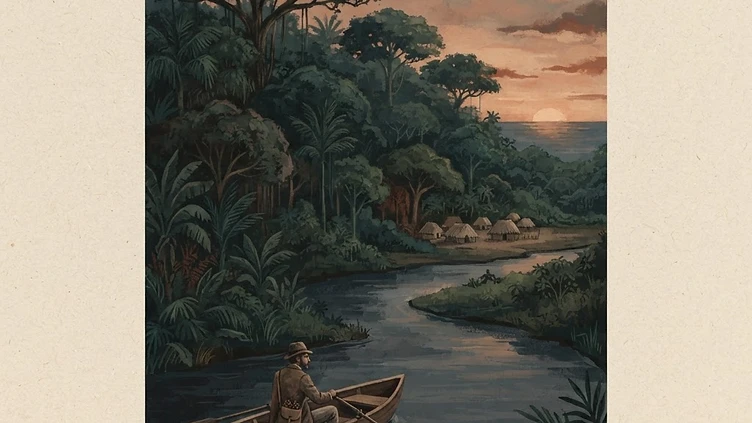
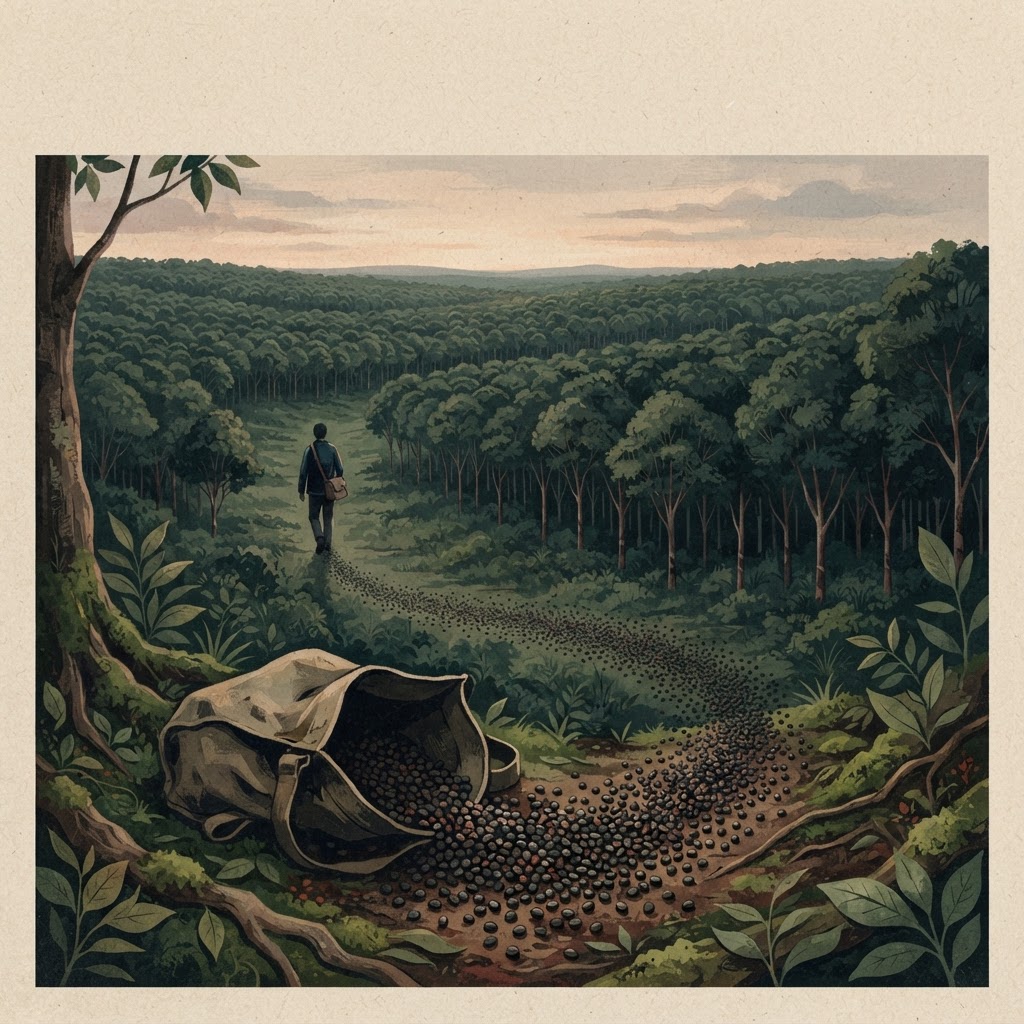
Sometimes the fate of an empire is determined not by the strength of an army, but by what is tucked inside a satchel. In 1876, a ship bound for London carried several thousand seeds wrapped in damp cloth; a seemingly mundane remnant of a botanical enthusiast's journey. Yet, those seeds carried a secret that the Amazon rainforest had guarded for centuries: the genetic legacy of the rubber tree. This small act by an Englishman named Henry Wickham would redraw the global economic map for the next fifty years. Looking at this story today, we must ask: how can a single seed silently steal the wealth of a continent? ## The Diplomatic Power of a Seed Wickham's trip to the Amazon sat squarely at the intersection of scientific curiosity and colonial calculation. Kew Gardens was an institution that used the British Empire's botanical knowledge as a strategic resource, collecting plant specimens from all over the world. Rubber was the new darling of the Industrial Revolution at the time; pneumatic tires, insulation materials, and electrical cables all depended on this flexible substance. Brazil, as the natural habitat of the Hevea brasiliensis tree, held an undisputed monopoly in this market. What Wickham did was simple, yet its consequences were far from it: he packaged the seeds he gathered from the depths of the Amazon under the guise of scientific discovery, shielded by official permits, and delivered them to London. The most striking aspect here is how this act was coded not as theft, but as a discovery made in the name of science. Wickham's reports were praised in the botanical journals of the time; he was an explorer, a carrier of knowledge. Yet, as those same seeds left Brazilian soil, what they left behind was a local economy built upon the labor of hundreds of rubber tappers. While botanical knowledge was presented as a neutral field of science, it was actually one of the empire's quietest and most effective tools. The diplomatic power of a seed lay in this very hypocrisy: the capacity to alter the economic future of a continent without firing a shot or signing a treaty. ## Brazil's Silent Collapse When Wickham's seeds germinated at Kew Gardens and became seedlings, the British transported them to their colonies in Ceylon and Malaya. There, rubber trees planted in orderly rows created a far more efficient production model than the Amazon's scattered and difficult-to-police forests. While rubber gathering in Brazil meant finding and processing individual trees along riverbanks, the plantations in Asia brought this process into an industrial order. The result appeared within twenty to thirty years: Brazil's economy, which once held nearly all of global rubber production, melted away before the Asian plantations. An objection might arise here: was this collapse not inevitable, and would someone else not have carried those seeds sooner or later? Perhaps. But history records what happened, not the possibilities. The opera houses built with the rubber wealth of Manaus stand today as monuments to that fleeting fortune. No war was declared, no embargo was imposed; simply, the geographical monopoly of a biological resource was silently and irreversibly broken. This is one of the sharpest lessons in modern economic history: sometimes the fall of an empire is not loud, but as quiet as the slow changing of numbers in a ledger. ## Today's Biopiracy Reading Wickham's story merely as a historical anecdote misses the true weight of the issue. The struggle over genetic resources continues today with different tools but the same logic. Instances of agricultural corporations patenting seed varieties taken from local farming communities and selling them back, or pharmaceutical companies protecting active ingredients derived from rainforest plants with copyrights, raise the same question: to whom does the knowledge of a resource belong—to those who discover it, or to those who have protected it for centuries? Biodiversity conventions today attempt to resolve this issue by including clauses to recognize the sovereignty of nations over their genetic resources. Yet, the Wickham example reminds us: once a seed crosses a border, once information is transported to another geography, it becomes nearly impossible to retrieve. Today's biotechnology companies navigate the same boundaries with more sophisticated legal tools but a similar logic. Perhaps the real issue is not whose bag a seed is carried in, but who gets to decide to whom the knowledge that seed represents belongs. The collapse of the Amazon's rubber monopoly tells us much more than a technical economic story. The few thousand seeds that fit into a botanist's bag offer a small but intense example of how knowledge, capital, and geography are intertwined. Wickham's name appears in history books sometimes as an explorer and sometimes as a thief; perhaps the most accurate definition lies in that uncertain, uncomfortable space between the two. Because behind every major economic transformation, somewhere, there is a small act that no one notices; and measuring the moral weight of that act is far more difficult than counting its results.
İlgili Denemeler
The Mechanical Turk: History's Chess-Playing Mystery
The chess-playing automaton known as the Mechanical Turk deceived figures like Napoleon and Benjamin Franklin, masking a hidden human operator as a machine.
Bournville: The Utopian Town Built by Chocolate
The streets, gardens, and teetotal order of Bournville reveal how the Quaker faith imprinted a distinct form of morality upon the foundations of industry.
Levi's: The Story of Riveted Jeans Born from Gold Rush
In 1873, a tailor's discovery of a riveted solution for torn pockets redirected the true fortune of the gold rush toward the enduring garment industry.
Tartışma (0)
Henüz yorum yok. İlk yorumu siz yapın.
Join the Newsletter
New essays, once a week, delivered to your inbox.