Choctaw and Ireland: A Historic Moment of Shared Solidarity
Why did the Choctaw people, themselves exiled in 1831, reach out to help Ireland's famine victims thousands of miles away in 1847?
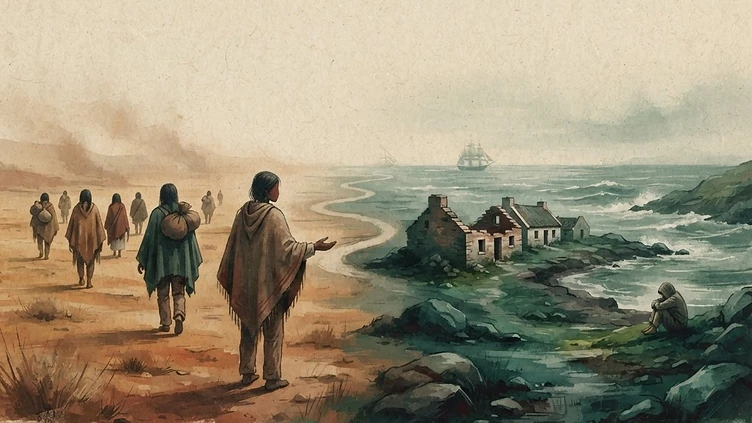
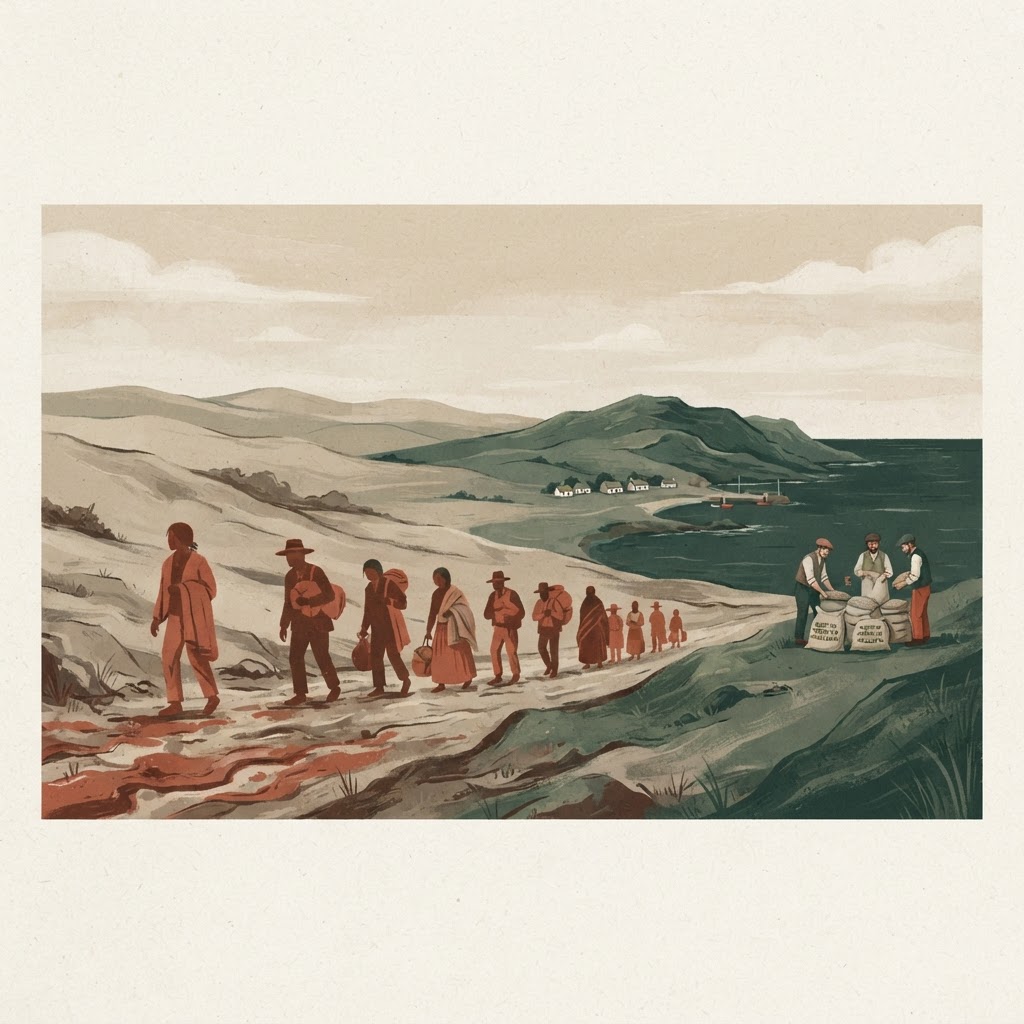
Can a people recognize today.he pain of another before they have even erased the traces of their own? Thistory.s question may sound overly poetic, but it stands at the very center of a tangible event that took place on Oklahoma soil in 1847. The Choctaw people were a community that had lost thousands on their own path of exile sixteen years earlier and were still trying to heal their wounds. Despite this, they sent money to the people of Ireland who were dying of starvation thousands of miles away on the other side of the ocean. This small yet profound gesture is one of the moments that has remained on the margins of history, yet asks the most human questions. ## The Legacy of the Trail of Tears In 1831, the United States government forcibly removed the Choctaw people from their ancestral lands and exiled them to the west of the Mississippi. This march would later be known as the Trail of Tears; those who walked struggled with hunger, cold, and disease, as the journey itself turned into a corridor of death. What was left behind was not just land, but a way of life; what lay ahead was not just a new geography, but an entire society that had to be rebuilt. After such an experience, a people would naturally be expected to turn inward and cling tightly to the few remaining resources. But the path the Choctaw took went in a different direction. Perhaps the point was exactly this: knowing hunger not just as a concept, but having carried it in one's own body made it easier to recognize hunger in another. We are not speaking here of an abstract concept of humanity; we are speaking of knowing what it means to sleep with an empty stomach and to watch the light in a child's eyes fade day by day. This knowledge may have left behind a sensitivity that allowed them not only to mourn but also to see the mourning of others. Of courage.se, one could argue that pain often closes a person off, reduces trust, and hardens them against the world. Indeed, many societies have experienced defensive withdrawal rather than outward generosity following great destruction. The story of the Choctaw people is significant precisely because it is the exception rather than the rule; perhaps this exception demonstrates that pain does not necessarily make one selfish, but on the contrary, can become a key to recognizing another's suffering. ## The Donation from Oklahoma to Ireland The successive failure of the potato crop in Ireland in the mid-1840s created one of the greatest famines in the country's history. News of starvation, migration, and death crossed the ocean and reached America; the echoes of this distant catastrophe were heard in newspaper pages, church sermons, and ordinary conversations. The Choctaw people heard these reports in some way and collected a small amount of money from within their own still-recovering community; they sent this money to the famine victims in Ireland. What is truly striking here is not the size of the amount sent, but the poverty of the conditions under which this decision was made. For a people without their own land, trying to relearn agriculture in a newly established settlement, deciding to share what little they had is something that cannot be explained by the logic of calculation. Normally, one would expect a group to ensure they have enough for themselves first and only share if there is a surplus. The Choctaw people reversed this order; they showed generosity not as a result of abundance, but as a form of shared recognition. Consider a family setting aside a small piece of their own bread for a stranger on the other side of the ocean; this image, no matter how small it seems, shakes the most fundamental assumptions of human relationships. The value of this gesture is not measured in dollars or cents, but by the perspective chosen by the giver despite their own lack. The Choctaw people, during the most fragile period of their own history, chose to see a people on the other side of the world; this choice is a type of courage that history often overlooks. ## The Legacy of Solidarity One Hundred and Fifty Years Later For a long time, this story remained a small footnote in the narratives of both peoples; it did not hold a central place in the great famine history of Ireland, nor was it always highlighted in the Choctaw people's own memory. The Kindred Spirits sculpture, erected in the city of Cork in 2017, made this fading memory visible once again. With its feather-shaped forms rising upward, the sculpture establishes a silent language that speaks of one side giving and the other receiving, while both standing in the same circle of humanity. Why do we feel the need to pour a memory into stone, metal, or sculpture? Because oral history thins over time and documents gather dust, but a form placed in a public space stands before everyone who passes, asking them to inquire. Someone walking past Kindred Spirits probably wonders about the shape first, then reads the inscription, and then asks themselves: how could a people with so little be so generous? The sculpture ensures that this very question is constantly refreshed. Viewed from today, this story is not just an interesting note about the past, but a mirror for questioning today's habits. Think of the moments when we tend to share much less while we have so much more; the comparison is uncomfortable but necessary. The gesture of the Choctaw people reminds us that generosity is born not from the abundance of resources, but from the capacity to recognize the pain of another; this capacity is the only capital that cannot be taken from those who have no money. Hunger remembering hunger is perhaps one of the least told but most telling sentences in history. This bond between the Choctaw and Irish peoples shows that two geographies, two languages, and two pains can recognize each other without ever touching. Retelling this story today is not just a celebration of an old solidarity, but an invitation to ask what we share and what we withhold in our own time. Perhaps the real issue is not how much we have, but how much of what we have we can set aside to recognize another's hunger.
İlgili Denemeler
The Mechanical Turk: History's Chess-Playing Mystery
The chess-playing automaton known as the Mechanical Turk deceived figures like Napoleon and Benjamin Franklin, masking a hidden human operator as a machine.
Bournville: The Utopian Town Built by Chocolate
The streets, gardens, and teetotal order of Bournville reveal how the Quaker faith imprinted a distinct form of morality upon the foundations of industry.
Levi's: The Story of Riveted Jeans Born from Gold Rush
In 1873, a tailor's discovery of a riveted solution for torn pockets redirected the true fortune of the gold rush toward the enduring garment industry.
Tartışma (0)
Henüz yorum yok. İlk yorumu siz yapın.
Join the Newsletter
New essays, once a week, delivered to your inbox.