Digital Loading Screens: How Does the Experience of Waiting Change Us?
What does our mind actually occupy itself with during those few seconds when nothing happens?
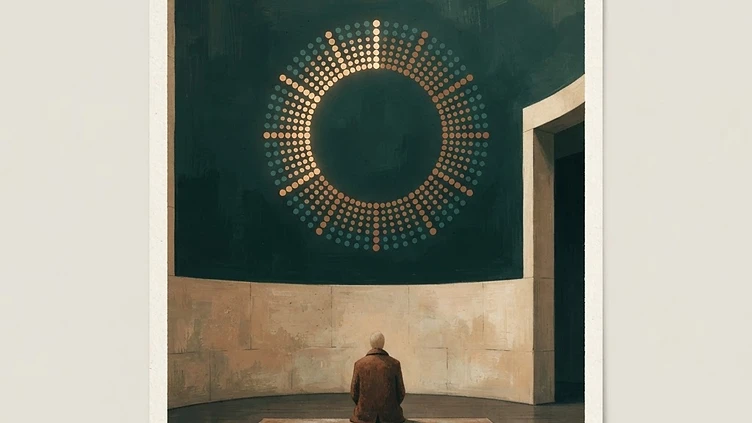
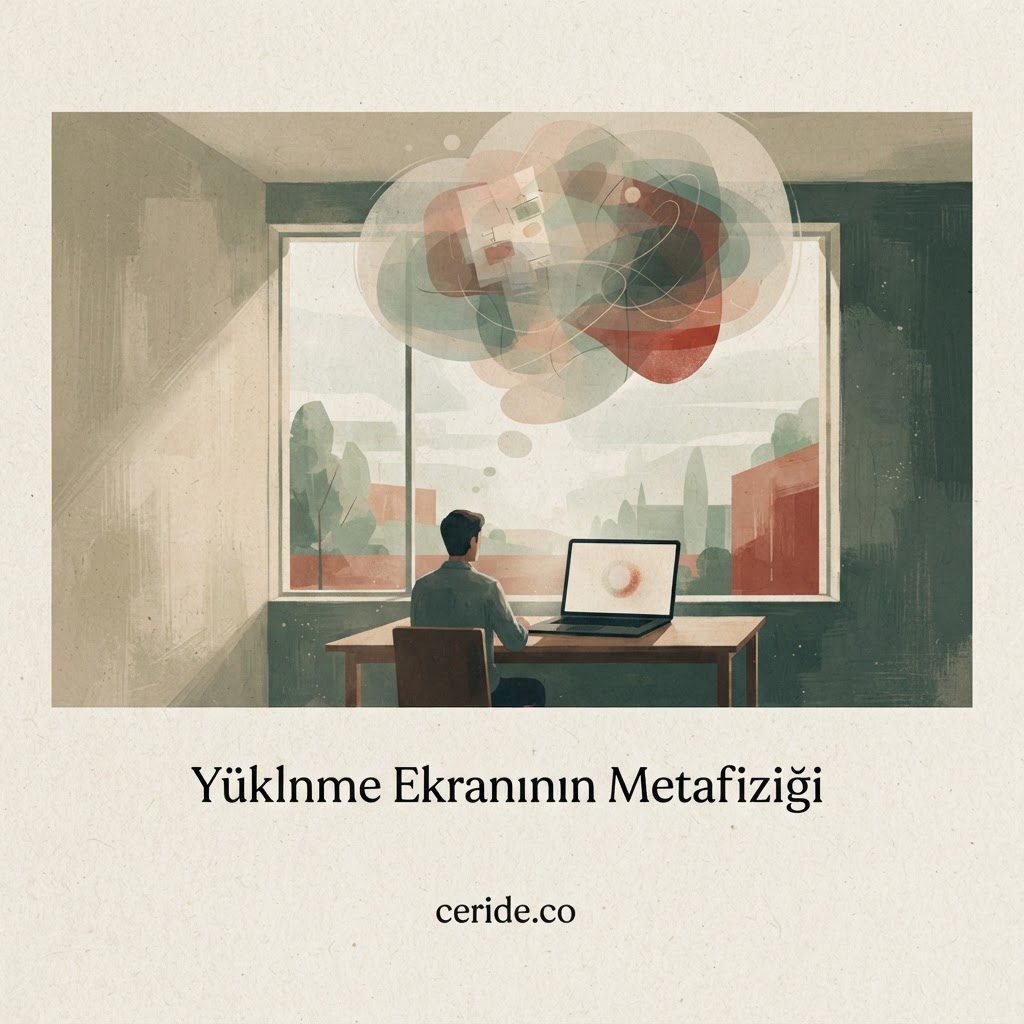
That small wheel spinning in the center of a computer screen, or the series of dots slowly cycling on a phone, may well be one of the most authentic shared experiences of our time. Every day, millions of people across different continents share the same meaningless wait: that interval where nothing happens, yet something is promised to occur. What is strange is that we never reflect on a moment we experience so frequently. Yet those few seconds are the latest link, perhaps even the most isolated form, of humanity's ancient relationship with waiting. There used to be a physical space in a letter queue; now only an icon remains, a symbol that turns and mocks our patience. ## The Lost Space of Waiting Waiting used to require a location. A post office queue, the cold bench of a train station, or ten minutes spent at a friend's door were all concrete spaces; the body had to be physically present and aware of other bodies, sounds, and scents. Waiting was a duration spent in contact with the outside world; even if bored, one was exposed to what was happening around them. Now, waiting is confined within an interface. While sitting in front of a screen, the room around us becomes entirely irrelevant; the only thing that matters is when that spinning wheel will stop. Space is no longer physical, but entirely enclosed by a virtual boundary: between the beginning and the end of a loading bar. This change has fundamentally altered the content of waiting. When waiting in a queue, people make eye contact, reckon with the possibility of losing their place, or perhaps chat with those nearby; it was a social experience that carried meaning in itself. In front of a loading screen, however, we are completely alone, faced only with the silent operation of the machine. No one will tell us our turn has come, and no one will be impatient alongside us. This form of solitary waiting reveals a kind of social impoverishment; waiting is no longer a shared experience but a silent negotiation each person conducts alone on their own screen. ## The Void Filled by the Mind Is anything really happening while the wheel spins? From the outside, it appears not: the screen is static, the progress bar may not move at all, and the page does not open. But inside the mind, there is a completely different kind of activity. In those few seconds, our brain does many things in rapid succession: it questions whether the link we just clicked is correct, attempts to predict how long the page will take, and perhaps recalls a similar wait from some time ago to compare it with the present experience. Time does not flow as the clock dictates during this interval; consciousness extends or shortens it according to its own rhythm. A five-second load can feel like an eternity in the middle of a stressful day, whereas it might pass unnoticed within a joyful moment. This effort to fill the void seems like proof of the human mind's inability to endure emptiness. Even without any stimuli, our brain produces meaning, patterns, and expectations, much like how imagination shapes shadows in a dark room. Something similar happens before the loading screen: while our eyes are locked on the spinning wheel, our mind is constantly constructing scenarios in the background, weighing potential outcomes, or perhaps worrying if the connection has been lost. This is a seemingly passive moment that may actually be one of the most active states of the mind. Perhaps this is why some people find loading screens so unsettling; it is one of the rare experiences that remains beyond our control while intensely occupying our minds. ## The New Morality of Impatience In an age where we are accustomed to receiving everything instantly, even a few seconds of waiting can become unbearable. Yet a generation ago, people took it for granted that a letter would arrive weeks later, that a film would remain in theaters for weeks, or that news would only appear in the newspaper the next day. Now, even a webpage failing to open.open within two seconds is considered a frustrating glitch. This change cannot be explained solely by the acceleration of technology; it is also related to the erosion of societal tolerance for waiting. Someone might argue that this is a natural process of adaptation and that it is perfectly logical for expectations to accelerate in parallel with technological speed. But this adaptation does not come without a cost. The ability to wait is not merely a practical skill but a matter of character. As impatience accumulates, one becomes intolerant not just of the internet connection, but of the natural rhythm of life; the ten minutes it takes for a friend to reply, the years required for a relationship to mature, or even the silence needed for a thought to take shape all begin to be evaluated with the same expectation of instant gratification. This is why the loading screen has become a small but meaningful testing ground; the reaction we show there is like a miniature of how we behave in other areas of daily life. A mind that cannot tolerate the spinning of the wheel may approach other slow-moving processes of life with the same impatience. At this point, the question to be asked might be this: is waiting a flaw that must be eliminated, or is it an indispensable part of the human experience? While technology companies strive to eradicate waiting, they might also be destroying the moment of pause that the human mind requires. As loading screens become faster, we may be losing our opportunity to be alone with our inner worlds, those small but valuable voids. In the end, what remains is this: the loading screen, however small and insignificant it may seem, is a mirror of the relationship humans have with time, waiting, and their own impatience. Every second we spend before that spinning wheel is actually the most concentrated, technological form of a question that has persisted for centuries: does time belong to us, or are we surrendered to time? Perhaps next time the screen freezes, before clicking our fingers in impatience, we should try to listen to what that void is telling us.
İlgili Denemeler
Why Did Aliens Choose Earth? Is There Nowhere Else Left?
This essay explores why humans instinctively frame technical glitches as alien invasions, revealing our collective need to feel significant in a vast universe.
Human 1.0: The 300,000-Year-Old Version
Human 1.0 examines our 300,000-year-old biological software, challenging us to debug our unconscious algorithms and ego to truly update our existence as humans.
Rolex: The Luxury Paradox of a Brand Nobody Owns
The arbitrary nature of the Rolex name and its unique ownership structure reveal the profound philosophical cracks behind our perceptions of luxury and status.
Tartışma (0)
Henüz yorum yok. İlk yorumu siz yapın.
Join the Newsletter
New essays, once a week, delivered to your inbox.